Guoxue, relative to Western learning since the "spread of Western learning to the east", generally refers to "traditional Chinese thought, culture and academics".
Guoxue is based on the pre-Qin classics and the theories of hundreds of schools of thought, covering a complete cultural and academic system such as Confucian classics of the Han Dynasty, metaphysics of the Wei and Jin Dynasties, Taoism of the Sui and Tang Dynasties, Neo-Confucianism of the Song and Ming Dynasties, practical studies of the Ming and Qing Dynasties, as well as pre-Qin poetry and fu, Han Fu, Six Dynasties parallel prose, Tang and Song poetry, Yuan opera, Ming and Qing novels, and the history of the past dynasties.
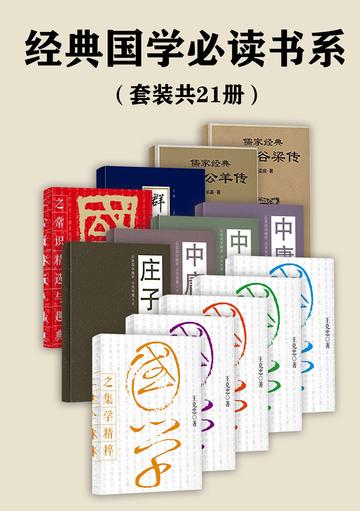
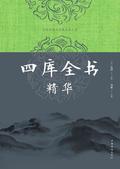
This set of books includes a total of 21 volumes, including "The Essence of Chinese Studies", "The Essence of History", "The Essence of Mongolian Studies", "The Essence of Confucian Classics", "The Essence of Collection of Chinese Studies", "Zhuangzi (Miscellaneous Chapters)", "Zhuangzi (External Chapters)" and "Zhuangzi (Internal Chapters)".
"Shang Jun Shu" is one of the representative works of the Legalist school during the Warring States Period, also known as "Shang Zi", with 24 chapters in existence. The book solved the theoretical foundation issues of implementing the reform under the conditions at that time, and put forward several major principles of the reform. It included both macro theoretical explanations and specific laws and regulations. Some of the contents, such as not allowing people with the same interests to supervise each other, still have reference value to this day.
The style of this book is diverse, and the discussion styles include: "Agricultural War", "Kaisa", "Planning" and more than ten chapters. They are either synthesized first and then analyzed, or analyzed first and then synthesized, and they are both inductive and deductive, echoing from beginning to end. Sometimes metaphors, parallelism, contrast, metonymy and other rhetorical techniques are also used.
The chapter "Lai Min" uses the fable of "Qi people have Dongguo Chang" to enhance the effect and image of the reasoning. The explanatory style includes: "Ken Ling", "Jin Ling", "Within the Territory" and other chapters, which are interpretations of Qin's political decrees. The debate style includes "Gengfa", which elaborates the central argument through dialogue and refutation between characters. Sima Qian recorded it in "Historical Records. Biography of Shang Jun" to express Shang Yang's claims.
Reader comments
I especially like "Zhuangzi". Zhuangzi's thoughts are profound, and many of his famous quotes have left a deep impression on me, such as "The gap between heaven and earth in life is like a sudden passing." This sentence makes me cherish time more. Moreover, the content in the book is rich and diverse, including theoretical explanations and fables, making it very interesting to read. I think this is a set of books that are worth reading and I recommend them to you!


I especially like "Zhuangzi". Zhuangzi's thoughts are profound, and many of his famous quotes have left a deep impression on me, such as "The gap between heaven and earth in life is like a sudden passing." This sentence makes me cherish time more. Moreover, the content in the book is rich and diverse, including theoretical explanations and fables, making it very interesting to read. I think this is a set of books that are worth reading and I recommend them to you!
Simplify the complex and can be used by beginners