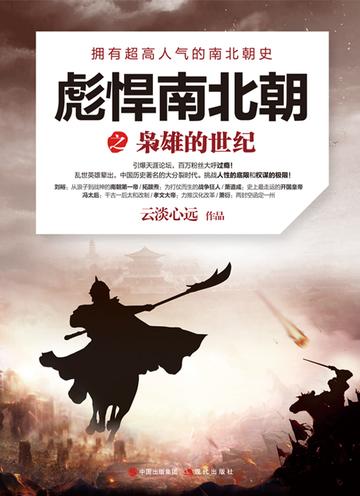
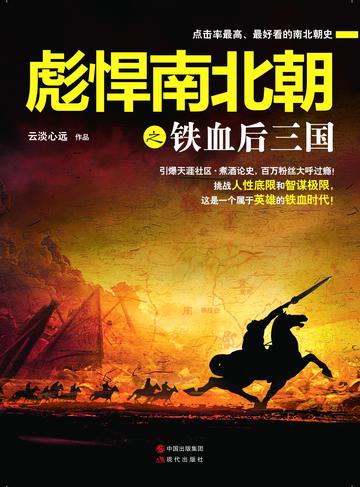
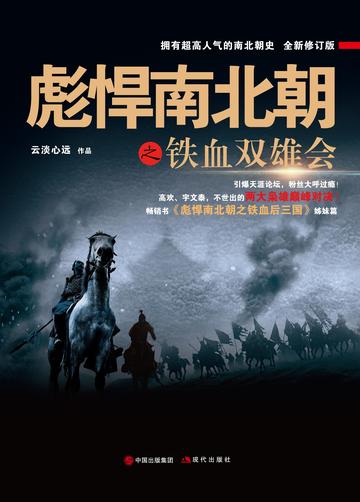
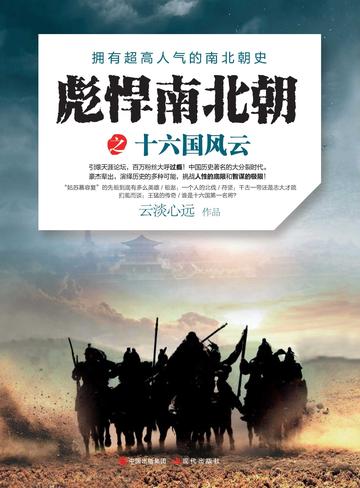
This was an age of great division in Chinese history, but also one of profound ethnic integration. It was an era of iron and blood, of chaos and war, and of heroes rising in every corner. For three hundred years, the Southern and Northern Dynasties rose and fell in turn, while north and south remained divided and at odds, locked in frequent warfare. Yet through all that conflict and integration, China found a way forward, entering the unprecedentedly prosperous Sui and Tang dynasties and emerging reborn from the flames.
It was an age of ambition, when heroes vied for supremacy and the winds of change swept across the land. Liu Yu rose from a wanderer to a god of war, eventually becoming the first emperor of the Southern Song. He launched two northern expeditions, his ambition spanning ten thousand miles. Tuoba Tao was a fierce, bloodthirsty warrior, a tyrant of extraordinary courage who unified the north, ended the Sixteen Kingdoms era, and ushered in the Northern and Southern Dynasties. Liu Yilong was a master of political intrigue who brought about the prosperous Yuanjia era. Tan Daoji, the foremost general of the Liu Song, famously counted out sand as grain, and had no equal. Wang Zhen'e repeatedly devised brilliant stratagems, including a surprise attack on Chang'an. Cui Hao was a gifted statesman with uncanny foresight and a strategic mind to rival Zhuge Liang. Xiao Daocheng deposed the Song and founded Qi, repelled Northern Wei invasions, and laid the groundwork for the Yongming era. Empress Dowager Feng introduced the Taihe reforms, earning her a place among the greatest empresses in history. Emperor Xiaowen was a young ruler who pretended to lead a southern campaign so he could move the capital to Luoyang and press ahead with reforms to adopt Han culture. Xiao Yan settled the fate of a province with two empty letters. When the time is right, heaven and earth lend their strength: he replaced Qi with Liang and became the “King of Lucky Breaks.” The “Tiger of Wei” made his name across the land, annihilating three hundred thousand enemy troops at the Battle of Zhongli, a triumph on a par with Fei River. It was the most glorious of ages, and also the most dangerous, drawing countless heroes into history’s arena, each following in the footsteps of those who came before. The rise and fall of rulers and ministers, the rivalries and schemes of officialdom, the secretive struggles for power within the imperial clans, the expansion and plunder of territory, the bloodshed and stratagems of war, the hunger for power and the dream of unification: together, they unfolded into a singular legend of a chaotic age.
The women in the harem of the Northern Wei Dynasty came from many places and all ethnic groups. There were many Han women entering the palace. Therefore, many emperors of the Northern Wei Dynasty were born to Han women. For example, Emperor Ming Yuan, Empress Du, gave birth to Emperor Taiwu, Emperor Wencheng Li Gui gave birth to Emperor Xianwen, Emperor Xianwen Mrs. Li gave birth to Emperor Xiaowen, etc.
The characters are very rich in character and experience. For example, Liu Yu's transformation from a prodigal son to a god of war, Tuoba Tao's violence and bravery, and Empress Dowager Feng's resourcefulness all impressed me deeply. It feels like I have traveled back to that era and experienced various legendary stories with them!
Thanks to the author for his hard work
Humorous, interesting, and very beautiful
Very good, read history and gain insights!