Uncovering the truth about people and events at the turn of the Ming and Qing dynasties
[Editor's Recommendations]
⭐ The author combines meticulous micro-level textual research with a broad, big-picture perspective, vividly recreating the turbulent and eventful transition from Ming to Qing. The book is a valuable reference for researchers and enthusiasts.
⭐ It also includes an account of Zheng Tianting's academic thought, which lies at the root of the author's own scholarly journey.
[Expert Recommendations]
Chen Zuwu: "The Ming-Qing Transition: A Unique Perspective vividly recreates the turbulent and eventful transition from Ming to Qing. This will undoubtedly 'help us correctly understand the characteristics of the conflict between the Ming and Qing dynasties and the trends in historical development during their transition.' It begins with textual research but goes beyond it, a quality that scholars of historical textual research in the old era could never hope to match."
Yuan Senpo: "This book has two distinctive features. First, its research is precise and thorough, restoring the historical truth on a number of key issues from the transition between the Ming and Qing dynasties. Second, the author traces the origins of questions that have received relatively little attention in past scholarship, analyzing them carefully and objectively and offering original insights. The author has seen what predecessors did not see and said what they did not say."
Sun Weiguo: "The book takes a fresh approach, advances original arguments, draws on detailed historical sources, and supports its case with thorough analysis. It presents a series of new and convincing views on the transition from Ming to Qing. On some questions, its conclusions may be considered definitive."
[Synopsis]
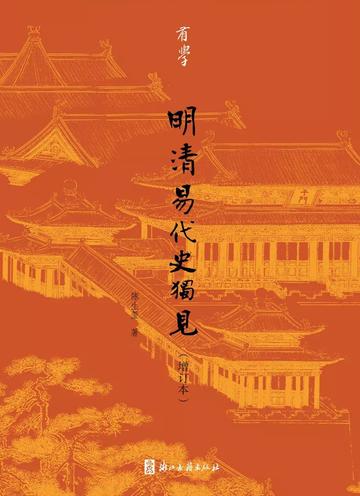
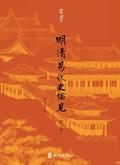
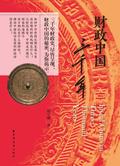
One of the books in the "Youxue" series, this is a revised and republished edition of Professor Chen Shengxi's The Ming-Qing Transition: A Unique Perspective. It brings together several essays on the transition from Ming to Qing, focusing on topics including the late Ming wars against the Later Jin, the Qing army's entry through the pass, Wu Sangui's surrender, the historical record of Chen Yuanyuan, the killing of Mao Wenlong, and the early Qing hair-cutting edict. It refutes historical inaccuracies that have circulated to this day and stands as a model study of the late Ming and early Qing.
[About the Author]
Chen Shengxi, born in Qian County, Shaanxi, in 1932, graduated from the History Department of Nankai University in 1956. That same year, he began postgraduate research on Ming and Qing history under Professor Zheng Tianting. He was a professor of history at Nankai University. His works include The Ming-Qing Transition: A Unique Perspective, Turbulent Times and Beauty (annotated), An Introduction to Qing History Studies (coauthored), Twilight of an Empire: Zhang Juzheng and the Wanli Reforms, and The Fall of the Great Ming Empire. He oversaw the compilation of The Imperial Reader of Zizhi Tongjian, The Imperial Reader of the Analects, The Imperial Reader of Mencius, and A Mirror for Good Governance, among others, and edited the ten-volume collection Compendium of Political Works. He published dozens of academic papers, including "The Qing Army's Entry through the Pass and Wu Sangui's Surrender to the Qing," "A Study of Chen Yuanyuan's Life," "The Historical Choices at the Turn of the Ming and Qing Dynasties," "Why Did Qin Shi Huang Burn Books and Bury Scholars?" and "On Li Yan, Revisited."














This book is amazing! Professor Chen Shengxi combined microscopic research with macroscopic control very well, which gave me a clearer understanding of the history of the Ming and Qing Dynasties. I especially like the analysis of characters such as Wu Sangui and Chen Yuanyuan in the book, which is very interesting. Professor Chen's academic attitude is also very admirable, rigorous and objective. This book is truly a treasure for a history buff like me! Highly recommended!
Very interesting and rich in historical knowledge