A legendary journey of thoughts of five giants of Chinese painting
Editor's recommendation
⭐A gathering of talents: This book lists five art masters with superb attainments in traditional Chinese painting. Their names are familiar to the art world, including Pan Tianshou, the last master of traditional modern painting, Huang Binhong, a master of the 20th century who inherited the past and the future, Tang Yun, a giant of Chinese painting of the "Marine School", Xiao Junxian, whose landscapes are known as "from the Song Dynasty to the Yuan Dynasty, with nature as his teacher", Tao Lengyue, who is known as the "Lengyue Landscape" who combines Chinese and Western painting methods, all stars are dotted with bright ideas.
⭐Master's Wonderful Interpretation: The author is a researcher at the China Art Institute and has written a large number of art academic works. He has high attainments. Contemporary masters have their own fun in interpreting masters. In this book, let's see how the master explains to you and experience the extraordinary fun.
⭐Macroscopic approach: When the author Mr. Lang Shaojun summarized and summarized the thoughts and artistic concepts of these five masters of art, he placed their works in the context of the times and systematically sorted out the five masters' understanding of Chinese painting without losing the characteristics of the times.
Introduction
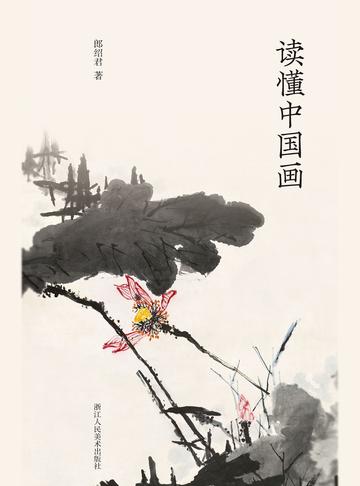
In the 20th century, many schools and representatives of Chinese painting emerged, including Huang Binhong, Pan Tianshou and others, who made indelible contributions to the development of Chinese painting. "Understanding Chinese Painting" systematically combs the understanding of Chinese painting by Pan Tianshou, Huang Binhong, Tang Yun, Xiao Junxian and Tao Lengyue under the background of this era. At the same time, the author Mr. Lang Shaojun summarized and summarized the artistic concepts and practices of several people.
[About the author]
Lang Shaojun, born in 1939 in Dingzhou, Hebei Province, holds a Master of Arts degree from the China Academy of Art. He was the director of the Modern Art Research Office of the Institute of Fine Arts of the China Academy of Art. He is currently a researcher and doctoral supervisor at the academy and a member of the National Cultural Relics Appraisal Committee. He is the author of "On Modern Chinese Art", "Collection of Modern Chinese Painting", "Reconstructing Chinese Elite Art", "The World of Qi Baishi", "Guardian and Development", etc., And co-edited "Selected Chinese Art in the 20th Century", "Encyclopedia of China·Art Volume·Modern and Modern Branches", "Complete Works of Famous Chinese Painters·Modern and Modern Volume", "The Complete Works of Qi Baishi", "The Complete Works of Lu Yanshao", etc. In 2018, he won the 4th "Wu Zuoren Art Award·Art History Theory Award".
Reader comments
This book is very good! It introduces five masters of Chinese painting, allowing us to have a deeper understanding of their artistic thoughts and works. The author Mr. Lang Shaojun's interpretation is also very good. He puts the thoughts of the masters in the context of the times, so that we can better understand their paintings. This reminds me of the book "History of Chinese Painting", which also sorts out the development of Chinese painting from a macro perspective. However, "Understanding Chinese Painting" focuses more on the interpretation of individual masters, while "History of Chinese Painting" focuses more on the overall historical context. Combining the two will give you a more comprehensive understanding of Chinese painting.
This book is very good! It introduces five masters of Chinese painting, allowing us to have a deeper understanding of their artistic thoughts and works. The author Mr. Lang Shaojun's interpretation is also very good. He puts the thoughts of the masters in the context of the times, so that we can better understand their paintings. This reminds me of the book "History of Chinese Painting", which also sorts out the development of Chinese painting from a macro perspective. However, "Understanding Chinese Painting" focuses more on the interpretation of individual masters, while "History of Chinese Painting" focuses more on the overall historical context. Combining the two will give you a more comprehensive understanding of Chinese painting.
Learned! Learned!