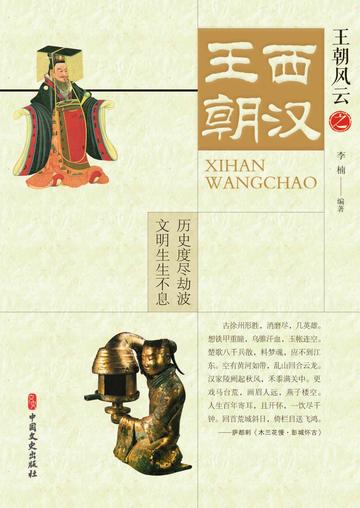
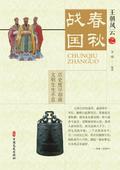
This book reveals the historical picture of more than 200 years from when Xiang Yu and Liu Bang rebelled against Qin in 209 BC, to when Liu Bang established the Han Dynasty, and to when Wang Mang usurped the Han Dynasty in 9 AD. "King Xiang is not a politician, but the King of Han is a brilliant politician." Liu Bang was born in a back alley and had a wild temperament. His official position and administration followed the Qin system, and his rule was both fierce and fierce. The governance of Wen and Jing focused on resting with the people, but Emperor Wen and Emperor Jing were the most successful kings and had nothing to praise. Emperor Wu was a man of great talent and strategy, opening up new territories and promoting national prestige. He was an emperor who could rival Gaozu. Emperor Yuan's scholars governed the country and restricted Wen Yi. The Western Han Dynasty turned from prosperity to decline, and the country's fortunes worsened, and was eventually usurped by Mang Xin.
Reader comments
This book is very good! It vividly depicts the historical picture of the Western Han Dynasty. I especially like the description of Liu Bang and Emperor Wu of the Han Dynasty in the book, which shows their political wisdom and leadership skills. Moreover, the author also mentioned the long history of China and the profoundness of civilization, which gave me a deeper understanding of history. All in all, this is a great book worth reading!
The greatest success of the Western Han Dynasty was that it inherited the legacy of the Qin Dynasty, abolished some harsh criminal laws, improved it in the Qin Dynasty's ruling system, applied Huang-Lao's learning to recuperate, and the society developed, and later adopted Confucianism to consolidate its rule. The Western Han Dynasty also carried out military strikes against the Xiongnu who threatened the border, consolidating border stability while strengthening external contacts and cultural exchanges. The biggest internal problem in the Western Han Dynasty was the interference of foreign relatives in politics. First there were the Lu family, the Dou family, and then the Wang family. The final demise was also due to the dictatorship of the foreign relatives and Wang Mang usurping the throne.
This book is very good! It vividly depicts the historical picture of the Western Han Dynasty. I especially like the description of Liu Bang and Emperor Wu of the Han Dynasty in the book, which shows their political wisdom and leadership skills. Moreover, the author also mentioned the long history of China and the profoundness of civilization, which gave me a deeper understanding of history. All in all, this is a great book worth reading!
The greatest success of the Western Han Dynasty was that it inherited the legacy of the Qin Dynasty, abolished some harsh criminal laws, improved it in the Qin Dynasty's ruling system, applied Huang-Lao's learning to recuperate, and the society developed, and later adopted Confucianism to consolidate its rule. The Western Han Dynasty also carried out military strikes against the Xiongnu who threatened the border, consolidating border stability while strengthening external contacts and cultural exchanges. The biggest internal problem in the Western Han Dynasty was the interference of foreign relatives in politics. First there were the Lu family, the Dou family, and then the Wang family. The final demise was also due to the dictatorship of the foreign relatives and Wang Mang usurping the throne.
Good reviews. Very comprehensively written