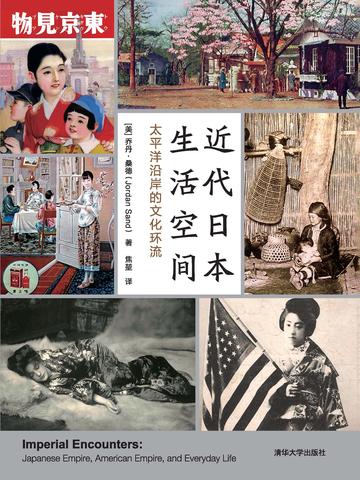
Starting from objects and events that are closely related to daily life and are usually not described in the country's "big history", this book provides a detailed examination and vivid explanation of the changes in housing, furniture, food, clothes, shoes, behavior, urban space, etc. In the Pacific Rim region centered on Japan in the first half of the 20th century. Including: how to deal with the influence of European norms in the "foreign" life and interior decoration of Japan's upper class in the late Meiji period, the global diffusion of MSG, the intertwined conflicts of sitting on the floor or on chairs and the spread of rattan chairs, the rise and fall of "cultural life" rhetoric and "cultural housing", "sightseeing trips" from overseas colonies to Tokyo, the relationship between Okinawan pork and the US military, etc. In a broad time and space framework, the author presents a stirring historical picture full of violent migration of people and objects, cultural blending and transformation, revealing the complex network and the far-reaching impact of colonialism in modern Japan and the United States.
As a scholar who teaches in the United States and Japan at the same time, the author's perspective is fresh, interesting and original. The book also contains more than 150 precious historical pictures, integrating readability, professionalism and new perspectives.
Reader comments
This book is very interesting! It starts from the details of daily life and shows the cultural integration between Japan and the United States in modern times. Just like my cousin who likes to study history, she will definitely be interested in the "foreign" life and interior decoration of Japan's upper class mentioned in the book. Moreover, the author's perspective is very fresh, and there are many precious historical pictures in the book, which makes reading not boring at all. I think this book is not only suitable for people who are interested in history, but also for friends who like to learn about different cultures.



This book is very interesting! It starts from the details of daily life and shows the cultural integration between Japan and the United States in modern times. Just like my cousin who likes to study history, she will definitely be interested in the "foreign" life and interior decoration of Japan's upper class mentioned in the book. Moreover, the author's perspective is very fresh, and there are many precious historical pictures in the book, which makes reading not boring at all. I think this book is not only suitable for people who are interested in history, but also for friends who like to learn about different cultures.