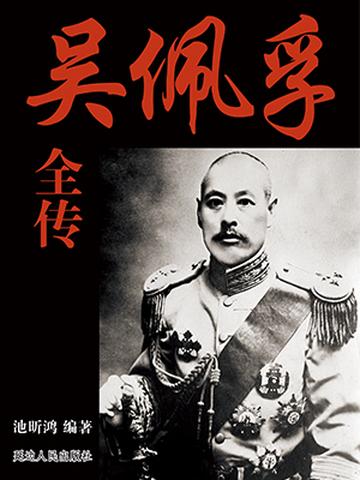
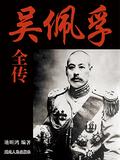
"Wu Peifu, courtesy name Ziyu, was born in Penglai, Shandong in 1874. He surrendered to the Huai Army in 1898. In 1906, he was appointed as the commander of Cao Kun's Department of the Beiyang Army, and was highly regarded. He was later promoted to brigade commander. When the movement to protect the country against Yuan emerged, he went to Sichuan with the battalion to suppress the Yunnan National Defense Army led by Cai E. In July 1917, he was appointed to the army to fight against the rebels. Pioneer of the West Route, he participated in the crusade against Zhang Xun's restoration. In the same year, Sun Yat-sen formed the French Protectorate Military Government, and Duan Qirui sent Cao Kun and Zhang Huaizhi to lead the expedition south. Wu was appointed as the acting division commander of the third division and the former commander-in-chief of the enemy. Because the position of the Hunan governor was obtained by Zhang Jingyao of the Anhui clique, Wu was very angry and was dismissed.
Wu Peifu was a leader in the history of the Republic of China during the period when the Beiyang political and military group ruled. When the reform movement reached its climax, he entered the military field as a scholar and became a general, becoming a highly respected minister.
On August 2, 1918, Wu Peifu telegraphed for the first time from the former enemy in Hengyang, Hunan, "to strike for peace" and "to withdraw defenses and return to the north." He ordered his divisions to resist, raised troops to hold the enemy accountable, and advocated a nationwide strike as one, opposed separatism, and achieved peaceful reunification. This was his first righteous act and political appearance. It had a huge impact and far-reaching significance, and thus won national praise. After the "September 18" national calamity broke out in 1937, the Wu family lived in seclusion in the capital as a residence in Yanshan, studying Confucius, Mencius, Buddhism and Taoism, and writing the meaning of "Spring and Autumn". After the Japanese invaders occupied Pingjin, he resisted the enemy's temptation to surrender. With his awe-inspiring and awe-inspiring national righteousness, he fought against the enemy and traitors, and maintained his integrity. In 1939, he ended his all-powerful, difficult, tortuous, ups and downs, legendary and mysterious life.
Reader comments
A true and objective account of Wu Peifu's ups and downs life


A true and objective account of Wu Peifu's ups and downs life