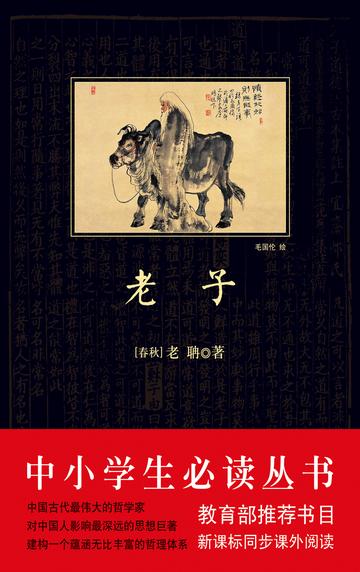
In "Laozi", we have sorted out the representative theories of various schools, made appropriate choices and careful explanations, and strive to allow readers to naturally understand the meaning of "Tao" and "De" through the word-for-word interpretation of "Five Thousand Words".
We believe that any overly arbitrary and exclusive interpretation of these two words with rich and profound connotations is irresponsible.
Perhaps, it is really only through "enlightenment" that we can understand the true meaning of Taoism.
Reader comments
This book reminded me of a friend of mine who was indecisive when faced with a major decision in her life. Just like the "Tao" mentioned in the book, the road of life is full of changes and uncertainties. We can't just rely on conventional thinking and methods to solve problems, but we must learn to observe the beauty from "nothing" and deduce its clues from "something". This book teaches us to look at things from a broader perspective and understand the nature of things. It is like a key that opens the door to wisdom, guiding us towards deeper thinking and a better life.
To do nothing, to do nothing, to have no meaning, to be as cautious as the beginning.
Whatever you do, don't cause yourself any trouble afterwards. Be careful and know your goals.
There is no action and no attachment, but it depends on the specific environment. Failure and success are all natural.
After reading it through, I can't say the translation is good. It is still necessary to read several different translations in order to get closer to the original meaning of the Tao Te Ching. Tao follows nature, which is endless, ever-changing, and cyclical. People strive for self-improvement, gain, look down upon, let go, be content with the situation, and be content. Based on the secular world, deeply engaged in reading and thinking, is it consistent with the Tao?
Very good book. But it's not missing. There are only sixty-four chapters. The Tao Te Ching has eighty-one chapters. What about the next ten chapters?
The book written to the emperor is also written by us in an impetuous era.
After reading it, I probably understand it.
It is a good book, no doubt, it is not too much to read it a hundred times.
This book reminded me of a friend of mine who was indecisive when faced with a major decision in her life. Just like the "Tao" mentioned in the book, the road of life is full of changes and uncertainties. We can't just rely on conventional thinking and methods to solve problems, but we must learn to observe the beauty from "nothing" and deduce its clues from "something". This book teaches us to look at things from a broader perspective and understand the nature of things. It is like a key that opens the door to wisdom, guiding us towards deeper thinking and a better life.
To do nothing, to do nothing, to have no meaning, to be as cautious as the beginning. Whatever you do, don't cause yourself any trouble afterwards. Be careful and know your goals. There is no action and no attachment, but it depends on the specific environment. Failure and success are all natural.
After reading it through, I can't say the translation is good. It is still necessary to read several different translations in order to get closer to the original meaning of the Tao Te Ching. Tao follows nature, which is endless, ever-changing, and cyclical. People strive for self-improvement, gain, look down upon, let go, be content with the situation, and be content. Based on the secular world, deeply engaged in reading and thinking, is it consistent with the Tao?
Very good book. But it's not missing. There are only sixty-four chapters. The Tao Te Ching has eighty-one chapters. What about the next ten chapters?
The book written to the emperor is also written by us in an impetuous era.
After reading it, I probably understand it.
It is a good book, no doubt, it is not too much to read it a hundred times.
Not bad, it makes me calm every time I read it