In the hierarchy and social relations of the autocratic era, the distinction between high and low is very important. The so-called "mean" has two different meanings in ancient literature: the first meaning refers to the relationship between officials and people, with officials as noble and people as humble, to emphasize the respect of famous objects; the other meaning refers to individuals who are in a particularly low legal and social status in society and have no independent personality, as well as the hierarchy composed of these people. The existence of untouchables has also become one of the important features of the feudal hierarchy.
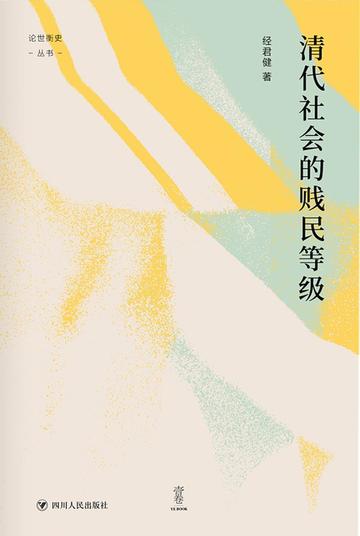
As a complete history of the hierarchy of the Qing Dynasty, "The Untouchability Class in Qing Dynasty Society" can be said to have created a research paradigm for China's feudal hierarchy. The author integrates knowledge from history, sociology, politics, economics and law, and for the first time systematically explores the status of untouchables in Qing Dynasty society and the division of ranks within the untouchable hierarchy from a caste perspective. It profoundly reveals the structural status, development characteristics and social functions of the social hierarchy in the Qing Dynasty.
This book conducts multi-faceted discussions on the origins, identity characteristics, legal status, social status, and the process of legal identity liberation of various untouchables such as slaves, degenerates, beggars, fishermen with nine surnames, Danhus, Lehus, and tenant servants in the Qing Dynasty. It also proposes some issues that have not been discussed by predecessors and opinions that are different from predecessors. The many discussions in this book are of great help to readers in understanding the formation and development of the social hierarchy and the flow and solidification of social classes in the Qing Dynasty.
Reader comments
This book is detailed and well-researched. Mr. Jing Junjian conducted a comprehensive analysis of the untouchable class in the Qing Dynasty from multiple disciplinary perspectives, which gave me a clearer understanding of the social classes of that era. In particular, the discussion in the book about the liberation of untouchable status made me feel the importance of social progress. "In a class society, no member of society belongs to a specific class without exception." This sentence made me deeply realize that we should strive to create a more equal society so that everyone can live with dignity. This book is of great help in understanding history and social systems and is worth reading.



This book is detailed and well-researched. Mr. Jing Junjian conducted a comprehensive analysis of the untouchable class in the Qing Dynasty from multiple disciplinary perspectives, which gave me a clearer understanding of the social classes of that era. In particular, the discussion in the book about the liberation of untouchable status made me feel the importance of social progress. "In a class society, no member of society belongs to a specific class without exception." This sentence made me deeply realize that we should strive to create a more equal society so that everyone can live with dignity. This book is of great help in understanding history and social systems and is worth reading.