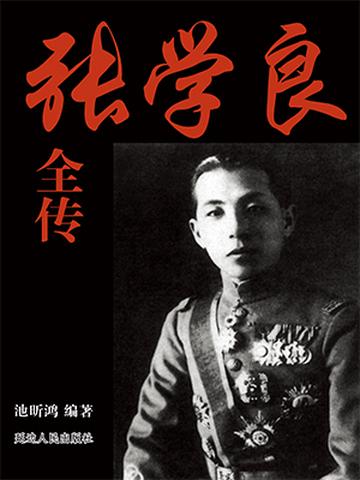
"For Chinese people under the age of fifty, Zhang Xueliang is like a living shadow. No one knows him, but almost no one has seen him. In modern history, if there is a ranking of the top ten influential figures, Zhang Xueliang will definitely be at the top.
Zhang Xueliang, courtesy name Hanqing and nickname Yi'an, was born in Haicheng, Liaoning Province on June 3, 1901 in Zhangjiabao Village, Ejia Village, Jiujian Township, Tai'an County, Liaoning Province (formerly known as Zhanjiawopu, Sangzilin). Kuomintang general and organizer of the Xi'an Incident. The eldest son of Zhang Zuolin, the leader of the Feng clique warlord. After Zhang Zuolin was killed by Japanese soldiers in 1928, Zhang Xueliang became the commander-in-chief of security in the three northeastern provinces and began to rule the Northeast. Zhang Xueliang has patriotism and nationalism and is unwilling to be the slave of foreigners. Especially the tragic death of his father made him see with his own eyes the dangers of dealing with the Japanese. In addition, the pain of hatred between country and family has made him unforgettable and cannot be forgotten, so he will never be a sinner of history. In order to maintain the noble national integrity like Yue Fei, Wen Tianxiang and other national heroes of the past dynasties, and in order to gather the strength of the whole country to jointly resist aggression, in December of the same year, he took the decisive action of "changing the flag" and declared his submission to the Nanjing National Government and served as the Commander-in-Chief of the Northeast Frontier Defense and the Deputy Commander-in-Chief of the Army, Navy and Air Force.
After the Xi'an Incident, Zhang Xueliang has been under house arrest. At the Political Consultative Conference held in 1946, the CCP proposed to release Zhang Xueliang, but failed. After the Kuomintang withdrew to Taiwan, Chiang Kai-shek transferred Zhang Xueliang to Taiwan to continue under house arrest. After the death of Chiang Ching-kuo in 1988, Zhang Xueliang gradually gained personal freedom. In April 1993, he was hired as a professor at Northeastern University.