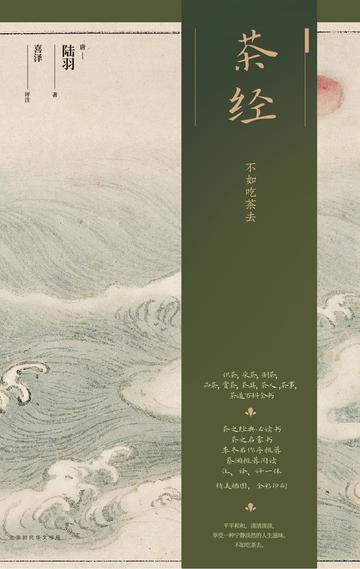
The Book of Tea is the earliest, most complete and comprehensive introduction to tea in China and even the world. It is known as the Encyclopedia of Tea and was written by Lu Yu in the Tang Dynasty. This book is a comprehensive treatise on the history, origin, current situation, production technology, tea drinking techniques, and tea ceremony principles of tea production. It is an epoch-making monograph on tea science, an incisive agricultural work, and a book that explains tea culture. Elevating the ordinary tea ceremony into a wonderful cultural art has promoted the development of Chinese tea culture.
Reader comments
A classic indeed. Although the original text is a little difficult to read, after reading the previous vernacular content and understanding the background of the times, it feels much smoother to read the original text listed later. The annotations are also very detailed.
Before I read it, I had already learned from various cultural popularizations on the Internet that tea in ancient times had to be added with various seasonings or condiments and even food, and fruits, nuts, etc. Might also be added to fry it together. I always thought it would be something like a meal replacement powder, sesame paste nut porridge, or a salty soup () a bit like Kway Tsai Soup. . . There's also tea, matcha and tea foam painting. But I still have no idea.
After reading this, I went to find the tea art of tea foam painting. It really looked like a cheese milk cap, but the foam was denser, and it was possible to create such white foam using only tea powder. I really want to taste it myself one day.
It is said that tea now has more advanced preservation technology, so we no longer use tea cakes and tea powder to make tea. This technique of ordering tea and matcha was introduced to Japan and has been passed down in Japan. Although it was abandoned because of technological progress, in terms of culture, these past skills are also part of traditional Chinese tea culture. Inheritance, reproduction and interpretation are still very important.
The book "Tea Classic" is very good! It not only introduces the history and culture of tea in detail, but also deeply explores the techniques of drinking tea and the principles of tea ceremony. After reading it, I have a deeper understanding of tea culture. Moreover, the description of the role and behavior of tea drinkers in the book also made me understand the importance of mood and attitude in the process of tea tasting. In short, this is a book worth reading again and again, which will allow you to better appreciate the charm of tea culture.

A classic indeed. Although the original text is a little difficult to read, after reading the previous vernacular content and understanding the background of the times, it feels much smoother to read the original text listed later. The annotations are also very detailed. Before I read it, I had already learned from various cultural popularizations on the Internet that tea in ancient times had to be added with various seasonings or condiments and even food, and fruits, nuts, etc. Might also be added to fry it together. I always thought it would be something like a meal replacement powder, sesame paste nut porridge, or a salty soup () a bit like Kway Tsai Soup. . . There's also tea, matcha and tea foam painting. But I still have no idea. After reading this, I went to find the tea art of tea foam painting. It really looked like a cheese milk cap, but the foam was denser, and it was possible to create such white foam using only tea powder. I really want to taste it myself one day. It is said that tea now has more advanced preservation technology, so we no longer use tea cakes and tea powder to make tea. This technique of ordering tea and matcha was introduced to Japan and has been passed down in Japan. Although it was abandoned because of technological progress, in terms of culture, these past skills are also part of traditional Chinese tea culture. Inheritance, reproduction and interpretation are still very important.
The book "Tea Classic" is very good! It not only introduces the history and culture of tea in detail, but also deeply explores the techniques of drinking tea and the principles of tea ceremony. After reading it, I have a deeper understanding of tea culture. Moreover, the description of the role and behavior of tea drinkers in the book also made me understand the importance of mood and attitude in the process of tea tasting. In short, this is a book worth reading again and again, which will allow you to better appreciate the charm of tea culture.