A huge research project comparable to the famous Manhattan atomic bomb project and the Apollo moon landing project - the "Human Genome Project" shocked the world. The "Human Genome Project", planned to be completed in fifteen years and costing US$3 billion, was proposed by American scientists in 1986 and approved by the US Congress. The former Soviet Union, Japan, the United Kingdom, France, Italy, the European Community, etc. Also participated in this plan.
What exactly are genes? Genes are currently the only untapped resources of human beings. They are the last treasures left by humans themselves, waiting to be uncovered and understood by humans. As for the "Human Genome Project", if I had to use a metaphor, perhaps it would be more vivid to describe it as "a treasure still covered under the gravel". On the surface, this is still a desolate desert. In the next few years, with the development of scientists from various countries, this barren desert will usher in a peak period when its various treasures are discovered and robbed.
"Introduction to Genetic Engineering" provides an in-depth and easy-to-understand introduction from the overview of genes, genetic engineering, gene industry and gene economy, etc., And helps us to correctly face the opportunities, choices and challenges brought by the "genetic revolution", and clears up doubts and confusions. It is a rare scientific popular reading, suitable for national civil servants and readers who are interested in life sciences.
Reader comments
This book is very interesting! It introduces genetic engineering in a simple and easy-to-understand way, so that even a person like me who doesn't know much about life sciences can easily understand it. Just like "A Brief History of Humankind", this book also made me think more about the development and future of mankind. Moreover, there is no annoying preachy content in the book, and science is explained in easy-to-understand language. I think this book is not only suitable for national civil servants, but also for ordinary readers like us who are interested in life sciences.
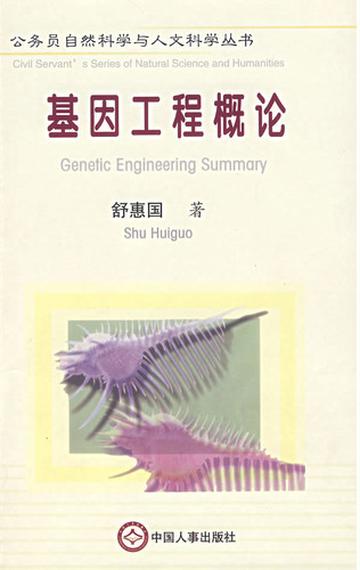





This book is very interesting! It introduces genetic engineering in a simple and easy-to-understand way, so that even a person like me who doesn't know much about life sciences can easily understand it. Just like "A Brief History of Humankind", this book also made me think more about the development and future of mankind. Moreover, there is no annoying preachy content in the book, and science is explained in easy-to-understand language. I think this book is not only suitable for national civil servants, but also for ordinary readers like us who are interested in life sciences.
I really love it