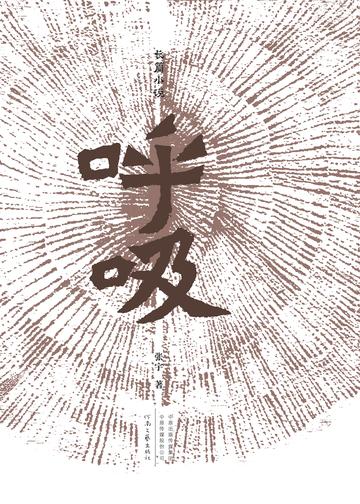
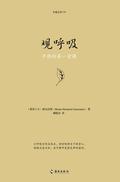
This is a full-length novel that tells the legendary life of Bodhidharma, the founder of Zen Buddhism, and reproduces the process of Zen culture taking root in the Central Plains more than 1,500 years ago and the birth of the first ancestor. The novel reimagines and fictionalizes historical legends and historical records, and "resurrects" Bodhidharma, the founder of Zen Buddhism, in a literary way through stories such as crossing a river with a reed, facing the wall for nine years, standing in the snow with a broken arm, and returning to the west with only his shoes on. At the same time, through Bodhidharma, a Buddhist figure from ancient India, the author conducts new thinking, sorting, interpretation and tribute to traditional Chinese classic culture - from Hetu Luoshu to "Book of Changes" and "Tao Te Ching", from Confucius, Zhuangzi to Laozi.
Zhang Yu uses his excellent novelist's foundation and structural ability, and his broad and in-depth understanding of history and Chinese culture to achieve the integration and unity of history and literature in his works. Moreover, his simple and simple narration allows contemporary readers to read it in one go. It can be said that a true monk only talks about common things. Together with the Bodhidharma written by the author, readers will enter a realm that connects all things with every breath, which is peaceful, vast, profound, pious and charming. This is a book worth reading carefully by every Chinese.
Reader comments
Well written. I couldn't put the book down in my hands. I thought it was a book about self-cultivation, but it turned out to be a book about self-cultivation. After eating it in one go, I felt warm all over.
Incorporate your own knowledge (real insights) into biographical writing, 🐂🐂enjoy your meal! Been taught a lesson
What makes the whole book feel unnatural is that the treatment of sentient beings is a bit stiff (I feel that the reasons are not deep enough) and the superficial repeated emphasis. But the flaws are still not concealed! [Like][Like][Like]
After reading it, if I have to say which sentence I like the most, I can't find it. This book is as refreshing as flowing water. What impressed me are: Bodhidharma's selflessness in meditation practice, the limitations and farewell of Master Bhattacharya, Sakyamuni's "picking up flowers and smiling" to teach with heart, Bodhidharma's concentration and earnestness in reading Chinese classics, Ji Foguang's crying and broken arm when he went up the mountain to worship his master, and the mystery of Bodhidharma's return to the west with only one foot. ... I admire them very much. As the article says, "The birth and construction of a national culture, as well as its continuous development, are the essence and crystallization of the hard work of generations of people." I am grateful to everyone who loves knowledge and pursues wisdom.
Mainly because of the heart. For example, if you plant a tree, you have to cultivate the soil and water it, right? Then you look at the changes every day, when new leaves grow, where they grow, whether they are round or long, aren't these connected? For another example, if you especially like to watch ants climbing trees, then you can watch ants climbing trees. Why does this ant climb the tree? What do you do after climbing a tree? The ant has caught the tree bug, and it wants to go down the tree and send it back to the ant nest. Why doesn't it eat it in one bite? Why send it home? In fact, this is not difficult, the main thing is to pay attention. Whether you can have new discoveries and understandings is fate. In my estimation, this lesson assigned by the Patriarch is just a foundation to first guide us to the right path of practice. Is this true? "
Extra chapter of Shakyamuni Buddha: Zen Buddhism. Bodhidharma, the 28th generation founder of Zen Buddhism, traveled east to China. While studying Chinese Taoism and Confucianism, he spread the core Zen sect of Mahayana Buddhism. "The heart is the Buddha, the Buddha is the heart, there is no Buddha outside the heart, and there is no mind outside the Buddha." He is well-deserved to be the first generation founder of Chinese Zen Buddhism!
We readers have benefited a lot from the hard work the writer put in. This is also the spirit of Mahayana Buddhism promoted and spread by Bodhidharma: benefiting all living beings and serving all living beings! [Like][Like]
Written in an easy-to-understand manner. It first combines the historical context, and then uses the novel structure to vividly portray the image of Patriarch Bodhidharma who cares about the world, making it more immersive and deeply touching. It is recommended that if you want to know more about Bodhidharma, one of the founders, you can read this book.
Bodhidharma said: "I was entrusted by my master to preach in Cathay, which is what we often call China."
Through Bodhidharma's experience, practice and preaching, this book deeply explores the concept and spirit of Zen Buddhism, showing Bodhidharma's pursuit of Buddhism, cultivation of mind and compassion for all living beings, allowing readers to have a deeper understanding of the Zen spirit.
At the same time, the author uses Bodhidharma in the book to sort out and explain traditional Chinese classic culture, from Hetu Luoshu to "Book of Changes", from Laozi, Confucius to Zhuangzi, showing the breadth and depth of Chinese culture, the mutual influence between different schools of thought, and ultimately Zen Buddhism, which was born from the mutual integration of Confucianism, Taoism and Buddhist thought in traditional Chinese culture.
Since it is a novel, a lot of imagination and fiction will be used in the plot and details. For example, stories such as "Crossing the River with a Reed" and "Returning to the West with Only One Footstep" are given new connotations and interpretations in the book, making them more interesting to read.
However, the overall language style is very plain and simple, and the story is told without too many gorgeous words and rhetorical techniques, but it can touch people's hearts and I finished reading it without realizing it.
After reading this book, I discovered that the author is an old man who has gone through many vicissitudes of life and is nearly 70 years old.
The rich life experience and thoughts about life are consistent with the spirit of Zen in the book. Therefore, during the reading process, you will have a peaceful mind and a pure sense of appreciating life indifferently.
(To use Xu Zhisheng's words to describe it, it is absolutely beautiful!)
Zen
Directly pointing at the human heart, seeing one's own nature and becoming a Buddha: emphasizing that everyone possesses Buddha-nature deep in their heart. There is no need to delve too much into external cumbersome rituals and classic teachings. Instead, through inward self-contemplation and insight into one's own mind, one must directly realize one's own inherent Buddha-nature, thereby achieving the state of Buddhahood.
Do not establish words, teach outsiders: do not rely on fixed written classics as the only way of inheritance and enlightenment. The true essence of Buddhism is difficult to accurately convey through words. It pays more attention to heart-to-heart, a look, an action or a short but meaningful sentence to understand the true meaning of Buddhism. (There is no Buddha outside my heart)
Zazen: sit quietly and meditate to calm the body and mind, eliminate distracting thoughts, and focus on inner awareness; try to be aware of the emergence and disappearance of every thought of yours, and not be distracted by distracting thoughts, so as to achieve a deeper understanding and understanding of your own mind. (Mindfulness meditation)
Ordinary mind: Treat everything in life with an ordinary mind, whether facing good or bad times, not being tempted by worldly fame and wealth, nor being depressed and despairing due to setbacks. (Don't be happy with things, don't be sad with yourself)
The present moment is: living completely in the present moment, not dwelling on past memories or worries about the future, understanding the Dharma and realizing enlightenment in every breath and every move of the present moment. (Live in the moment)
The language is fluent, and this book made me get to know Bodhidharma and become interested in Bodhidharma. As a not very diligent Buddhist, if time permits, I will look for more books on Bodhidharma to increase my knowledge and strengthen my heart toward Buddha.
This book is very interesting! It tells the legendary life of Bodhidharma, and also incorporates thoughts on traditional Chinese culture, giving me a deeper understanding of history and culture. The "life is short" mentioned in the book reminded me of my relatives and friends. We must cherish the present and live well. I like Bodhidharma's experiences in different countries in the book. It's exciting and inspiring. It is recommended that you also read this book, you will definitely gain something!
It basically introduces the legendary life of Bodhidharma, giving us a basic understanding of Bodhidharma. This book not only contains history, but also contains the interest of novels, allowing us readers to understand history without losing interest. It is really a good book.
A very good book! It is helpful for individuals to sort out the context of traditional culture, and can provide useful enlightenment for understanding and inheritance of classics. You can get a glimpse of Chinese classics and appreciate a hint of the depth of the classics! I hope more people will read this book. Thanks to the author!
Notice, Pingbai, Yuanbo
I shed tears of emotion, I couldn't help it
The most fascinating and heart-warming book I have ever read! Thanks to the author for his contribution!
Beyond the masterpieces of the old Baiyun, the cultural heritage of the historical city is authentic. Could you please give our fellow villager Zhuangzi a copy? Looking forward to seeing you [KISS]
"Breath" uses the metaphor of breathing to show the complexity and tenacity of life. It contains profound philosophical thoughts in the plain narrative. It is a thought-provoking and unique literary masterpiece.
Bodhidharma is integrated with the sea. The sea is me. I am the sea. I always meditate in the sea! The sea is the son of nature, and Damoda has become the "son of nature"...
It's interesting. You can practice breathing techniques for a while.
When I first saw the title "Breath", I thought it was a book about Qigong. After reading it, I realized it was about the story of Bodhidharma. The content is very down-to-earth and easy to understand, so I read it in one sitting. Worth recommending!
It is easy to understand and many Buddhist principles are clear and clear. I don't know the breathing method in it. Can I learn it?
This is the best novel I have ever read
I've been listening to it for a long time
After reading this book, I have a new understanding of the meaning of Buddhism. It is well written, easy to understand, and explains the profound things in a simple way.
It's well written and very easy to understand. Suddenly it has a new direction.
I have read some books about Buddha, and I think this one is very well written, easy to understand, and the text is beautiful and quite attractive.
It tells stories about Buddhist characters and principles in a simple and easy-to-understand way, which is very good
It's a very good book. After reading it, I have a better understanding of Bodhidharma's life trajectory. The author's writing is simple and easy to understand, but the content is profound. Worth reading.
You can feel that the author writes with care! The content is also good, easy to understand, professional and appreciative.
The novel is wonderfully written! It's very attractive, and there's a feeling that it's still unfinished. It is also very helpful to practitioners, thank you for your dedication!
Well written. I couldn't put the book down in my hands. I thought it was a book about self-cultivation, but it turned out to be a book about self-cultivation. After eating it in one go, I felt warm all over. Incorporate your own knowledge (real insights) into biographical writing, 🐂🐂enjoy your meal! Been taught a lesson What makes the whole book feel unnatural is that the treatment of sentient beings is a bit stiff (I feel that the reasons are not deep enough) and the superficial repeated emphasis. But the flaws are still not concealed! [Like][Like][Like]
After reading it, if I have to say which sentence I like the most, I can't find it. This book is as refreshing as flowing water. What impressed me are: Bodhidharma's selflessness in meditation practice, the limitations and farewell of Master Bhattacharya, Sakyamuni's "picking up flowers and smiling" to teach with heart, Bodhidharma's concentration and earnestness in reading Chinese classics, Ji Foguang's crying and broken arm when he went up the mountain to worship his master, and the mystery of Bodhidharma's return to the west with only one foot. ... I admire them very much. As the article says, "The birth and construction of a national culture, as well as its continuous development, are the essence and crystallization of the hard work of generations of people." I am grateful to everyone who loves knowledge and pursues wisdom.
Mainly because of the heart. For example, if you plant a tree, you have to cultivate the soil and water it, right? Then you look at the changes every day, when new leaves grow, where they grow, whether they are round or long, aren't these connected? For another example, if you especially like to watch ants climbing trees, then you can watch ants climbing trees. Why does this ant climb the tree? What do you do after climbing a tree? The ant has caught the tree bug, and it wants to go down the tree and send it back to the ant nest. Why doesn't it eat it in one bite? Why send it home? In fact, this is not difficult, the main thing is to pay attention. Whether you can have new discoveries and understandings is fate. In my estimation, this lesson assigned by the Patriarch is just a foundation to first guide us to the right path of practice. Is this true? "
Extra chapter of Shakyamuni Buddha: Zen Buddhism. Bodhidharma, the 28th generation founder of Zen Buddhism, traveled east to China. While studying Chinese Taoism and Confucianism, he spread the core Zen sect of Mahayana Buddhism. "The heart is the Buddha, the Buddha is the heart, there is no Buddha outside the heart, and there is no mind outside the Buddha." He is well-deserved to be the first generation founder of Chinese Zen Buddhism! We readers have benefited a lot from the hard work the writer put in. This is also the spirit of Mahayana Buddhism promoted and spread by Bodhidharma: benefiting all living beings and serving all living beings! [Like][Like]
Written in an easy-to-understand manner. It first combines the historical context, and then uses the novel structure to vividly portray the image of Patriarch Bodhidharma who cares about the world, making it more immersive and deeply touching. It is recommended that if you want to know more about Bodhidharma, one of the founders, you can read this book.
Bodhidharma said: "I was entrusted by my master to preach in Cathay, which is what we often call China." Through Bodhidharma's experience, practice and preaching, this book deeply explores the concept and spirit of Zen Buddhism, showing Bodhidharma's pursuit of Buddhism, cultivation of mind and compassion for all living beings, allowing readers to have a deeper understanding of the Zen spirit. At the same time, the author uses Bodhidharma in the book to sort out and explain traditional Chinese classic culture, from Hetu Luoshu to "Book of Changes", from Laozi, Confucius to Zhuangzi, showing the breadth and depth of Chinese culture, the mutual influence between different schools of thought, and ultimately Zen Buddhism, which was born from the mutual integration of Confucianism, Taoism and Buddhist thought in traditional Chinese culture. Since it is a novel, a lot of imagination and fiction will be used in the plot and details. For example, stories such as "Crossing the River with a Reed" and "Returning to the West with Only One Footstep" are given new connotations and interpretations in the book, making them more interesting to read. However, the overall language style is very plain and simple, and the story is told without too many gorgeous words and rhetorical techniques, but it can touch people's hearts and I finished reading it without realizing it. After reading this book, I discovered that the author is an old man who has gone through many vicissitudes of life and is nearly 70 years old. The rich life experience and thoughts about life are consistent with the spirit of Zen in the book. Therefore, during the reading process, you will have a peaceful mind and a pure sense of appreciating life indifferently. (To use Xu Zhisheng's words to describe it, it is absolutely beautiful!) Zen Directly pointing at the human heart, seeing one's own nature and becoming a Buddha: emphasizing that everyone possesses Buddha-nature deep in their heart. There is no need to delve too much into external cumbersome rituals and classic teachings. Instead, through inward self-contemplation and insight into one's own mind, one must directly realize one's own inherent Buddha-nature, thereby achieving the state of Buddhahood. Do not establish words, teach outsiders: do not rely on fixed written classics as the only way of inheritance and enlightenment. The true essence of Buddhism is difficult to accurately convey through words. It pays more attention to heart-to-heart, a look, an action or a short but meaningful sentence to understand the true meaning of Buddhism. (There is no Buddha outside my heart) Zazen: sit quietly and meditate to calm the body and mind, eliminate distracting thoughts, and focus on inner awareness; try to be aware of the emergence and disappearance of every thought of yours, and not be distracted by distracting thoughts, so as to achieve a deeper understanding and understanding of your own mind. (Mindfulness meditation) Ordinary mind: Treat everything in life with an ordinary mind, whether facing good or bad times, not being tempted by worldly fame and wealth, nor being depressed and despairing due to setbacks. (Don't be happy with things, don't be sad with yourself) The present moment is: living completely in the present moment, not dwelling on past memories or worries about the future, understanding the Dharma and realizing enlightenment in every breath and every move of the present moment. (Live in the moment)
The language is fluent, and this book made me get to know Bodhidharma and become interested in Bodhidharma. As a not very diligent Buddhist, if time permits, I will look for more books on Bodhidharma to increase my knowledge and strengthen my heart toward Buddha.
This book is very interesting! It tells the legendary life of Bodhidharma, and also incorporates thoughts on traditional Chinese culture, giving me a deeper understanding of history and culture. The "life is short" mentioned in the book reminded me of my relatives and friends. We must cherish the present and live well. I like Bodhidharma's experiences in different countries in the book. It's exciting and inspiring. It is recommended that you also read this book, you will definitely gain something!
It basically introduces the legendary life of Bodhidharma, giving us a basic understanding of Bodhidharma. This book not only contains history, but also contains the interest of novels, allowing us readers to understand history without losing interest. It is really a good book.
A very good book! It is helpful for individuals to sort out the context of traditional culture, and can provide useful enlightenment for understanding and inheritance of classics. You can get a glimpse of Chinese classics and appreciate a hint of the depth of the classics! I hope more people will read this book. Thanks to the author!
Notice, Pingbai, Yuanbo
I shed tears of emotion, I couldn't help it
The most fascinating and heart-warming book I have ever read! Thanks to the author for his contribution!
Beyond the masterpieces of the old Baiyun, the cultural heritage of the historical city is authentic. Could you please give our fellow villager Zhuangzi a copy? Looking forward to seeing you [KISS]
"Breath" uses the metaphor of breathing to show the complexity and tenacity of life. It contains profound philosophical thoughts in the plain narrative. It is a thought-provoking and unique literary masterpiece.
Bodhidharma is integrated with the sea. The sea is me. I am the sea. I always meditate in the sea! The sea is the son of nature, and Damoda has become the "son of nature"...
It's interesting. You can practice breathing techniques for a while.
When I first saw the title "Breath", I thought it was a book about Qigong. After reading it, I realized it was about the story of Bodhidharma. The content is very down-to-earth and easy to understand, so I read it in one sitting. Worth recommending!
It is easy to understand and many Buddhist principles are clear and clear. I don't know the breathing method in it. Can I learn it?
This is the best novel I have ever read I've been listening to it for a long time
After reading this book, I have a new understanding of the meaning of Buddhism. It is well written, easy to understand, and explains the profound things in a simple way.
It's well written and very easy to understand. Suddenly it has a new direction.
I have read some books about Buddha, and I think this one is very well written, easy to understand, and the text is beautiful and quite attractive.
It tells stories about Buddhist characters and principles in a simple and easy-to-understand way, which is very good
It's a very good book. After reading it, I have a better understanding of Bodhidharma's life trajectory. The author's writing is simple and easy to understand, but the content is profound. Worth reading.
You can feel that the author writes with care! The content is also good, easy to understand, professional and appreciative.
The novel is wonderfully written! It's very attractive, and there's a feeling that it's still unfinished. It is also very helpful to practitioners, thank you for your dedication!
Great book, basic principles of Buddhism
Yes, easy to understand
Simple and easy to understand, benefit a lot