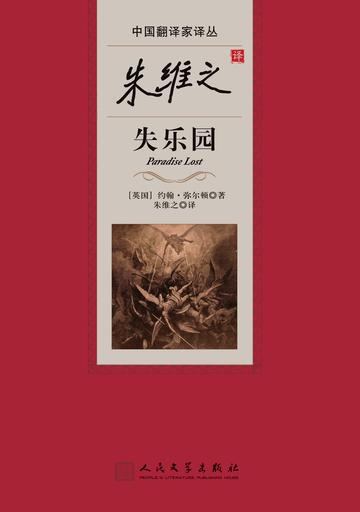
"Paradise Lost", with 12 volumes in total, reveals man's original sin and depravity with an epic and majestic momentum. In the poem, the rebellious angel Satan was sent to hell for resisting the authority of God, but he still did not repent, resisted in every corner, and found the Garden of Eden for revenge. Adam and Eve were tempted by a snake possessed by Satan and ate from the tree of the knowledge of good and evil, which God had expressly forbidden. In the end, Satan and his associates were condemned and turned into snakes, and Adam and Eve were expelled from the Garden of Eden. The poem embodies the poet's lofty spirit of pursuing freedom and is a very important work in the history of world literature and thought.
Reader comments
This book is amazing! The character of Satan impressed me deeply. His line "I would rather be a king in hell than a minister in heaven" is really domineering! His defiance is admirable. And the story of Adam and Eve made me see the frailties of human nature. This book can be regarded as a great work in terms of literary value and ideological depth. Worth reading!
"Paradise Lost" uses the dual narrative of Satan's rebellion against God and the fall of mankind to question the ethical boundaries of free will and oracles. In the thunderous rhetoric of the epic style, the dialectic of good and evil is sublimated into the cosmic poetics of existential dilemma. Zhu Weizhi's translation uses Chinese pronunciation to reconstruct Milton's magnificence, creating an eternal debate between divinity and humanity between the fall of angels and the morning light of Eden.



This book is amazing! The character of Satan impressed me deeply. His line "I would rather be a king in hell than a minister in heaven" is really domineering! His defiance is admirable. And the story of Adam and Eve made me see the frailties of human nature. This book can be regarded as a great work in terms of literary value and ideological depth. Worth reading!
"Paradise Lost" uses the dual narrative of Satan's rebellion against God and the fall of mankind to question the ethical boundaries of free will and oracles. In the thunderous rhetoric of the epic style, the dialectic of good and evil is sublimated into the cosmic poetics of existential dilemma. Zhu Weizhi's translation uses Chinese pronunciation to reconstruct Milton's magnificence, creating an eternal debate between divinity and humanity between the fall of angels and the morning light of Eden.