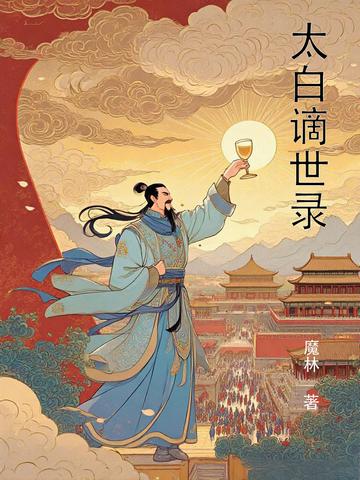
In the prosperous age of Kaiyuan, under the moonlight in Chang'an, Li Bai, dressed in white, splashed ink. The ink of "Qing Ping Diao" was not dry, but the crisp sound of the imperial concubine's golden hairpin falling to the ground awakened the sleeping bronze crane array in the underground palace of Zhongnan Mountain. This "exiled immortal" gradually discovered that his poems were the key to mending the cracks in history - the glass marbles lost during the burning night in Suiye City concealed the shocking secrets of the Wuzhou Dynasty; "Xia Ke Xing" written drunkenly in Hu Ji's wine shop coincided with the military defense plans of the thirty-six countries in the Western Regions; Yelang's sick words during his exile actually predicted the outcome of the Anshi Rebellion.
From Qinglian Township in the middle of Sichuan to Dangtu catching platform, Li Bai pursued not only poems and swords, but also a chess game that spanned time and space. The three-legged black tattoo on Su Wan'er's collarbone, the Qiuci talisman between Pei Shisanniang's eyebrows, the nine-branched lantern in Princess Yuzhen's ice coffin... The three women used love as a lock to involve him in the bronze crane formation left by the empress Wu Zetian. The wolf totem on An Lushan's chest, the cipher text under Li Linfu's tablet, and the remaining score of "Neon Clothes" by the Yongwang East Patrol Fleet have all become fatal moves in the undercurrent of history.
When he discovered that every word of "The Death Song" was rewriting the fate of the Tang Dynasty, the five-year-old himself was crawling from the fire scene of Suiye City to the whirlpool of destiny, and the end of an end using poetry as a blade and soul as a sacrifice was approaching. When Jiang Xin's moon breaks, is the banished immortal a prisoner who fell into ruins, or a prophet who recasts the galaxy? Those burned poem manuscripts contained the hottest truth of the prosperous Tang Dynasty - every drop of spilled ink was the blood that mended the sky.