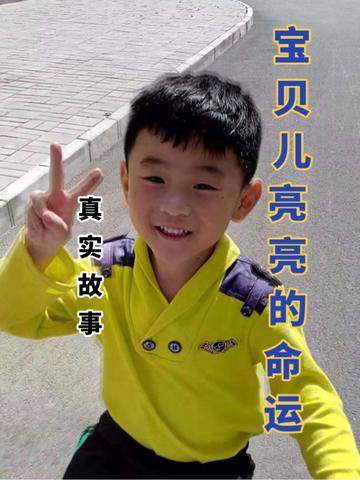
Adapted from the author's own experience - this novel is guided by the time of Liangliang's growth process. It uses the third person to narrate Ding Ding's fourteen years, from getting married and having children, buying a house and repaying a mortgage, to divorce and starting a business, to the secret battle between a single mother and her ex-mother-in-law. During the epidemic, Ding Ding accompanied the two children through a difficult psychological journey. Later, due to various unavoidable conflicts that often occurred in the family, driven by the incident, Liangliang and her mother finally couldn't escape the result of separation.
The story takes place in Tianjin and is a true story. All the scene and place names used are authentic, recreating the original appearance of the story at that time.
The language of the article is concise and simple, with a touch of humor and irony. The dialect with Tianjin regional characteristics (marked with annotations) further enhances the appreciation of the work, making the work more life-like and civilian-oriented, thus shortening the distance between it and the readers.
There is a small design at the beginning of the story. It is supposed to be about Liangliang's experience, but here it is all the people around him who are driving the development of the story. Liangliang has become a pawn of these people, passively accepting their arrangements and controlling his destiny. These people are his dearest and most beloved mother, father, grandmother and grandmother. The love they give him also brings invisible harm to him. This harm is not physical harm, but an invisible mental control and a deprivation of rights. Because he is too young, he has no choice but to let it go. His grandmother (Mr. Li), father (Mumu) and mother (Ding Ding) are both the operators of Bright Destiny and the victims at the same time.