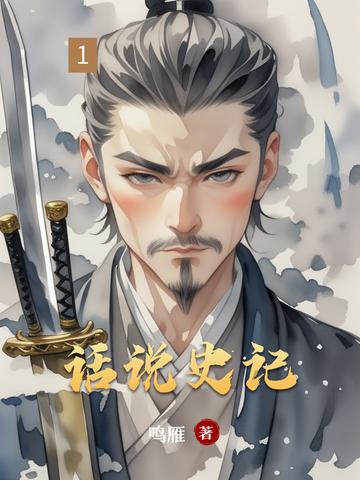
"Historical Records" is one of China's greatest historical works, and it is also a literary classic in ancient China. It has high literary value and was praised by Lu Xun as: the swan song of historians and the unrhymed "Li Sao". But it is difficult to understand because it is written in classical Chinese. Under the premise of respecting the original work, it is designed to be understandable by everyone and encourages readers through storytelling. New works are released. Welcome to Tomato Novel to read my works. I hope you all like them. Your attention is the motivation for my writing. I will try my best to tell every story!
Reader comments
This historical novel is a masterpiece. The author uses delicate brushwork to outline the magnificent picture of the times. The characters are vividly portrayed, and each character bears a distinct mark of the times, yet reveals the eternal brilliance of humanity. The plot is cleverly arranged, with both thrilling historical turns and gentle and touching details of life.
The author's research on the historical background is impressive, and the clothing, utensils, laws and regulations are meticulously restored, making readers feel as if they have traveled through time and space. What is even more valuable is that the novel injects profound humanistic thinking on the basis of respecting historical facts, making the dusty history glow with new vitality.
His writing skills are particularly outstanding, sometimes as sonorous and powerful as a knife carving an axe, and sometimes as graceful and charming as flowing clouds and flowing water. The whole work has a sense of history without losing the beauty of literature. It can be regarded as a model work of historical theme creation.
Following the author's writing style and witnessing the ferocious image of Chi You with a "bronze head and an iron forehead" and the legendary encounters of the Yellow Emperor's "Nine Heavens Mysterious Girl Conferring Military Letters", the original abstract historical concept becomes a tangible and knowable narrative experience.
In terms of character creation, the work has achieved a sublimation from historical records to literary models.
Taking Chapter 6, "The Responsible Emperor Shun" as an example, the author does not stop at the brief record of "Shun cultivated Lishan, fished Leize, and Taohebin" in "Historical Records: The Chronicles of the Five Emperors". Instead, he used specific situations such as Shun's handling of family conflicts and management of tribal alliances to present a three-dimensional image of an ancient sage with both benevolence, wisdom, and political ability.
This kind of characterization not only retains the core of Sima Qian's "real records" spirit, but also incorporates the psychological depth of modern narrative literature, allowing historical figures to break out of the stereotype of facial makeup and become living individuals with complex personalities and real emotions.
What is particularly noteworthy is that the author's interpretation of Yao and Shun's abdication, a prototype event of Chinese political civilization, not only restores the solemn ritual of power transfer in ancient times, but also reveals the core of political ethics of "selecting the worthy and capable", providing contemporary readers with a vivid footnote for understanding traditional Chinese political culture.
The most precious value of this work is that it builds a cognitive bridge connecting classical and modern times.
The author is obviously well versed in the hermeneutic principle of "all history is contemporary history". When describing the Yellow Emperor's governing philosophy of "conquering people with virtue", it naturally extends to thinking about modern leadership; when describing Dayu's public and selfless approach to water control, he cleverly echoes the responsibility ethics of contemporary society.
This dialogue between ancient and modern times is not a rigid comparison, but occurs naturally through the internal logic of the story itself, allowing readers to subtly understand the spiritual code of Chinese civilization while immersed in ancient legends.
When modern readers smile knowingly at chapter titles like "Selecting Successors is Important," they have actually completed the contemporary decoding of traditional political wisdom.
From the perspective of cultural communication, this storytelling rewriting strategy has important enlightenment significance. It proves that classics do not have to stick to the serious face of high-level sermons, and can be appreciated by both refined and popular people through popular expressions.
The author's choice to publish on emerging reading platforms such as Tomato Novels is itself a precise cultural positioning - bringing historical classics into the public reading scene and rebuilding the possibility of in-depth thinking in the era of fragmented reading.
Those "Historical Records" stories that once existed only in academic halls now reach ordinary readers through mobile phone screens. This innovation in communication paths itself reflects the vitality of cultural inheritance.
Of course, any adaptation faces the dilemma of balancing fidelity and creativity.
The author has found a relatively ideal fulcrum between "respecting the original work" and "everyone can understand it". However, the literary processing of some chapters in pursuit of storytelling still requires readers to analyze it with historical common sense.
This kind of adaptation is essentially a creative transformation rather than an academic reproduction. Its value lies not in providing standard answers, but in stimulating readers' interest in returning to the original work.
In this era when cultural inheritance faces multiple challenges, Ming Yan's collection of vernacular "Historical Records" stories provides a valuable path of exploration.
It proves that the vitality of classics does not lie in the worship of being shelved in a shelf, but in the retelling that keeps pace with the times; the wisdom of history does not lie in the textual research in the pile of old papers, but in the activation of the current context.
When the story of Yan, Huang, and Chi You is retold in a language familiar to modern people, and when the governance concepts of Yao, Shun, and Yu are naturally presented through vivid plots, what we see is not only a popular reading, but also a cultural renaissance movement that is still flowing deep.
This work may be the key to opening the cultural treasure house of "Historical Records", allowing more people to have a glimpse of the bright ideological star at the source of Chinese civilization.
This book is wonderful, I keep reading it!
The plot is so well laid out! There are delicate foreshadowings hidden in the interlocking plots, and the twists are both unexpected and reasonable. It is impossible to stop reading, as if you have experienced an entire life with the characters.
This novel is like a carefully constructed maze, with surprising treasures hidden around every corner. The author uses delicate brushstrokes to outline a world with distinct layers. The plot unfolds naturally like clouds and flowing water, but there are hidden mysteries everywhere. The characters are full and three-dimensional, and their joys, sorrows, and joys are vividly displayed on the page, making readers feel as if they are actually there. The rhythm of the story is relaxed and moderate, with thrilling climaxes and tender and delicate depictions. Rich cultural connotations and profound thoughts on life are scattered between the lines like pearls, making it endlessly memorable to read. This is a masterpiece with both ideological depth and artistic charm, and is worth reading again and again.
When we talk about ancient civilization, we can often only piece together its outline from fragments of "Historical Records" and fragments of myths and legends. However, this work uses literary touches to open a vivid window to the source of Chinese civilization for us.
It does not reduce Chi You, Huang Di, Emperor Shun, Confucius, Liu Bang and many other figures into historical symbols, but tells them through "story telling". It turns abstract historical concepts into perceptible and knowable narrative experiences; it turns benevolence and political wisdom from words in historical materials into individuals with warmth and choices.
Especially in its interpretation of Yao and Shun's abdication, a prototype of political civilization, the work not only retains the core of the spirit of "real records", but also incorporates the psychological depth of modern narrative, allowing the ancient wisdom of "selecting the worthy and capable" to still arouse our thinking about the ideal political order in the contemporary era. This kind of writing is not only a reconstruction of history, but also an affectionate look back at the roots of culture, allowing us to re-anchor the spiritual coordinates of Chinese civilization in our dialogue with ancient sages.
"Historical Records" is a popular historical reading. The author took the original "Historical Records" as a sample. On the premise of respecting the original work, he processed and shaped abstract historical figures to make the characters vivid and three-dimensional. Anyone who has read "Historical Records" knows that "Historical Records" is not coherent enough when describing historical events. The same event is recorded in "Benji", "Family" and others in "Biography". It feels like the historical events have no beginning or end and are incomplete. The author did a particularly good job at this point. He organized the historical events in the original work so that the historical events can be presented to the readers in a relatively complete manner. For readers who like history, reading "Historical Records" is a wise choice.
"Historical Records" can be regarded as a sincere work among popular history-telling works: it grasps the core of "historical + literary classics" of "Historical Records", and avoids the reading threshold of classical Chinese. It uses storytelling to break down the content while respecting the original work, making "the historian's swan song" understandable to everyone.
It not only retains the character tension and historical depth of "Historical Records" itself, but also uses colloquial narrative to eliminate the sense of distance from the classics. It is suitable for readers who want to get started with "Historical Records" but are afraid of not being able to read classical Chinese. The author's intentions can be seen from the work. There is no joke or random modification, but "telling good stories" is the core. It not only allows people to easily understand history, but also feels the literary charm of "Historical Records". It is worth reading as a popular historical reading.
This history is well written, the vernacular history is beautiful to read, the author's writing style is fresh and refined, and it is catchy to read. The originally rigid history shines brightly in the author's writing. It is wonderful and worth reading!
The historical story "Hua Shi Ji" uses vernacular form to systematically present to readers thousands of years of historical events and figures from Emperor Xuanyuan to Emperor Wu of the Han Dynasty. Due to the long history, the descriptions of these historical figures in "Historical Records" are relatively abstract. Many historical figures are only mentioned briefly, leaving little impression after reading them. The story-style novel "Historical Records" has better shaped these historical figures, giving these abstract historical figures a three-dimensional sense. The historical events in "Historical Records" are recorded in different chapters because it is a historical book. When reading, it feels like these historical events have no beginning and no end, and are not coherent enough. The author reintegrates these incoherent stories so that these historical events can be presented to readers more completely. "Historical Records" is a good work worth reading.
A very different kind of novel that uses easy-to-understand writing to reproduce historical figures. It is very friendly and natural to read.
The author has profound literary skills, and the characters are vivid and lifelike. He also adds his own opinions to make it unique, as if he is hiding in history!
Recommend it!
A very unique book. On the premise of respecting the original work, it deeply dissects and analyzes historiography, and easily tells the story of history in modern spoken language. It is wonderful! Support the author greatly! [Like][Like][Like]
On the basis of respecting epics, the author tells wonderful stories in plain and popular language. By reading this book, I have a deeper understanding of ancient Chinese history. It is very interesting.
As a writer of classical Chinese, I have always been daunted by classics such as "Historical Records" until I came across this book "Talk about History". The author is really talented. On the premise of respecting the original work, he brings the magnificent history and the characters with distinctive personalities to life. There is no sense of boring translation at all, but it is as cordial as listening to the elders talking about ancient times. After reading this, I just want to say, great book! Worth it for everyone!
The content of the novel is rich and substantial, the plot is vivid, interesting and fascinating, the images are vivid and lifelike, the results are clear and reasonable, the description is meticulous, and it shows many wonderful stories.
I have been reading "Historical Records" for the past few days, and I have been deeply touched by it. The author interprets this masterpiece in vernacular form based on "Historical Records". Many of the characters in "Historical Records" are very abstract. Some characters are just mentioned in one stroke, and there is no understanding after reading them. Under the premise of respecting the original work, the author has reasonably recreated these abstract characters, making the original abstract characters flesh and blood, and the characters have a three-dimensional sense when reading. In addition, when reading "Historical Records", you will feel that the story is incoherent, that it is a kick in the sky and a kick in the ground, and you can't find the main line. The author did a good job at this point. He summarized and organized these incoherent events to make the story coherent and readable. "Historical Records" presents each historical figure in front of readers more accurately. Now I recommend that if you want to understand the more credible history from Emperor Xuanyuan Huang to Emperor Wu of the Han Dynasty, please read "Historical Records"
This vernacular historical record not only retains the charm of "Historical Records", but also creates some abstract characters to make the characters more picturesque. It is a good book for understanding history.
Good book recommendations;
The author has rich and colorful life experience, sharp contrasting characters, reasonable scene design, and appropriate use of time...
Good review!
Decisively add treasures and put them on the bookshelf so that you can continue to read, follow, and update in the future.
"Historical Records" is one of Tomato's works worth reading! It is a sincere and excellent popular interpretation of "Historical Records". It accurately captures its dual classic core of "history + literature" and uses storytelling to break down the content. It not only retains the historical depth and character tension of the original work, but also uses colloquial narrative to lower the reading threshold. There is no joke or random modification. It is a good choice for getting started with "Historical Records".
This historical novel is an excellent work. The author outlines the outline of the times with delicate brushwork, and skillfully interweaves the vicissitudes of history with the fate of the characters. The plot has ups and downs, not only a grand historical narrative, but also a profound portrayal of individual emotions. The characters are full and three-dimensional, and their struggles and choices are moving, as if they are talking to readers through time and space. The writing is concise and powerful, which not only restores the weight of history, but also gives the story a vivid modern flavor. The details are described accurately, and every scene seems to be vividly written on the page, making people immersed in it. The author's careful study of historical facts and artistic processing complement each other, respecting history without losing the charm of literature. This novel is not only a wonderful historical reproduction, but also a thought-provoking fable of human nature.
A shocking work! The author has created a modern version of the historical record with great care. On the basis of respecting the original work, he uses modern techniques and storytelling methods to re-present it, giving readers a different sense of picture and experience, which is easy to understand! Five-star praise!
On the premise of respecting the original work, the author uses a smooth modern narrative tone to make "the historian's swan song" easy to understand. When I first read it, I felt the weight of history. It was very interesting. Those names that once only existed in books suddenly became vivid and three-dimensional.
"Historical Records" uses storytelling to make "Historical Records", the twin gems of history and literature, approachable and relatable. On the premise of respecting the original work, it uses popular language to dismantle the threshold of classical Chinese, so that "the historian's swan song, the blank rhyme "Li Sao"" is no longer a classic shelved on the shelf. The author's eloquent narrative not only retains the weight of history, but is also full of the warmth of the story, allowing us to feel the pulse of three thousand years of Chinese civilization through easy reading. This is not only a popularization of knowledge, but also a spiritual dialogue with the sages, which is worthy of careful reading by every history lover.
It is said that the writing style of the historical records is very skillful. There is ancient charm hidden in the vernacular narrative. Reading it feels like listening to a story, but it does not lose its solemnity. The concept uses characters as anchors, and weaves this season's emperor line, the princes of aristocratic families, and the knight's biography into a big net, making the characters more three-dimensional, more vivid, and more lifelike. The most rare thing is that it sticks to the historical facts and details, and extracts them all from the original text of Shiji, which not only makes history come alive, but also does not lose the penmanship of Tai Shigong. Very good, I recommend it
I finally found a work related to "Historical Records" that I can read! In the past, when I read the classical Chinese version, I would feel sleepy after just two lines. Now, when I read this book, "Talk about History," it is a completely immersive experience. The author clearly sorted out the complicated historical events and created the characters very fully. After reading it, my favorable impression of "Historical Records" immediately increased. It must be praised with five stars!
The content of the novel is rich and substantial, the plot is lively and interesting, the characters are vivid and full, and the description is meticulous.
The author is talented and presents us classic works in a modern, straightforward and easy-to-understand way. An excellent work with historical themes, it contains many imprints of the times. The author's writing style is delicate and profound, and he shows the magnificent picture of the work in a smooth and flowing manner.
Very interesting, a rich piece of work.
It is very atmospheric and eloquent, and the wind of history blows slowly. It is not tiring to read, but also full of interest.
It is easy to understand, concise and clear. I was attracted by it once I read it. It is so well written, with broad ideas and a big pattern.
This article is cleverly conceived and should be considered a masterpiece of historical novels. Through the pen in his hand, the author has created vivid images of the Yellow Emperor, Chi You and other historical figures, which makes reading feel friendly and natural! Great article, I recommend it! [Like][Like]
The writing is exquisite! It is a rare work! Tell readers a historical record in a popular way! Make the story more exciting and coherent! Make readers unable to resist and keep reading! It is a good work worth reading!
The author uses modern straightforward language, [][][] to re-describe - Historical Records - allowing the culture on the bookshelf to evolve into a life experience. When I read it carefully, I deeply felt the charm of history. Those names that once only existed in textbooks suddenly became vivid and three-dimensional. This is definitely an excellent introductory book for those who want to get started with history but are afraid of difficulties.
This historical novel is a masterpiece. The author uses delicate brushwork to outline the magnificent picture of the times. The characters are vividly portrayed, and each character bears a distinct mark of the times, yet reveals the eternal brilliance of humanity. The plot is cleverly arranged, with both thrilling historical turns and gentle and touching details of life. The author's research on the historical background is impressive, and the clothing, utensils, laws and regulations are meticulously restored, making readers feel as if they have traveled through time and space. What is even more valuable is that the novel injects profound humanistic thinking on the basis of respecting historical facts, making the dusty history glow with new vitality. His writing skills are particularly outstanding, sometimes as sonorous and powerful as a knife carving an axe, and sometimes as graceful and charming as flowing clouds and flowing water. The whole work has a sense of history without losing the beauty of literature. It can be regarded as a model work of historical theme creation.
Following the author's writing style and witnessing the ferocious image of Chi You with a "bronze head and an iron forehead" and the legendary encounters of the Yellow Emperor's "Nine Heavens Mysterious Girl Conferring Military Letters", the original abstract historical concept becomes a tangible and knowable narrative experience. In terms of character creation, the work has achieved a sublimation from historical records to literary models. Taking Chapter 6, "The Responsible Emperor Shun" as an example, the author does not stop at the brief record of "Shun cultivated Lishan, fished Leize, and Taohebin" in "Historical Records: The Chronicles of the Five Emperors". Instead, he used specific situations such as Shun's handling of family conflicts and management of tribal alliances to present a three-dimensional image of an ancient sage with both benevolence, wisdom, and political ability. This kind of characterization not only retains the core of Sima Qian's "real records" spirit, but also incorporates the psychological depth of modern narrative literature, allowing historical figures to break out of the stereotype of facial makeup and become living individuals with complex personalities and real emotions. What is particularly noteworthy is that the author's interpretation of Yao and Shun's abdication, a prototype event of Chinese political civilization, not only restores the solemn ritual of power transfer in ancient times, but also reveals the core of political ethics of "selecting the worthy and capable", providing contemporary readers with a vivid footnote for understanding traditional Chinese political culture. The most precious value of this work is that it builds a cognitive bridge connecting classical and modern times. The author is obviously well versed in the hermeneutic principle of "all history is contemporary history". When describing the Yellow Emperor's governing philosophy of "conquering people with virtue", it naturally extends to thinking about modern leadership; when describing Dayu's public and selfless approach to water control, he cleverly echoes the responsibility ethics of contemporary society. This dialogue between ancient and modern times is not a rigid comparison, but occurs naturally through the internal logic of the story itself, allowing readers to subtly understand the spiritual code of Chinese civilization while immersed in ancient legends. When modern readers smile knowingly at chapter titles like "Selecting Successors is Important," they have actually completed the contemporary decoding of traditional political wisdom. From the perspective of cultural communication, this storytelling rewriting strategy has important enlightenment significance. It proves that classics do not have to stick to the serious face of high-level sermons, and can be appreciated by both refined and popular people through popular expressions. The author's choice to publish on emerging reading platforms such as Tomato Novels is itself a precise cultural positioning - bringing historical classics into the public reading scene and rebuilding the possibility of in-depth thinking in the era of fragmented reading. Those "Historical Records" stories that once existed only in academic halls now reach ordinary readers through mobile phone screens. This innovation in communication paths itself reflects the vitality of cultural inheritance. Of course, any adaptation faces the dilemma of balancing fidelity and creativity. The author has found a relatively ideal fulcrum between "respecting the original work" and "everyone can understand it". However, the literary processing of some chapters in pursuit of storytelling still requires readers to analyze it with historical common sense. This kind of adaptation is essentially a creative transformation rather than an academic reproduction. Its value lies not in providing standard answers, but in stimulating readers' interest in returning to the original work. In this era when cultural inheritance faces multiple challenges, Ming Yan's collection of vernacular "Historical Records" stories provides a valuable path of exploration. It proves that the vitality of classics does not lie in the worship of being shelved in a shelf, but in the retelling that keeps pace with the times; the wisdom of history does not lie in the textual research in the pile of old papers, but in the activation of the current context. When the story of Yan, Huang, and Chi You is retold in a language familiar to modern people, and when the governance concepts of Yao, Shun, and Yu are naturally presented through vivid plots, what we see is not only a popular reading, but also a cultural renaissance movement that is still flowing deep. This work may be the key to opening the cultural treasure house of "Historical Records", allowing more people to have a glimpse of the bright ideological star at the source of Chinese civilization. This book is wonderful, I keep reading it!
The plot is so well laid out! There are delicate foreshadowings hidden in the interlocking plots, and the twists are both unexpected and reasonable. It is impossible to stop reading, as if you have experienced an entire life with the characters.
This novel is like a carefully constructed maze, with surprising treasures hidden around every corner. The author uses delicate brushstrokes to outline a world with distinct layers. The plot unfolds naturally like clouds and flowing water, but there are hidden mysteries everywhere. The characters are full and three-dimensional, and their joys, sorrows, and joys are vividly displayed on the page, making readers feel as if they are actually there. The rhythm of the story is relaxed and moderate, with thrilling climaxes and tender and delicate depictions. Rich cultural connotations and profound thoughts on life are scattered between the lines like pearls, making it endlessly memorable to read. This is a masterpiece with both ideological depth and artistic charm, and is worth reading again and again.
When we talk about ancient civilization, we can often only piece together its outline from fragments of "Historical Records" and fragments of myths and legends. However, this work uses literary touches to open a vivid window to the source of Chinese civilization for us. It does not reduce Chi You, Huang Di, Emperor Shun, Confucius, Liu Bang and many other figures into historical symbols, but tells them through "story telling". It turns abstract historical concepts into perceptible and knowable narrative experiences; it turns benevolence and political wisdom from words in historical materials into individuals with warmth and choices. Especially in its interpretation of Yao and Shun's abdication, a prototype of political civilization, the work not only retains the core of the spirit of "real records", but also incorporates the psychological depth of modern narrative, allowing the ancient wisdom of "selecting the worthy and capable" to still arouse our thinking about the ideal political order in the contemporary era. This kind of writing is not only a reconstruction of history, but also an affectionate look back at the roots of culture, allowing us to re-anchor the spiritual coordinates of Chinese civilization in our dialogue with ancient sages.
"Historical Records" is a popular historical reading. The author took the original "Historical Records" as a sample. On the premise of respecting the original work, he processed and shaped abstract historical figures to make the characters vivid and three-dimensional. Anyone who has read "Historical Records" knows that "Historical Records" is not coherent enough when describing historical events. The same event is recorded in "Benji", "Family" and others in "Biography". It feels like the historical events have no beginning or end and are incomplete. The author did a particularly good job at this point. He organized the historical events in the original work so that the historical events can be presented to the readers in a relatively complete manner. For readers who like history, reading "Historical Records" is a wise choice.
"Historical Records" can be regarded as a sincere work among popular history-telling works: it grasps the core of "historical + literary classics" of "Historical Records", and avoids the reading threshold of classical Chinese. It uses storytelling to break down the content while respecting the original work, making "the historian's swan song" understandable to everyone. It not only retains the character tension and historical depth of "Historical Records" itself, but also uses colloquial narrative to eliminate the sense of distance from the classics. It is suitable for readers who want to get started with "Historical Records" but are afraid of not being able to read classical Chinese. The author's intentions can be seen from the work. There is no joke or random modification, but "telling good stories" is the core. It not only allows people to easily understand history, but also feels the literary charm of "Historical Records". It is worth reading as a popular historical reading.
This history is well written, the vernacular history is beautiful to read, the author's writing style is fresh and refined, and it is catchy to read. The originally rigid history shines brightly in the author's writing. It is wonderful and worth reading!
The historical story "Hua Shi Ji" uses vernacular form to systematically present to readers thousands of years of historical events and figures from Emperor Xuanyuan to Emperor Wu of the Han Dynasty. Due to the long history, the descriptions of these historical figures in "Historical Records" are relatively abstract. Many historical figures are only mentioned briefly, leaving little impression after reading them. The story-style novel "Historical Records" has better shaped these historical figures, giving these abstract historical figures a three-dimensional sense. The historical events in "Historical Records" are recorded in different chapters because it is a historical book. When reading, it feels like these historical events have no beginning and no end, and are not coherent enough. The author reintegrates these incoherent stories so that these historical events can be presented to readers more completely. "Historical Records" is a good work worth reading.
A very different kind of novel that uses easy-to-understand writing to reproduce historical figures. It is very friendly and natural to read. The author has profound literary skills, and the characters are vivid and lifelike. He also adds his own opinions to make it unique, as if he is hiding in history! Recommend it!
A very unique book. On the premise of respecting the original work, it deeply dissects and analyzes historiography, and easily tells the story of history in modern spoken language. It is wonderful! Support the author greatly! [Like][Like][Like]
On the basis of respecting epics, the author tells wonderful stories in plain and popular language. By reading this book, I have a deeper understanding of ancient Chinese history. It is very interesting.
As a writer of classical Chinese, I have always been daunted by classics such as "Historical Records" until I came across this book "Talk about History". The author is really talented. On the premise of respecting the original work, he brings the magnificent history and the characters with distinctive personalities to life. There is no sense of boring translation at all, but it is as cordial as listening to the elders talking about ancient times. After reading this, I just want to say, great book! Worth it for everyone!
The content of the novel is rich and substantial, the plot is vivid, interesting and fascinating, the images are vivid and lifelike, the results are clear and reasonable, the description is meticulous, and it shows many wonderful stories.
I have been reading "Historical Records" for the past few days, and I have been deeply touched by it. The author interprets this masterpiece in vernacular form based on "Historical Records". Many of the characters in "Historical Records" are very abstract. Some characters are just mentioned in one stroke, and there is no understanding after reading them. Under the premise of respecting the original work, the author has reasonably recreated these abstract characters, making the original abstract characters flesh and blood, and the characters have a three-dimensional sense when reading. In addition, when reading "Historical Records", you will feel that the story is incoherent, that it is a kick in the sky and a kick in the ground, and you can't find the main line. The author did a good job at this point. He summarized and organized these incoherent events to make the story coherent and readable. "Historical Records" presents each historical figure in front of readers more accurately. Now I recommend that if you want to understand the more credible history from Emperor Xuanyuan Huang to Emperor Wu of the Han Dynasty, please read "Historical Records" This vernacular historical record not only retains the charm of "Historical Records", but also creates some abstract characters to make the characters more picturesque. It is a good book for understanding history.
Good book recommendations; The author has rich and colorful life experience, sharp contrasting characters, reasonable scene design, and appropriate use of time... Good review! Decisively add treasures and put them on the bookshelf so that you can continue to read, follow, and update in the future.
"Historical Records" is one of Tomato's works worth reading! It is a sincere and excellent popular interpretation of "Historical Records". It accurately captures its dual classic core of "history + literature" and uses storytelling to break down the content. It not only retains the historical depth and character tension of the original work, but also uses colloquial narrative to lower the reading threshold. There is no joke or random modification. It is a good choice for getting started with "Historical Records".
This historical novel is an excellent work. The author outlines the outline of the times with delicate brushwork, and skillfully interweaves the vicissitudes of history with the fate of the characters. The plot has ups and downs, not only a grand historical narrative, but also a profound portrayal of individual emotions. The characters are full and three-dimensional, and their struggles and choices are moving, as if they are talking to readers through time and space. The writing is concise and powerful, which not only restores the weight of history, but also gives the story a vivid modern flavor. The details are described accurately, and every scene seems to be vividly written on the page, making people immersed in it. The author's careful study of historical facts and artistic processing complement each other, respecting history without losing the charm of literature. This novel is not only a wonderful historical reproduction, but also a thought-provoking fable of human nature.
A shocking work! The author has created a modern version of the historical record with great care. On the basis of respecting the original work, he uses modern techniques and storytelling methods to re-present it, giving readers a different sense of picture and experience, which is easy to understand! Five-star praise!
On the premise of respecting the original work, the author uses a smooth modern narrative tone to make "the historian's swan song" easy to understand. When I first read it, I felt the weight of history. It was very interesting. Those names that once only existed in books suddenly became vivid and three-dimensional.
"Historical Records" uses storytelling to make "Historical Records", the twin gems of history and literature, approachable and relatable. On the premise of respecting the original work, it uses popular language to dismantle the threshold of classical Chinese, so that "the historian's swan song, the blank rhyme "Li Sao"" is no longer a classic shelved on the shelf. The author's eloquent narrative not only retains the weight of history, but is also full of the warmth of the story, allowing us to feel the pulse of three thousand years of Chinese civilization through easy reading. This is not only a popularization of knowledge, but also a spiritual dialogue with the sages, which is worthy of careful reading by every history lover.
It is said that the writing style of the historical records is very skillful. There is ancient charm hidden in the vernacular narrative. Reading it feels like listening to a story, but it does not lose its solemnity. The concept uses characters as anchors, and weaves this season's emperor line, the princes of aristocratic families, and the knight's biography into a big net, making the characters more three-dimensional, more vivid, and more lifelike. The most rare thing is that it sticks to the historical facts and details, and extracts them all from the original text of Shiji, which not only makes history come alive, but also does not lose the penmanship of Tai Shigong. Very good, I recommend it
I finally found a work related to "Historical Records" that I can read! In the past, when I read the classical Chinese version, I would feel sleepy after just two lines. Now, when I read this book, "Talk about History," it is a completely immersive experience. The author clearly sorted out the complicated historical events and created the characters very fully. After reading it, my favorable impression of "Historical Records" immediately increased. It must be praised with five stars!
The content of the novel is rich and substantial, the plot is lively and interesting, the characters are vivid and full, and the description is meticulous.
The author is talented and presents us classic works in a modern, straightforward and easy-to-understand way. An excellent work with historical themes, it contains many imprints of the times. The author's writing style is delicate and profound, and he shows the magnificent picture of the work in a smooth and flowing manner. Very interesting, a rich piece of work.
It is very atmospheric and eloquent, and the wind of history blows slowly. It is not tiring to read, but also full of interest.
It is easy to understand, concise and clear. I was attracted by it once I read it. It is so well written, with broad ideas and a big pattern.
This article is cleverly conceived and should be considered a masterpiece of historical novels. Through the pen in his hand, the author has created vivid images of the Yellow Emperor, Chi You and other historical figures, which makes reading feel friendly and natural! Great article, I recommend it! [Like][Like]
The writing is exquisite! It is a rare work! Tell readers a historical record in a popular way! Make the story more exciting and coherent! Make readers unable to resist and keep reading! It is a good work worth reading!
The author uses modern straightforward language, [][][] to re-describe - Historical Records - allowing the culture on the bookshelf to evolve into a life experience. When I read it carefully, I deeply felt the charm of history. Those names that once only existed in textbooks suddenly became vivid and three-dimensional. This is definitely an excellent introductory book for those who want to get started with history but are afraid of difficulties.