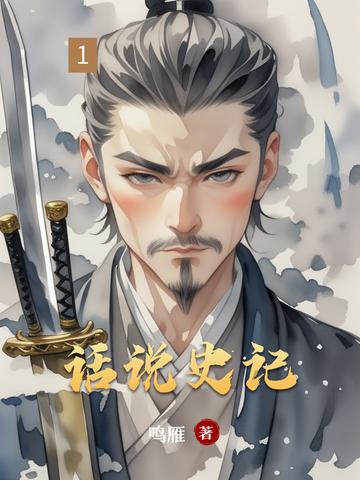
A Tale of the Records of the Grand Historian
话说史记
- Status
- Ongoing
- Length
- 732k Words
- Genre
- Historical
- Subgenre
- Historical & Ancient
- Updated
- 6mo ago
- Source
- Fanqie
Synopsis
386Chapters
7Reads
8.3Score
3Listens
3kReads · all time
More by this author
In booklists 4
Classic Spy Novels: Got Any Recommendations?
348Books35.4MViews2dUpdated

Jiang Nan Has Finished, Chen Shu Has Passed Away. Pray Tell, What Other Masterpieces Does Tomato Have?
368Books226.9kViews23dUpdated
Looking for Historical Stories with Two Male Leads, or Male-Protagonist No-CP Stories
I want a genuine historical setting, not an alternate history! No alternate history! No alternate history! Transmigration stories or historical fan fiction are both fine. I would be immensely grateful.
24Books2kViews24dUpdated
Apocalypse + Reborn + CP + Wish Fulfillment
Looking for books like Reborn at the End of the World: Escaping the Famine with Billions in Supplies.
39Books45.7kViews1moUpdated
Reader comments 114
Translated by Google Translate
It's really pretty! I just don't know why so few people watch it! 💕 💕 💕 💕 💕 💕 💕 💕 💕 💕 💕 💕 💕 💕 💕 💕 💕 💕 💕 💕 💕 💕 💕 💕 💕 💕 💕 💕 💕 💕 💕 💕 💕 💕 💕 💕 💕 💕 💕 💕 💕 💕 💕 💕 💕 💕 💕 💕 💕 💕 💕 💕 💕 💕
This historical novel is a masterpiece. The author uses delicate brushwork to outline the magnificent picture of the times. The characters are vividly portrayed, and each character bears a distinct mark of the times, yet reveals the eternal brilliance of humanity. The plot is cleverly arranged, with both thrilling historical turns and gentle and touching details of life. The author's research on the historical background is impressive, and the clothing, utensils, laws and regulations are meticulously restored, making readers feel as if they have traveled through time and space. What is even more valuable is that the novel injects profound humanistic thinking on the basis of respecting historical facts, making the dusty history glow with new vitality. His writing skills are particularly outstanding, sometimes as sonorous and powerful as a knife carving an axe, and sometimes as graceful and charming as flowing clouds and flowing water. The whole work has a sense of history without losing the beauty of literature. It can be regarded as a model work of historical theme creation.
The plot is so well laid out! There are delicate foreshadowings hidden in the interlocking plots, and the twists are both unexpected and reasonable. It is impossible to stop reading, as if you have experienced an entire life with the characters.
Following the author's writing style and witnessing the ferocious image of Chi You with a "bronze head and an iron forehead" and the legendary encounters of the Yellow Emperor in the "Nine Heavens Mysterious Girl's Military Letter", the original abstract historical concept becomes a tangible and knowable narrative experience. In terms of character creation, the work has achieved a sublimation from historical records to literary models. Taking Chapter 6, "The Responsible Emperor Shun" as an example, the author does not stop at the brief record of "Shun cultivated Lishan, fished Leize, and Taohebin" in "Historical Records: The Chronicles of the Five Emperors". Instead, he used specific situations such as Shun's handling of family conflicts and management of tribal alliances to present a three-dimensional image of an ancient sage with both benevolence, wisdom, and political ability. This kind of characterization not only retains the core of Sima Qian's "real records" spirit, but also incorporates the psychological depth of modern narrative literature, allowing historical figures to break out of the stereotype of facial makeup and become living individuals with complex personalities and real emotions. What is particularly noteworthy is that the author's interpretation of Yao and Shun's abdication, a prototype event of Chinese political civilization, not only restores the solemn ritual of power transfer in ancient times, but also reveals the core of political ethics of "selecting the worthy and capable", providing contemporary readers with a vivid footnote for understanding traditional Chinese political culture. The most precious value of this work is that it builds a cognitive bridge connecting classical and modern times. The author is obviously well versed in the hermeneutic principle of "all history is contemporary history". When describing the Yellow Emperor's governing concept of "conquering people with virtue", it naturally extends to thinking about modern leadership; when describing Dayu's public and selfless approach to water control, he cleverly echoes the responsibility ethics of contemporary society. This kind of dialogue between ancient and modern times is not a rigid comparison, but occurs naturally through the internal logic of the story itself, allowing readers to subtly understand the spiritual code of Chinese civilization while immersed in ancient legends. When modern readers smile knowingly at chapter titles like "Selecting Successors is Important," they have actually completed the contemporary decoding of traditional political wisdom. From the perspective of cultural communication, this storytelling rewriting strategy has important enlightenment significance. It proves that classics do not have to stick to the serious face of high-level sermons, and can be appreciated by both refined and popular people through popular expressions. The author's choice to publish on emerging reading platforms such as Tomato Novel is itself a precise cultural positioning - bringing historical classics into the public reading scene and rebuilding the possibility of in-depth thinking in the era of fragmented reading. Those "Historical Records" stories that once existed only in academic halls now reach ordinary readers through mobile phone screens. This innovation in communication paths itself reflects the vitality of cultural inheritance. Of course, any adaptation faces the dilemma of balancing fidelity and creativity. The author has found a relatively ideal fulcrum between "respecting the original work" and "everyone can understand it". However, the literary processing of some chapters in pursuit of storytelling still requires readers to analyze it with historical common sense. This kind of adaptation is essentially a creative transformation rather than an academic reproduction. Its value lies not in providing standard answers, but in stimulating readers' interest in returning to the original work. In this era when cultural inheritance faces multiple challenges, Ming Yan's collection of vernacular "Historical Records" stories provides a valuable path of exploration. It proves that the vitality of classics does not lie in the worship of being shelved in a shelf, but in the retelling that keeps pace with the times; the wisdom of history does not lie in the textual research in the pile of old papers, but in the activation of the current context. When the stories of Yan, Huang, and Chi You are retold in a language familiar to modern people, and when the governance concepts of Yao, Shun, and Yu are naturally presented through vivid plots, what we see is not only a popular reading, but also a cultural renaissance movement that flows deeply. This work may be the key to opening the cultural treasure house of "Historical Records", allowing more people to have a glimpse of the bright ideological star at the source of Chinese civilization.
This novel is like a carefully constructed maze, with surprising treasures hidden around every corner. The author uses delicate brushstrokes to outline a world with distinct layers. The plot unfolds naturally like clouds and flowing water, but there are hidden mysteries everywhere. The characters are full and three-dimensional, and their joys, sorrows, and joys are vividly displayed on the page, making readers feel as if they are actually there. The rhythm of the story is relaxed and moderate, with thrilling climaxes and tender and delicate depictions. Rich cultural connotations and profound thoughts on life are scattered between the lines like pearls, making it endlessly memorable to read. This is a masterpiece with both ideological depth and artistic charm, and is worth reading again and again.
So wonderful and so attractive! In the novel, following the author's pen and ink, and looking back at Cangjie's search for wisdom in "gazing at the stars and making characters" and Kuafu's persistence in "running across the river every day" without regrets, those ancient legends that have been deposited in historical records have transformed into perceptible and knowable spiritual coordinates. In terms of character creation, the work has completed the leap from symbolic image to three-dimensional personality. Taking the chapter "Kuafu Chasing the Sun" as an example, the author does not stop at the simple description in "The Classic of Mountains and Seas" that "thirst wants to drink, drink from the river and Wei". Instead, he describes Kuafu's burning faith when chasing the sun, his compassion when he passes by the tribes, and his selfless mind when he abandons his staff to transform into the forest, vividly outlining an ancient pioneer with both idealism and humanistic care. This creative technique not only retains the "weird and strange" imaginative qualities of ancient myths, but also gives the characters an emotional warmth that directly touches people's hearts. The mythical characters are no longer cold written records in books, but have become symbols of perseverance and dedication rooted in the national memory. Give the author five stars!
Reading this book, it feels like you can hear Tai Shigong whispering in your ears, and see emperors and generals acting out their lives on the historical stage. It is not only a popular historical reading, but also a window that allows us to understand the wisdom and limitations of the ancients through stories, and then think about today's life and choices. If you are interested in history but are worried about the obscurity of classical Chinese, "Historical Records" is undoubtedly an excellent introductory book. It makes history no longer distant and makes classics within reach.
The most rare thing about "Speaking of Historical Records" is the awe of the original work. The author recounts it in a plain style without adding any drama. The words, deeds and events of the characters are all based on the original text of "Historical Records". The concept follows Tai Shigong's narrative logic and uses modern language to eliminate the barriers between ancient texts without losing the historical depth. Reading it is like listening to someone slowly telling history, and every detail is supported by references, allowing readers to touch the most authentic historical memory in easy reading. It is a good popular annotation of the original work. Recommend it😄
When we talk about ancient civilization, we can often only piece together its outline from fragments of "Historical Records" and fragments of myths and legends. However, this work uses literary touches to open a vivid window to the source of Chinese civilization for us. It does not reduce Chi You, Huang Di, Emperor Shun, Confucius, Liu Bang and many other figures into historical symbols, but tells them through "story telling". It turns abstract historical concepts into perceptible and knowable narrative experiences; it turns benevolence and political wisdom from words in historical materials into individuals with warmth and choices. Especially in its interpretation of Yao and Shun's abdication, a prototype of political civilization, the work not only retains the core of the spirit of "real records", but also incorporates the psychological depth of modern narrative, allowing the ancient wisdom of "selecting the worthy and capable" to still arouse our thinking about the ideal political order in the contemporary era. This kind of writing is not only a reconstruction of history, but also an affectionate look back at the roots of culture, allowing us to re-anchor the spiritual coordinates of Chinese civilization in our dialogue with ancient sages.
"Historical Records" is a popular historical reading. The author took the original "Historical Records" as a sample. On the premise of respecting the original work, he processed and shaped abstract historical figures to make the characters vivid and three-dimensional. Anyone who has read "Historical Records" knows that "Historical Records" is not coherent enough when describing historical events. The same event is recorded in "Benji", "Family" and others in "Biography". It feels like the historical events have no beginning or end and are incomplete. The author did a particularly good job at this point. He organized the historical events in the original work so that the historical events can be presented to the readers in a relatively complete manner. For readers who like history, reading "Historical Records" is a wise choice.