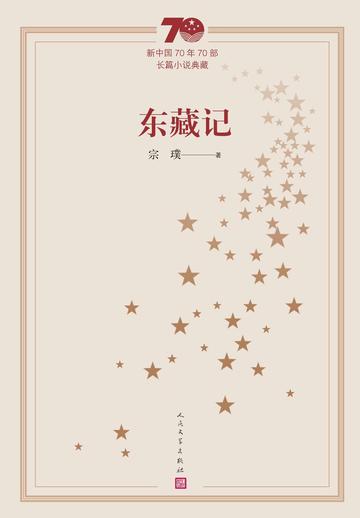
"The Legend of Dongzang" is a novel written by the contemporary female writer Zong Pu. It is the sequel to the novel "The Story of the Southern Crossing" and was first published in 2000. The characters in the novel are based on Professor Meng Yue of the History Department of Minglun University, his wife Lu Bichu, and his daughters Meng Liji and Meng Lingji. They are radiated to nearly a hundred people around Professor Meng Yue's relatives, friends, and colleagues. It tells the story of the personal encounters, emotional experiences, and spiritual growth of a group of intellectuals who came south from the capital during the Anti-Japanese War. The novel uses a warm tone to show the perseverance and broad-mindedness of the Chinese nation. In 2005, "Dongzang Ji" won the 6th Mao Dun Literature Award.
Reader comments
The teacher led a group of students to hide in Tibet during the Anti-Japanese War. Running to the police was a common practice. Although running to the police was hard, during the war years, it was a blessing to be alive. The teacher and the students used the cemetery as a classroom to avoid the artillery fire of the war. They were not afraid of hardship or death, and they could study tirelessly in an environment where they were short of food and clothing.
This book made me feel for myself, especially the suffering and resilience of people during the war. I just had a baby, and I can appreciate even more the sacrifices the mothers in the book make for their children and families. Lu Bichu is a character that I admire very much. She remains strong in a difficult environment and reminds me of my own mother. Moreover, the writing of this book is beautiful and I was immersed in it. I think it is not only a literary work, but also an empowering book.
It introduces the hard and high-spirited life of teachers and students at a university in Kunming during the Anti-Japanese War. Two sentences are deeply touching. One is that youth can melt hardships. The other is Principal Qin's last speech, never surrender. I believe that no matter whether you are young or not, you should never surrender to life and maintain a high-spirited vitality.


The teacher led a group of students to hide in Tibet during the Anti-Japanese War. Running to the police was a common practice. Although running to the police was hard, during the war years, it was a blessing to be alive. The teacher and the students used the cemetery as a classroom to avoid the artillery fire of the war. They were not afraid of hardship or death, and they could study tirelessly in an environment where they were short of food and clothing.
This book made me feel for myself, especially the suffering and resilience of people during the war. I just had a baby, and I can appreciate even more the sacrifices the mothers in the book make for their children and families. Lu Bichu is a character that I admire very much. She remains strong in a difficult environment and reminds me of my own mother. Moreover, the writing of this book is beautiful and I was immersed in it. I think it is not only a literary work, but also an empowering book.
It introduces the hard and high-spirited life of teachers and students at a university in Kunming during the Anti-Japanese War. Two sentences are deeply touching. One is that youth can melt hardships. The other is Principal Qin's last speech, never surrender. I believe that no matter whether you are young or not, you should never surrender to life and maintain a high-spirited vitality.