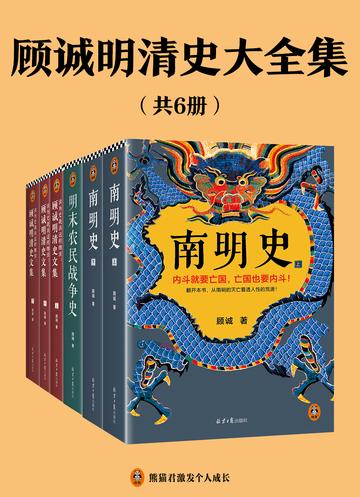
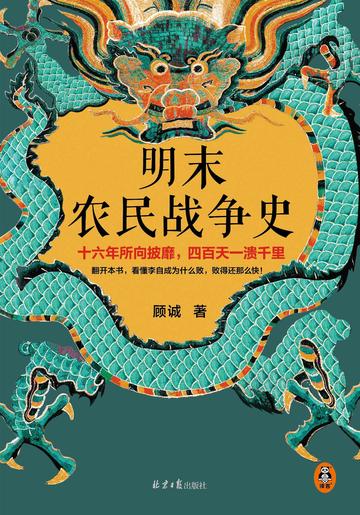
A History of the Peasant Wars at the End of the Ming Dynasty: In March 1644, Li Zicheng captured Beijing and the Ming dynasty fell. By then, he had been fighting for sixteen years. In April of the same year, Li Zicheng was defeated at Shanhai Pass and the Qing army entered the pass. The following May, Li Zicheng died in battle at Jiugong Mountain in Huguang, just four hundred days after the fall of the Ming dynasty.
Losing the battle for public opinion, making strategic blunders, and choosing the wrong people! Open this book and find out why Li Zicheng was defeated, and why his defeat came so quickly!
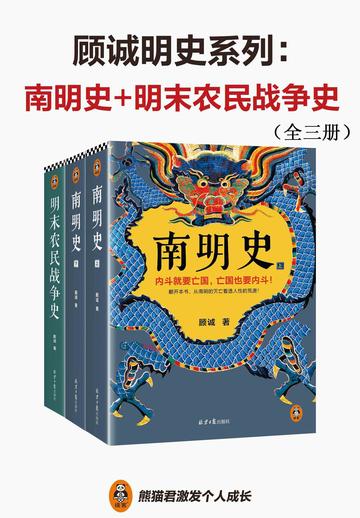
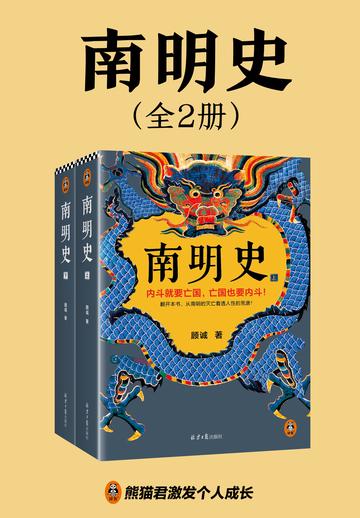
A History of the Southern Ming: They’d rather destroy the country through infighting than stop fighting even as the country fell! Nothing reveals the absurdity of human nature more clearly.
In March 1644, Li Zicheng’s Dashun army captured Beijing, and the Chongzhen Emperor hanged himself. With the support of military leaders such as Ma Shiying, Prince Fu Zhu Yousong ascended the throne in Nanjing and adopted the reign title Hongguang, but this only ushered in more infighting. The Hongguang, Longwu, and Yongli regimes succeeded one another. Through ceaseless internal strife, the Southern Ming court squandered countless chances to turn the tide and marched toward defeat.
Open Gu Cheng’s history series on the Ming dynasty and see the absurdity of human nature through the fall of the Ming.
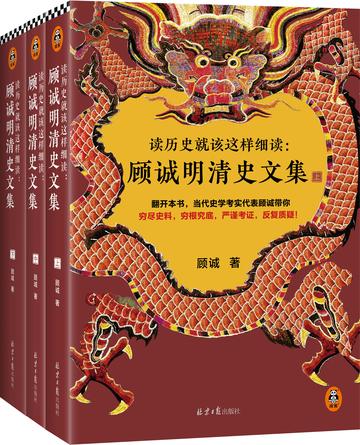
Reading History Closely: A Collection of Gu Cheng’s Essays on the Ming and Qing Dynasties:
Did Li Yan, the great general under Li Zicheng, even exist?
Was Shen Wansan, “the richest man of the Ming dynasty,” actually from the Yuan dynasty?
Behind these seemingly shocking claims lies Gu Cheng’s painstaking scrutiny of historical sources and rigorous reasoning. When writing his essay “Questioning Li Yan,” for example, he consulted not only archives and collected works, but more than a thousand local gazetteers, leading him to conclude that Li Yan, though mentioned in numerous historical records, was in fact fictional. In “A Study of Shen Wansan and His Family,” he points out that various sources, including the History of the Ming, are mistaken: Shen Wansan, “the richest man of the Ming dynasty,” was actually from the Yuan dynasty. His essays “A New Investigation into the Number of Cultivated Fields in the Early Ming,” “Changes to the Military Guard System in the Qing Dynasty,” “The Ming Empire’s System of Territorial Administration,” and “On Military Households in the Ming Dynasty” have earned an unshakable place as classics in the academic world thanks to their pioneering contributions.
Open this book and let Gu Cheng, a leading contemporary scholar of historical source criticism, guide you through exhaustive research, meticulous investigation, rigorous verification, and relentless questioning!
After reading Mr. Gu Cheng's comments on Mr. Yao Xueyin's "Jiashen Three Centenary Ceremony", I really feel that Mr. Gu Cheng is worthy of a generation of historians. I admire his people's view of history and his rigorous attitude towards history in an objective and fair manner.
This book is rich in content, and through in-depth research on historical details, it reveals many truths hidden behind the history of the Ming and Qing Dynasties. The author's rigorous academic attitude is admirable. Reading this book feels like being in a long scroll of history and having a dialogue with the ancients. Especially the interpretation of the demise of the Ming Dynasty and the internal strife in the Southern Ming Dynasty gave me a deeper understanding of the rise and fall of history.
Eye-opening and worth reading
Not bad, but more professional
Those with low blood pressure can watch it, but those with high blood pressure should not watch [Eat Melon]





After reading Mr. Gu Cheng's comments on Mr. Yao Xueyin's "Jiashen Three Centenary Ceremony", I really feel that Mr. Gu Cheng is worthy of a generation of historians. I admire his people's view of history and his rigorous attitude towards history in an objective and fair manner.
This book is rich in content, and through in-depth research on historical details, it reveals many truths hidden behind the history of the Ming and Qing Dynasties. The author's rigorous academic attitude is admirable. Reading this book feels like being in a long scroll of history and having a dialogue with the ancients. Especially the interpretation of the demise of the Ming Dynasty and the internal strife in the Southern Ming Dynasty gave me a deeper understanding of the rise and fall of history.
Eye-opening and worth reading
Not bad, but more professional
Those with low blood pressure can watch it, but those with high blood pressure should not watch [Eat Melon]
Very nice, I like it very much
This book is okay