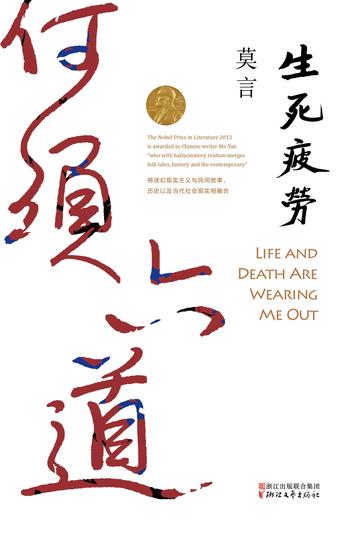
"Life and Death" is a long masterpiece in which Mo Yan observes history in the form of allegory and writes about reality through absurd imagination, thus telling the story of the joys and sorrows, ups and downs of a peasant family for more than half a century. In the novel, Ximen Nao, a landowner who was unjustly killed, went through six reincarnations, becoming a donkey, a cow, a pig, a dog, a monkey, and finally a big-headed baby, talking endlessly about his bizarre experiences in each life. The novel transcends life and death through the imagination of six reincarnations, sympathizes with the unpredictable fate of historical changes, and also praises the persistent vitality of farmers living on this land from generation to generation.
Reader comments
If you can watch it, it will become available to members?
After reading "Life and Death Fatigue", I couldn't get back to my senses for a long time, thinking repeatedly about the strange colors of the Six Paths of Reincarnation, especially under Mo Yan's bizarre and bizarre descriptions. This book has a strong magical color. I was attracted by this layer of color when I first read it, and it is only through repeated reading that I can understand Mo Yan's story about life under reincarnation. Such compassionate feelings are also an explanation of Mo Yan's view on life and death. It is also the absurdity of the world happening one after another, roaring in, and then quietly leaving, leaving a deserted land without any grass. It is a contradiction between worrying and feeling that it should be like this. It can only be said that Mo Yan's black humor is getting better and better. It is indeed tears in laughter and worry in joy.
"Life and Death Fatigue" won the first prize of the "Dream of Red Mansions Award" in the second Hong Kong Baptist University World Chinese Novel Award. This is a book by Mo Yan published in 2006. Through the eyes of various animals, the book observes and appreciates the complex, noisy, suffering-filled transformation history of Chinese rural society over the past fifty years. Like a historical record, it takes readers from the Great Leap Forward era to modern reform and opening up and then to the market economy. This book is a long political drama that Mo Yan faithfully reflects history.
Unique, it traces one's past and present lives from the perspective of animals. Wonderful. The content is colorful, humorous and interesting, and the good and evil of human nature are vividly displayed.
This book uses a fable to reflect the historical changes and social reality of rural China. It tells the story of the ups and downs of a peasant family for more than half a century. One of the landlords, Ximen Nao, was unjustly killed and went through six reincarnations. He became a donkey, a cow, a pig, a dog, a monkey, and finally was reincarnated as a big-headed baby and told about his experiences in each life. Through such imagination, the novel transcends the boundaries between life and death, expresses compassion for the impermanence of fate in historical changes, and also praises the persistent vitality of farmers living on the land from generation to generation. The book not only contains profound historical reflections and discussions on human nature, but also has a very tense storyline and rich and rustic language style. It is a literary masterpiece worth reading.
The narrative of this book is plain, humorous and interesting. Narrated from the perspectives of Lan Jiefang and Da Tou'er, the story revolves around Ximen Nao's unjust and tragic death and his reincarnation as a donkey, cow, pig, dog, and Da Tou'er. Taking our country from the 1940s and 1950s to the beginning of the century as the historical background, it describes the rural living conditions of our country and the simple and ordinary life of farmers who are born in the land and return to the land. Ximen Nao was filled with hatred because of his tragic death. He reincarnated four times in the animal realm. During his several reincarnations, Ximen Nao became less and less resentful. Finally, he reincarnated in the human realm, the six realms of reincarnation, and became a Buddha. This book is magical realism, similar to One Hundred Years of Solitude, and has rich imagination. However, compared to One Hundred Years of Solitude, the relationship between the characters in this book is easier to sort out, and the historical background is more intimate. Reality and magic are combined, with real feelings and unrestrained imagination. Worth reading.
Crazy exploration on the edge of pornography and reaction
After reading "Life and Death Fatigue", I was greatly shocked. The genius narrative technique often made my eyes shine, and I couldn't help but laugh. He is a writer with a very distinctive style. Mo Yan used extremely exaggerated language to reflect the hypocritical reality, which can also be corroborated with many social realities. It made me reflect while laughing, and I was able to look at problems from multiple angles. I learned a lot of new knowledge and got new inspiration. "Life and Death Fatigue" really deserves the award. The fusion of chapter style and folklore gives this book the charm of a classical novel, especially the narrative of six reincarnations, which makes this book more magical realism.
What an open-minded child! He has been filial, simple, kind and perseverant since he was a child. It would be great if he likes another girl. Unfortunately, fate is like this. Many times he has no choice but to develop in the direction of a happy ending. What I love most is the collaboration and openness between mother and son.
It's very beautiful. Mo Yan's works are so wonderful!
The combination of rural magicism and the background of the times, as well as Mo Yan's own personal experience, is really admirable.
I'm watching it, but I'm halfway through it, so why am I a member and not allowed to watch it?
What a difference
It's wonderful, the story has ups and downs.
A faithful representation of original sin.
Look forward, don't look back
It would have been better if the plot had been earlier
Ridiculous humor.
It has the same purpose as "One Hundred Years of Solitude". They all tell the development of the family under the general background from different angles.
It is both big history and small history. Although it is far, it is also close. Although strange, it is blameless. Because this world is indeed not that logical.
If you can watch it, it will become available to members?
After reading "Life and Death Fatigue", I couldn't get back to my senses for a long time, thinking repeatedly about the strange colors of the Six Paths of Reincarnation, especially under Mo Yan's bizarre and bizarre descriptions. This book has a strong magical color. I was attracted by this layer of color when I first read it, and it is only through repeated reading that I can understand Mo Yan's story about life under reincarnation. Such compassionate feelings are also an explanation of Mo Yan's view on life and death. It is also the absurdity of the world happening one after another, roaring in, and then quietly leaving, leaving a deserted land without any grass. It is a contradiction between worrying and feeling that it should be like this. It can only be said that Mo Yan's black humor is getting better and better. It is indeed tears in laughter and worry in joy.
"Life and Death Fatigue" won the first prize of the "Dream of Red Mansions Award" in the second Hong Kong Baptist University World Chinese Novel Award. This is a book by Mo Yan published in 2006. Through the eyes of various animals, the book observes and appreciates the complex, noisy, suffering-filled transformation history of Chinese rural society over the past fifty years. Like a historical record, it takes readers from the Great Leap Forward era to modern reform and opening up and then to the market economy. This book is a long political drama that Mo Yan faithfully reflects history.
Unique, it traces one's past and present lives from the perspective of animals. Wonderful. The content is colorful, humorous and interesting, and the good and evil of human nature are vividly displayed.
This book uses a fable to reflect the historical changes and social reality of rural China. It tells the story of the ups and downs of a peasant family for more than half a century. One of the landlords, Ximen Nao, was unjustly killed and went through six reincarnations. He became a donkey, a cow, a pig, a dog, a monkey, and finally was reincarnated as a big-headed baby and told about his experiences in each life. Through such imagination, the novel transcends the boundaries between life and death, expresses compassion for the impermanence of fate in historical changes, and also praises the persistent vitality of farmers living on the land from generation to generation. The book not only contains profound historical reflections and discussions on human nature, but also has a very tense storyline and rich and rustic language style. It is a literary masterpiece worth reading.
The narrative of this book is plain, humorous and interesting. Narrated from the perspectives of Lan Jiefang and Da Tou'er, the story revolves around Ximen Nao's unjust and tragic death and his reincarnation as a donkey, cow, pig, dog, and Da Tou'er. Taking our country from the 1940s and 1950s to the beginning of the century as the historical background, it describes the rural living conditions of our country and the simple and ordinary life of farmers who are born in the land and return to the land. Ximen Nao was filled with hatred because of his tragic death. He reincarnated four times in the animal realm. During his several reincarnations, Ximen Nao became less and less resentful. Finally, he reincarnated in the human realm, the six realms of reincarnation, and became a Buddha. This book is magical realism, similar to One Hundred Years of Solitude, and has rich imagination. However, compared to One Hundred Years of Solitude, the relationship between the characters in this book is easier to sort out, and the historical background is more intimate. Reality and magic are combined, with real feelings and unrestrained imagination. Worth reading.
Crazy exploration on the edge of pornography and reaction
After reading "Life and Death Fatigue", I was greatly shocked. The genius narrative technique often made my eyes shine, and I couldn't help but laugh. He is a writer with a very distinctive style. Mo Yan used extremely exaggerated language to reflect the hypocritical reality, which can also be corroborated with many social realities. It made me reflect while laughing, and I was able to look at problems from multiple angles. I learned a lot of new knowledge and got new inspiration. "Life and Death Fatigue" really deserves the award. The fusion of chapter style and folklore gives this book the charm of a classical novel, especially the narrative of six reincarnations, which makes this book more magical realism.
What an open-minded child! He has been filial, simple, kind and perseverant since he was a child. It would be great if he likes another girl. Unfortunately, fate is like this. Many times he has no choice but to develop in the direction of a happy ending. What I love most is the collaboration and openness between mother and son.
It's very beautiful. Mo Yan's works are so wonderful! The combination of rural magicism and the background of the times, as well as Mo Yan's own personal experience, is really admirable.
I'm watching it, but I'm halfway through it, so why am I a member and not allowed to watch it?
What a difference
It's wonderful, the story has ups and downs.
A faithful representation of original sin.
Look forward, don't look back
It would have been better if the plot had been earlier
Ridiculous humor. It has the same purpose as "One Hundred Years of Solitude". They all tell the development of the family under the general background from different angles. It is both big history and small history. Although it is far, it is also close. Although strange, it is blameless. Because this world is indeed not that logical.
Wonderful, this magical content is well written