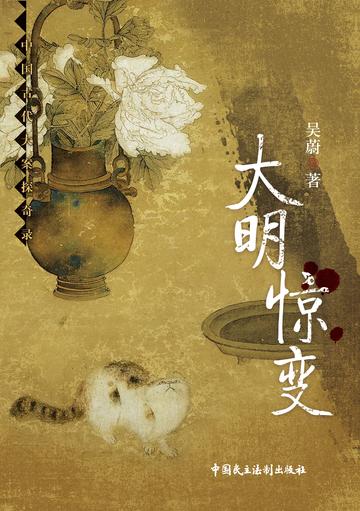
Ming Taizu Zhu Yuanzhang started out as a poor monk, expelled the Mongolian forces back to his hometown in Mobei, single-handedly founded the Ming Dynasty, and worked hard to stabilize the country.
However, a few years after his death, there was the Battle of Jingnan. The designated successor, Jianwen Emperor Zhu Wenwen, was defeated and fled disguised as a monk.
Is it a coincidence or a cycle of cause and effect? Zhu Di, the founder of the Ming Dynasty, seized the throne by force and became the world-famous Yongle Emperor. However, the fate of his descendants was ups and downs. They struggled to ascend the throne, and some died unexpectedly and suddenly, or died early in their prime.
Is it the fickleness of fate or retribution from heaven? By the 14th year of Zhengtong (1449), 500,000 elite Ming troops were annihilated in Tumubao, and Zhu Qizhen, the Yingzong of the Ming Dynasty, was captured by the Mongolian Oara. As a result, the Ming Dynasty encountered the biggest crisis since its founding. This setback and defeat not only became a turning point in the rise and fall of the dynasty, but also a turning point in the lives of the Ying and Jing emperors, Yu Qian and many other subjects, thus creating a sad and deplorable history...
Reader comments
The historical details in this book are very vivid, making me feel like I have traveled back to the Ming Dynasty. I especially like Yu Qian in the book. He stood up when the country was in crisis, which is admirable. The author's writing style is very realistic, the writing is smooth, and the depiction of historical figures is very delicate, which gave me a deeper understanding of that era.
The author focuses on the thrilling event of the Tumubao Incident, and unfolds the politics, military, and world affairs of the mid-Ming Dynasty in front of readers. In the book, Yu Qian resists all opinions, opposes the Southerners, and takes up the heavy responsibility of defending the capital, but in the end he ends up having his family exterminated. The reader's writing is delicate and depicts many colorful characters, making the article more readable. This is a novel with a historical theme, bearing in mind the history and not forgetting the national humiliation. It is worth recommending
It sounds very nice, I love listening to it!
Good, good, good, good, good, good, good
It sounds good. I like it.
Although the book is finished, my heart has been unable to calm down for a long time, and it still remains in the blood of thousands of years.
The language is concise and clear, and you can understand it as soon as you read it.

The historical details in this book are very vivid, making me feel like I have traveled back to the Ming Dynasty. I especially like Yu Qian in the book. He stood up when the country was in crisis, which is admirable. The author's writing style is very realistic, the writing is smooth, and the depiction of historical figures is very delicate, which gave me a deeper understanding of that era.
The author focuses on the thrilling event of the Tumubao Incident, and unfolds the politics, military, and world affairs of the mid-Ming Dynasty in front of readers. In the book, Yu Qian resists all opinions, opposes the Southerners, and takes up the heavy responsibility of defending the capital, but in the end he ends up having his family exterminated. The reader's writing is delicate and depicts many colorful characters, making the article more readable. This is a novel with a historical theme, bearing in mind the history and not forgetting the national humiliation. It is worth recommending
It sounds very nice, I love listening to it!
Good, good, good, good, good, good, good
It sounds good. I like it.
Although the book is finished, my heart has been unable to calm down for a long time, and it still remains in the blood of thousands of years.
The language is concise and clear, and you can understand it as soon as you read it.
Very good, very good