Stats
9.3Score
12Chapters
Tags
Synopsis
Reader comments
In booklists 5
Looking for Literary Works That Can Improve My Writing Skills! ! !
29.8MViews557Books1dUpdated


A Must-Read for Chinese Language and Literature Majors
Are there any books that can actually help improve your writing and expression skills?
4.8MViews565Books3dUpdated



Does Anyone Like Literary Classics as Much as I Do?
I recommend twenty-three literary masterpieces to you
4.4MViews948Books5dUpdated


Literature Books, I Want Literature Books! ! !
Family members, I want to read literature books, books that can improve my writing skills or increase my knowledge. Beg on your knees!
3.1MViews564Books23hUpdated



Am I the Only One Who Likes Our Lady?
Not a holy mother bitch! ! ! He is the kind of person who has compassion for everyone and has that kind of faint divinity. When he sees others in danger, he will subconsciously save them. The same is true for pure evil (after all, it is subconscious), but he just thinks about it and slaps himself in reaction.
9.1kViews59Books8moUpdated
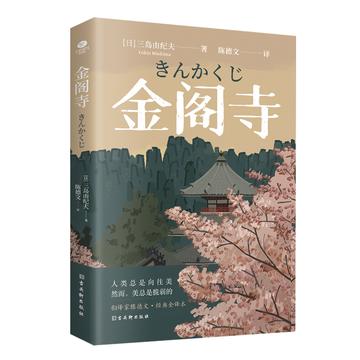
This article cannot be called a book review. At best, it is my own complaint. If you are interested in this book, you can read it first. Kinkakuji Temple - Mishima Yukio. People who like this style should be familiar with him. I came across this book while browsing in a place called Shangshu Pavilion. The outer cover of the whole book is very textured. The book is made of hard paper shell. It is three-dimensional and has sharp edges and corners. It is a thin book and well-proportioned. When you hold it in your hand, you can feel the texture of the book itself. Both hands I sat down with it in my hand and read about three chapters in one breath. In fact, it was very obscure and boring at first glance, but the environment was really good, so I continued to read it patiently. Fortunately, the more I read, the more exciting it became. It didn't disappoint me, and it was very interesting to my taste (maybe I am a bit heavy-handed). At the beginning of the story, Mizoguchi, a young man born with a stutter, whose father is the abbot of the temple, (he has low self-esteem and is sensitive, and his inability to talk fluently with others has also caused his inevitable loneliness. In addition, his dark and twisted seeds of the Kinkakuji have become him until his father died of illness. Before he left, he entrusted him to the abbot of the Kinkakuji. This was the beginning of his first approach to the Kinkaku in his dream, and it was also there that he met the first ray of light that shone into his life - Tsurukawa. I really like this boy in Mishima's novel. The article describes the scene when Mizoguchi first meets Tsurukawa like this: "The area around the pond is covered with summer grass. A low fence separates the path from the grass. Lying on the ground is a boy wearing a white shirt. There is a rake leaning on the small maple tree nearby." How to say it, I don't know if it is. It's my misunderstanding. I always feel that Mizoguchi's perspective is very similar to that of a boy or girl who has just started to fall in love. The first glance always stays on the other person's white shirt, and then he diverts his attention like a blind eye. Moreover, it is mentioned many times in the article that Mizoguchi thinks that he is the folds on his white shirt. This is really like what Mizoguchi would imagine. This was their first encounter. It was wonderful and harmonious, as if they had been like this from the beginning. An understatement of "It's you" was the beginning of fate. Later, Tsurukawa's "unexpected" death always made me feel lost and lamented. I am like this as a reader, let alone Mizoguchi himself. I won't continue to reveal it here. In short, Tsurukawa's origin determines his fate. This is not arbitrary, but comes from his thoughts after watching their endings. There is another person in the novel. He and Tsurukawa are completely opposite ends of the magnetic poles. Maybe there is no beauty without ugliness, and there is no goodness without evil. Kashiwagi was born with club feet, and Mizoguchi believed that this was the same kind of person who was born with the same conditions as him and was born in harmony. Maybe my life experience is not enough to interpret this character. I don't understand him, let alone interpret him? So those who are interested can explore on their own.
This book is very in-depth and depicts the inner characters of the characters in detail. I like Mizoguchi in the book very much, and his experience made me empathize with him. He said, "Not being understood is my only pride." This sentence really touched me. Mishima Yukio used his brushstrokes to depict a lonely soul longing to be understood. This book made me think a lot about human nature and beauty. I recommend it to you. I believe you will also gain a lot of insights.
Mizoguchi has a strong destructive and possessive desire for beauty. The Golden Pavilion Temple is beautiful, but in his opinion, the beauty of "saving all sentient beings" that everyone can see is illusory. He resents the beauty of equality, just like he resents the stuttering that is his special mark. Mizoguchi has been fantasizing about gaining immortality from a grand destruction. He wants to destroy the Kinkakuji so that he can possess it intact and forever. It was not until the end of the story that Mizoguchi changed his mind. The young monk escaped from the sky full of fire. He no longer pursued eternal life in disaster and destruction. He wanted to live.
Those who pursue pure beauty have a dark heart The charm of this heart lies in the muteness of the cruel mind and the confusion that abandons light and turns to darkness. With this heart Can dispel all false light
Adapted from real events, Yukio Mishima completed his philosophy of "beauty" with ultimate destruction. The twisted obsession with the Kinkaku-ji Temple is a violent tear between "eternal beauty" and "ephemeral existence" - this cultural symbol was built in the 14th century. Its immortal beauty forms a sharp opposition to the fleetingness of individual life, giving rise to the morbid logic that "the beauty of destruction is the beauty of pilgrimage." This kind of enthusiasm and delicacy for beauty is mixed with destructive evil and hysterical intoxication, making people unconsciously fall into the thinking trap: when the Golden Temple collapses in the flames, the death of the material form makes the beauty last forever. Through this extreme sacrifice of beauty, Mishima not only explores the dialectic between "instant beauty" and "absolute beauty", but also reflects the spiritual dilemma of the postwar Japanese - amid the rupture between tradition and modernity, spirit and materiality, individuals' pursuit of meaning often leads to paranoia. His interpretation makes loneliness and not being understood become unique pride. Witnessing people's anguish and blood, and hearing their moans before death will make people humble, considerate, optimistic and peaceful. The setting sun reflects off the lake and dances under the eaves of each floor. Compared with the surrounding light, the movement on the inside of the eaves is even more dazzling, like a painting with an enlarged perspective, giving the Golden Pavilion its majesty and making people look up. Is beauty the Golden Temple? If it is, I must destroy it. The beauty I love must be like this. In my life, it not only blocks me, but also protects me.
Human beings always yearn for beauty, call for beauty, and create beauty. However, beauty is always fragile. In the face of evil, beauty is vulnerable.
Mizoguchi regards his own concept of "beauty" as the only supreme one in his world. The Kinkakuji Temple occupies a lofty position and is observed by Mizoguchi every moment like a sacrifice. His stuttering is the threshold that isolates himself from the outside world. However, the Kinkaku cannot always be close to his world. The emotional building carries endless yearning and fear, so the simple word "destruction" suddenly flashed in his mind, and gradually expanded, eventually filling Mizoguchi's entire body and mind. Beauty reached eternity at the moment of destruction. He firmly believed that the idea of burning the Golden Temple naturally replaced the idea of worshiping the Golden Temple.
The scenery and characters in the novel are described eloquently, the metaphors are appropriate, the structure is clear, the story is very strong, and it is very interesting to read. The characterization of Mizoguchi surrounding the Golden Pavilion is unique and has a profound psychological depiction.
The pursuit of beauty develops into the extreme psychology of destroying beauty, a depiction of nihilism and spiritual dilemma. The Golden Pavilion Temple has been endowed with the symbolic meaning of absolute beauty in the protagonist's heart since childhood. It is transcendent, flawless and the embodiment of eternal beauty. However, this absolute beauty poses a huge oppression to the protagonist. He considers himself ugly and full of darkness, which is in sharp contrast to the perfection of the Golden Temple. The existence of the Golden Pavilion itself is like a mirror, always reflecting his flaws and the limitations of life, making him feel suffocated and desperate. Beauty here becomes an unattainable ideal, a power that denies real life. It ceased to be a comfort and became a shackles. The protagonist's love for the Golden Pavilion gradually evolves into a pathological possessiveness. He realizes that he can never truly own the Golden Temple—either physically or spiritually. Since it cannot be integrated with beauty in reality, destroying beauty becomes another form of "possession" and "realization." Through destruction, the protagonist attempts to break the oppression of the absoluteness of beauty on himself and proves his ability to intervene or even end this eternal beauty. The act of destruction itself, in the protagonist's logic, becomes an extreme way to confirm his own existence and fight against nothingness. He imagined that in the moment of destruction, the beauty of the Golden Temple would reach its peak and be with him. The protagonist's morbid psychology and extreme attitude towards beauty can be seen as a metaphor for the spiritual plight of postwar Japan. He cannot find meaning and despairs of reality. He can only indulge in the fantasy of absolute beauty (past glory or ideal), and finally leads to a destructive explosion.
Mizoguchi in "The Temple of the Golden Pavilion" embodies the absolute loneliness of human nature, the feeling of being isolated from the entire world and rejected by the entire universe. That kind of spirit can only be trapped within an inch of its own land, unable to breathe, unable to communicate with the outside world, and unable to be understood by anyone (except yourself). Others may resonate with your heart to a certain extent, but they will never be able to touch the deepest, darkest, and most subtle side of your heart. Although his body is not isolated, his mind is rejected by the entire world and no one understands it. It describes the unparalleled loneliness, the absolute isolation, being trapped in the cage of one's own spirit, without any outside air flowing in. This is a complete loneliness, a complete isolation, the existence of an individual rejected by the entire universe.
This book describes the inner changes of the protagonist in detail, as well as some of the author's own opinions, that is, discussions on beauty and ugliness. Because of his own flaws, Kashiwagi has developed talents that others do not have. He is also the male protagonist's role as a guide. The male protagonist is similar to Kashiwagi at the physiological level, so he naturally Of course it will be affected, but I personally don't think this is a decisive factor (which is the main reason for the male protagonist's darkening). In short, this book's portrayal of people is good, but it is difficult to read (for me), but then again, which good book is easy to read? Reading is like that, as long as it can stimulate your thinking, then it is a good book.
The profiling of Tsurukawa, the speculation on the value of love and beauty in Kashiwagi's almost masochistic psychological analysis, and the detailed portrayal of the protagonist's burning of the Kinkakuji Temple from motivation to action are all quite brilliant. What I like the most is the clip where Kashiwagi reveals his true feelings to the protagonist. I feel a little bit about the process of psychological distortion caused by physical deformity and changing my values and love. It even gave me a sense of déjà vu as the protagonist in Crime and Punishment self-analyzes.
The most beautiful thing is Asi under the firelight
Some of the philosophical parts in it left me confused. I will read it again when I have time.
When I first watched it, I was still troubled, angry, and angry; after a few months, when I continued watching it, I just thought it was a story, a story about a person with low self-esteem.
I feel the death drive impacting my body. Very good writer Yukio Mishima! Desirable
It's well written. What I like most is the writing style. It's very unique. The protagonist's mental state becomes increasingly worse in the later stages... It's difficult for me to understand him because of my different experiences, but I can recognize the beauty of seeing flowers in the smoke.
Well written and beautiful
So beautiful, so beautiful
Finished reading. Didn't understand at all
The fire that killed me will also burn down the Golden Pavilion. I am too blind to see that there is no better sentence than this.
It's still good to see over 500 pages.
I was deeply shocked before I even finished reading. He is worthy of being a literary giant of a generation.
After reading this book, I don't know where the sadness comes from, just like the falling cherry blossoms and fallen leaves in the autumn wind.
Inferiority and arrogance go hand in hand