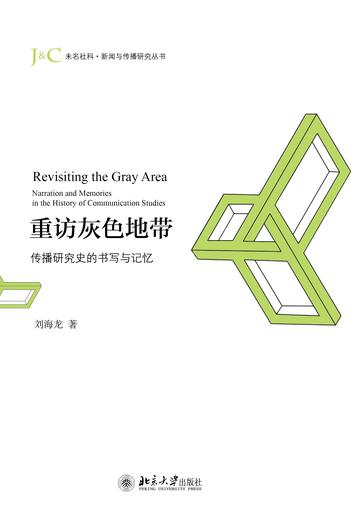
The history of communication research is the cornerstone for the establishment of communication studies as a discipline, and this book is a monograph by Liu Hailong, an outstanding young scholar in China, who scientifically sorts out and thinks carefully about the history of communication studies. This book starts from those "gray areas" that have been intentionally included or unintentionally misread, and combined with newly discovered materials and contexts, reinterprets classic communication studies texts in order to subvert the hegemony of the mainstream narrative of communication academic history, find new perspectives, and liberate the imagination of communication research.
Reader comments
The book "Revisiting the Gray Zone: Writing and Memory of the History of Communication Research" is written by Professor Liu Hailong. With a unique perspective and rich materials, it conducts a comprehensive and in-depth discussion on the history, current situation and future of communication research. It is a good book worth recommending. However, this book also has some shortcomings. First of all, some concepts and theories in the book are relatively complex and may require certain professional knowledge and background to fully understand. Secondly, the solutions and ideas for some problems and challenges in the book are not specific and in-depth enough, and may require further discussion and research.
Taking the development history and current situation of the field of communication research as the main line, it also deeply discusses how communication scholars write and record the research history of this field and how to inherit these research results. By reviewing the development history of the field of communication research, the context, experience and contributions of communication research are systematically sorted out, and the achievements of researchers are comprehensively and in-depth analyzed and evaluated. It also discussed some issues and challenges in communication research from multiple perspectives, such as interdisciplinary intersection, theoretical construction, etc., And put forward useful suggestions and thinking for future development.
I feel that this is a strange book that completely subverts my understanding of traditional communication studies, because the author uses an angle that few people pay attention to, that is, the gray area as an entry point, and then conducts detailed discussions to demonstrate some of his own views, thereby completing the compilation work. For me, this was something I couldn't imagine before, but the author did it. I think this book should be more widely circulated, and more people should understand the various knowledge and issues mentioned in the book. This can help us better understand the world we live in, and also help us expand our careers and thinking.
The theme of the book focuses on the "grey areas" of communication research, that is, those areas that have not yet been fully understood and studied, and are also the unknown areas of communication research. By reviewing the historical development of communication research, the author points out the importance and necessity of "grey zones" in communication research and how we understand and explore these zones. This topic is thought-provoking and gives us a deeper understanding of communication research. Overall, "The Gray Zone Revisited: Writing and Remembering the History of Communication Research" is a good book worth recommending.
In this book, the author uses timeline as the main logic to conduct an overall review and recall of the history of communication research. The author analyzes the evolution and changes in the field of communication research by sorting out historical documents, research results and academic discussions. They put forward the view that the writing and remembering of the history of communication research should be more comprehensive and objective, and avoid focusing too much on certain schools or viewpoints at the expense of other important contributions and developments. The entire book helps us better understand the subject of communication.
This book reminded me of my experience delivering couriers in the city. Running every day is like being on the road to spread information. The content in the book is very enlightening and gave me a deeper understanding of the history of communication studies. In particular, the author's interpretation of the "grey area" reminds me of the various complex situations we encounter at work. This book is not only an academic study, but also a reflection on real life. It is worth reading!
The author's research and thinking are very meaningful. At present, we know very little about communication theory, but some of the questions about this are explained in the book. The author's discussion is very exciting, from the initial criticism of the same explanations in the history of communication research to the citation of classics to express his own opinions. It is in-depth, including his own thinking and reference from predecessors. The author uses easy-to-understand language to let readers gradually understand the significance of the history of communication research.
It is a very good supplement to "Mass Communication Theory: Paradigms and Schools". Teacher Liu Hailong's work has internal coherence. What is very good is that this book responds to the issue of ontology and reviews the history of communication studies in China. This is rare.


The book "Revisiting the Gray Zone: Writing and Memory of the History of Communication Research" is written by Professor Liu Hailong. With a unique perspective and rich materials, it conducts a comprehensive and in-depth discussion on the history, current situation and future of communication research. It is a good book worth recommending. However, this book also has some shortcomings. First of all, some concepts and theories in the book are relatively complex and may require certain professional knowledge and background to fully understand. Secondly, the solutions and ideas for some problems and challenges in the book are not specific and in-depth enough, and may require further discussion and research.
Taking the development history and current situation of the field of communication research as the main line, it also deeply discusses how communication scholars write and record the research history of this field and how to inherit these research results. By reviewing the development history of the field of communication research, the context, experience and contributions of communication research are systematically sorted out, and the achievements of researchers are comprehensively and in-depth analyzed and evaluated. It also discussed some issues and challenges in communication research from multiple perspectives, such as interdisciplinary intersection, theoretical construction, etc., And put forward useful suggestions and thinking for future development.
I feel that this is a strange book that completely subverts my understanding of traditional communication studies, because the author uses an angle that few people pay attention to, that is, the gray area as an entry point, and then conducts detailed discussions to demonstrate some of his own views, thereby completing the compilation work. For me, this was something I couldn't imagine before, but the author did it. I think this book should be more widely circulated, and more people should understand the various knowledge and issues mentioned in the book. This can help us better understand the world we live in, and also help us expand our careers and thinking.
The theme of the book focuses on the "grey areas" of communication research, that is, those areas that have not yet been fully understood and studied, and are also the unknown areas of communication research. By reviewing the historical development of communication research, the author points out the importance and necessity of "grey zones" in communication research and how we understand and explore these zones. This topic is thought-provoking and gives us a deeper understanding of communication research. Overall, "The Gray Zone Revisited: Writing and Remembering the History of Communication Research" is a good book worth recommending.
In this book, the author uses timeline as the main logic to conduct an overall review and recall of the history of communication research. The author analyzes the evolution and changes in the field of communication research by sorting out historical documents, research results and academic discussions. They put forward the view that the writing and remembering of the history of communication research should be more comprehensive and objective, and avoid focusing too much on certain schools or viewpoints at the expense of other important contributions and developments. The entire book helps us better understand the subject of communication.
This book reminded me of my experience delivering couriers in the city. Running every day is like being on the road to spread information. The content in the book is very enlightening and gave me a deeper understanding of the history of communication studies. In particular, the author's interpretation of the "grey area" reminds me of the various complex situations we encounter at work. This book is not only an academic study, but also a reflection on real life. It is worth reading!
The author's research and thinking are very meaningful. At present, we know very little about communication theory, but some of the questions about this are explained in the book. The author's discussion is very exciting, from the initial criticism of the same explanations in the history of communication research to the citation of classics to express his own opinions. It is in-depth, including his own thinking and reference from predecessors. The author uses easy-to-understand language to let readers gradually understand the significance of the history of communication research.
It is a very good supplement to "Mass Communication Theory: Paradigms and Schools". Teacher Liu Hailong's work has internal coherence. What is very good is that this book responds to the issue of ontology and reviews the history of communication studies in China. This is rare.