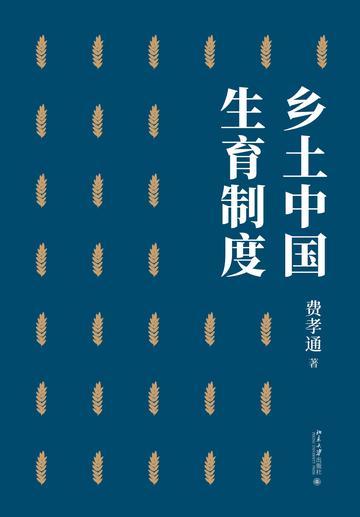
Rural China Fertility System
乡土中国 生育制度
- Status
- Completed
- Length
- 234k Words
- Updated
- 3y ago
- Source
- Fanqie
Stats
615Reads
9.4Score
125Shelves
39Chapters
76Listens
33.5kReads · all time
Tags
Synopsis
Reader comments
In booklists 5
Excellent Knowledge, Good at All Kinds of Things
I would like to read a book similar to "Food: Starting from Contracting the Canteen of Furry Bear Prison".
3.3MViews498Books2dUpdated
Literature Books, I Want Literature Books! ! !
Family members, I want to read literature books, books that can improve my writing skills or increase my knowledge. Beg on your knees!
3.1MViews564Books2dUpdated
Must-Read Classics in High School Books
I want to read a book similar to "Russian China". I'm looking for high school classics. Children really need them. Thank you.
1.5MViews599Books3dUpdated

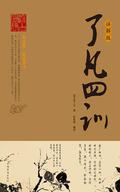
Looking for Books, Articles That Are Close to Reality and Are Not Brainless or Unhappy
Is there any book like "In and Out of the Village" and "Handsome Guy" that is logical, not exaggerated, brainless, routine, and systematic? I just want to see an ordinary person who is close to reality and slowly grows up. Although he has experienced ups and downs, there are no big storms.
14.7kViews300Books23dUpdated

Is There Anything Brain-Burning, Suspenseful or Funny ^_^
I want to read a book similar to "The End of Ten Days".
991Views52Books1moUpdated
I have read the pamphlet "Native China" roughly once, and to be honest, I felt confused while reading it. I saw someone in the book review area saying that this is an extracurricular reading for high school students. I was a little shocked. Is this really something that ordinary high school students can read? Let me briefly talk about my feelings: 1. This is a collection of papers with the theme of Chinese rural society, or a collection of (part of) Fei Lao's lesson plans. So during the reading process, you will find that each article is related, but there is no strong logical relationship. 2. When I read, I often compare it with my own understanding of the countryside. To be honest, some are consistent and some are different. There may be many reasons for this. For example, the rural society described in the book is an ideal model. This kind of society does not exist in reality. It did not exist more than a hundred years ago, and it does not exist now after so many years of changes. These lesson plans are all theoretical summaries. If you really want to understand them, you probably need to look at the materials from Fei Lao and his colleagues who went deep into rural fieldwork to read them. I haven't read The Birth System yet, I'll review it after I finish it (if I can watch it) I also briefly read the reproductive system, and it was also confusing, but it is simpler and more intuitive than that of rural China. Because the reproductive system discussed in this book includes many aspects such as marriage, family, childbirth, upbringing, inheritance, etc., Which are also closely related to people's lives today; and unlike rural China, which heavily quotes Confucian classics, this book mainly uses real-life problems or norms themselves as the entry point, and sometimes also cites the phenomena of field surveys by some foreign anthropologists for comparative research. Reading this book allows you to follow the author to examine some behaviors and norms in daily life from another perspective, and think about questions such as why are there such traditions? Why are there so many rituals? I won't talk about anything else. There is a professional book review at the end of this book. You can read it directly by browsing the table of contents. In addition, it is recommended to read "Three Villages of Yunnan" and "Jiangcun Economy" before watching "Country China", or even "The Reproductive System" first
This book uses concise and smooth language to analyze the structure and characteristics of China's rural society in a simple and easy-to-understand manner. Mr. Fei Xiaotong's writing style is simple and unpretentious, but full of wisdom, which makes people benefit a lot. The sentence in the book, "Growing from the soil has a glorious history, and it will naturally be bound by the soil" vividly depicts the nature of China's rural society. Recommended to friends who are interested in Chinese society and culture!
Yes, relatively easy to understand
Born to harm others, not to benefit oneself. Since our birth, our civilization and institutions have always revolved around reproduction, ensuring the continuation of our society and civilization. Reproduction ensures the normal operation and integrity of society, and society also allows reproduction to proceed normally.
I mainly read about rural China, and what impressed me most after reading it was the differential order pattern. Comparing it with Adler's Human Community, I felt that it has the same roots, but the differential order pattern is more in line with reality.
Strong timeliness, The profound explanations and humanistic care make this book a must-read for high school students. Looks and feels very good
Worth reading again and again, it breaks most people's views on rural society's conventions
Awesome, awesome, awesome
Must read it, great book
This book gave me a lot of inspiration
I learned a lot, thought about a lot, and understood a lot about my parents' relationship.
Good, the concept of locality and the differential order pattern are really well mentioned. I have benefited a lot. Good book.
The language is simple yet scientific and profound.
Worth a read, well written
It is good to brush it several times before marriage
Very good, very beautiful
Unquestionable authority
Thanks to Teacher Fei Xiaotong, I have benefited a lot.
It's quite in-depth and the language is not easy to understand.
Although I don't understand it well, it's a good book
The reproductive system is more readable than that of rural China and is more relevant to our lives.