There are many unexplained supernatural events in the world: strange stone formations, gloomy ancient mansions, frequent disappearances, and insurmountable death zones; Bermuda is always like a magic cave swallowing life, strange and huge symbols appear in the wheat fields from time to time, flying objects other than the earth occasionally fly over in the sky, and unidentified creatures often wander in Loch Ness; corpses remain incorruptible all year round, people wearing Pharaoh jewelry will die inexplicably, some people have immortality, and diamonds make people constantly encounter bad luck...
There are so many things that make people confused, so there are mediums who talk to the dead, and prophets with magical abilities. They use hypnosis and divination to predict good and bad luck, explore science, and try to solve various mysteries. Scientists do not believe in supernatural beings, and they usually attribute some things to coincidence. For example, the writer's description of the sinking of the "Titanic" is a coincidence, the similarities between the deaths of Lincoln and Kennedy are a coincidence, and the gems with curses are also a coincidence...
Although scientists explain this, it is still difficult to dispel people's doubts. There are too many coincidences in this world! Perhaps science can one day solve the mysteries for us, but before they are solved, people still like to look at it all with mysterious eyes. This is not superstition, but people hope that life will be more interesting.
Reader comments
The book mentions many interesting paranormal phenomena, such as the Loch Ness monster and the mysterious disappearances in the Bermuda Triangle. The descriptions in the book made me feel like I was in a world full of mysteries. As the American poet Emerson said: "All things are mysteries, and the key to one mystery is another." This book made me full of curiosity about the world, and also made me more convinced that with the continuous exploration of science, supernatural phenomena will one day be reasonably explained.
Behind all supernatural phenomena is the fact that man and nature are one and bound together. When humans are curious, nature will satisfy their curiosity; when humans are bored, nature will make people less bored; if humans hope for the end of the world, nature will create the end of the world. The world is a huge grass-stage troupe. How humans want to act, nature will act with you. Heaven and earth are unkind and regard all things as stupid dogs. Heaven has no relatives and always associates with good people. Only by respecting nature, loving nature, and getting close to nature can we find a way to coexist harmoniously with nature. This method is love and unity.
Unsolved mysteries in childhood account books
The "Unsolved Mysteries of the World" on the bookshelf is already yellowing. Opening the title page is like opening up a confusing story in my childhood - I once firmly believed that the Bermuda Triangle swallowed up countless ships and planes, firmly believed that the pyramids were navigation beacons for aliens, and argued with people until I turned red over the existence of the Loch Ness Monster.
Now when I re-read it, I found that the whole book is full of language traps - "it is said", "someone discovered", and "scientists think" are like an elaborate guessing game, but it never tells me "who" said it, "who" discovered it, and "which" scientist thinks it is. The source of those mysterious events always points to a vague distance, like a mirage, tempting to pursue but never able to reach.
I have written down countless "knowledge" in this account book: Atlantis sank to the bottom of the sea, crop circles are signals from aliens, and crystal skulls hide ancient wisdom. Now they have become bad debts that need to be written off one by one. The truth is that the accident rate in Bermuda is not higher than that in other sea areas, the construction technology of the pyramids has been reasonably explained, and the Loch Ness Monster is just a conspiracy between optical illusion and commercial hype.
But is this experience of being "cheated" really just a loss? Those mysterious phenomena nourished my imagination, allowing me to draw alien spaceships on the edges of my homework books and weave adventure stories into my compositions. This book, full of loopholes, was the enlightenment teacher of my rational thinking - it first gave me a magical world, and then allowed me to discover the cracks in this world myself, and learn to ask "who said it" and "why".
The unsolved mysteries in the pages of the book have long been solved, but the self who believed in miracles in childhood has become the biggest mystery: should we thank the scam itself, or should we thank the self who finally saw through the scam?
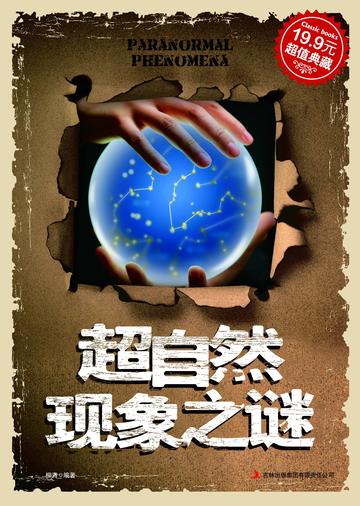



The book mentions many interesting paranormal phenomena, such as the Loch Ness monster and the mysterious disappearances in the Bermuda Triangle. The descriptions in the book made me feel like I was in a world full of mysteries. As the American poet Emerson said: "All things are mysteries, and the key to one mystery is another." This book made me full of curiosity about the world, and also made me more convinced that with the continuous exploration of science, supernatural phenomena will one day be reasonably explained.
Behind all supernatural phenomena is the fact that man and nature are one and bound together. When humans are curious, nature will satisfy their curiosity; when humans are bored, nature will make people less bored; if humans hope for the end of the world, nature will create the end of the world. The world is a huge grass-stage troupe. How humans want to act, nature will act with you. Heaven and earth are unkind and regard all things as stupid dogs. Heaven has no relatives and always associates with good people. Only by respecting nature, loving nature, and getting close to nature can we find a way to coexist harmoniously with nature. This method is love and unity.
Unsolved mysteries in childhood account books The "Unsolved Mysteries of the World" on the bookshelf is already yellowing. Opening the title page is like opening up a confusing story in my childhood - I once firmly believed that the Bermuda Triangle swallowed up countless ships and planes, firmly believed that the pyramids were navigation beacons for aliens, and argued with people until I turned red over the existence of the Loch Ness Monster. Now when I re-read it, I found that the whole book is full of language traps - "it is said", "someone discovered", and "scientists think" are like an elaborate guessing game, but it never tells me "who" said it, "who" discovered it, and "which" scientist thinks it is. The source of those mysterious events always points to a vague distance, like a mirage, tempting to pursue but never able to reach. I have written down countless "knowledge" in this account book: Atlantis sank to the bottom of the sea, crop circles are signals from aliens, and crystal skulls hide ancient wisdom. Now they have become bad debts that need to be written off one by one. The truth is that the accident rate in Bermuda is not higher than that in other sea areas, the construction technology of the pyramids has been reasonably explained, and the Loch Ness Monster is just a conspiracy between optical illusion and commercial hype. But is this experience of being "cheated" really just a loss? Those mysterious phenomena nourished my imagination, allowing me to draw alien spaceships on the edges of my homework books and weave adventure stories into my compositions. This book, full of loopholes, was the enlightenment teacher of my rational thinking - it first gave me a magical world, and then allowed me to discover the cracks in this world myself, and learn to ask "who said it" and "why". The unsolved mysteries in the pages of the book have long been solved, but the self who believed in miracles in childhood has become the biggest mystery: should we thank the scam itself, or should we thank the self who finally saw through the scam?