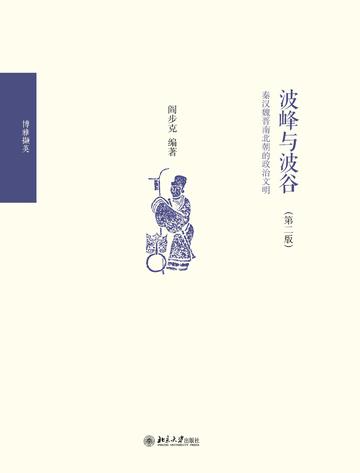
Peaks and Troughs: Political Civilization in Qin, Han, Wei, Jin, Southern and Northern Dynasties (Second Edition)
波峰与波谷:秦汉魏晋南北朝的政治文明(第二版)
- Status
- Completed
- Length
- 133k Words
- Genre
- Historical
- Updated
- 3y ago
- Source
- Fanqie
Stats
194Reads
9.4Score
15Chapters
15Listens
7.4kReads · all time

I only study Mr. Yan Buke's historical works, and I dare not comment on them at all. In my opinion, the old man may have borrowed the concepts of peaks and troughs from physics to refer to the development of political civilization in the middle of the night in ancient Chinese feudal society, that is, it presents a coherent law of historical change. Reading this book cannot help but be moved by Mr. Yan's profound knowledge and down-to-earth attitude towards learning. Even ordinary readers who are not majoring in history can feel the charm of historical research from it.
How many famous people have happened in Chinese history. This is an academic work on ancient Chinese history. Through the study of the political system, cultural traditions and social changes in the Qin, Han, Wei, Jin, Southern and Northern Dynasties, the author explores the changes and influence of political civilization in historical development. The book provides a detailed analysis of the political systems, social structures and humanistic thoughts of different dynasties, providing an in-depth interpretation and understanding of the history and culture of that period. "Crests and Troughs: Political Civilization in Qin, Han, Wei, Jin, Southern and Northern Dynasties" is a historical work with academic value and in-depth research, suitable for readers who are interested in ancient Chinese history.
The Qin, Han, Wei, Jin, Southern and Northern Dynasties were an important period in Chinese history and an important stage in the development of political civilization. During the Qin and Han dynasties, China realized a centralized system. The Qin Dynasty established a strong centralized system by conquering the six countries, while the Han Dynasty further consolidated this system and implemented the "emperor's autocratic" and "three public officials and nine ministers" systems. A complete legal system was established during the Qin and Han Dynasties, including "Qin Code", "Han Code", etc. These legal norms had a profound impact on later generations and became the basis of ancient Chinese law. During the Wei, Jin, Southern and Northern Dynasties, foreign cultures such as Buddhism appeared and had a certain impact on local cultures such as Taoism and Confucianism.
A brand-new perspective interprets historical politics, adopting the "institutional view of history", focusing on describing the political history of the Qin, Han, Wei, Jin, Southern and Northern Dynasties from the two aspects of "political system" and "political power". It explains the creation of the centralized bureaucratic imperial system from the Warring States Period to the Qin Dynasty, the development of various systems after the Han Dynasty, the political "metamorphosis" after the Wei and Jin Dynasties, the revitalization of the bureaucratic administration in the Northern Dynasties, etc. It also explains the civil servants, Confucian scholars, princes, relatives, eunuchs, and family members in this period.
Immortal product, I hope Tomato can keep this copyright and not take it off the shelves. I took a lot of notes in this book [face covering]
For a history novice, it seems a bit tiring, but it is very rewarding.
I have read it no less than three times, and I have new insights every time. Mr. Yan Buke is truly a master.
Teacher Yan Buke's level is very high [smile] This book is really well written
Objective and true, easy to understand, concise and clear
The content is concise and clear, the writing is easy to understand, the summary is comprehensive, and the viewpoint is sharp
Warmth, sentiment, and high academic level
When will Tomato get the copyright to the clan politics of the Eastern Jin Dynasty?