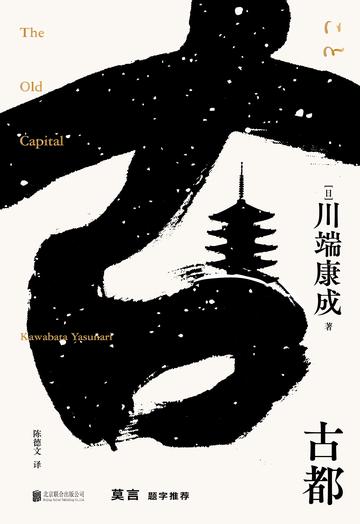
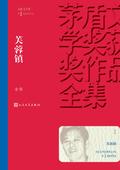
"Ancient Capital" is a Nobel Prize-winning novel by Kawabata Yasunari. The author uses light and delicate writing to describe the joys and sorrows of the twin sisters Chieko and Miaozi, as well as the loneliness of the world.
Reader comments
Kawabata Yasunari uses the four seasons as the timeline and the fate of the twin sisters Chieko and Naeko as the main line. He narrates their life experience, reunion, emotions, living conditions and inner world, interspersed with Japanese customs background, Heian Shrine's period festival, Aoi Festival, Kurama Fire Festival, Gion Festival, pumpkin offerings, cucumber seals, kimono culture, tea ceremony...
The branches of pink cherry blossoms are covered with dew in the spring morning, the lush camphor trees stand tall in summer, the long red maple leaves hang down in autumn, and the Kitayama cedar trees stand firm and upright in the heavy rain and snow in winter.
Qianezi thought to herself that Miaozi had not been abandoned, and she wondered whether Miaozi knew that she was one of the twins. If she understood, why didn't she come to Qianezi? Is it because Chieko was adopted and lived a wealthy life, while Miaozi was living a hard life as a laborer, so she didn't want to come? Maybe it's because of her strong character?
Under this old maple tree, Qianezi often thought of the seedlings far away in Beishan. This is where the two sisters met. Perhaps because of this, Chieko developed a special affection for this maple tree.
I finished reading this book at 2:30 in the morning. It is a very ordinary little story, depicting various sacrifices and the girl's hazy emotions, clean and pure.
I can't tell you the advantages of this book, but there are absolutely no shortcomings. It reads like Zhu Ziqing's prose, gentle and romantic.
Cleanliness and purity run through the whole story, family affection, the purity of love, and the final ending comes to an end with Miaozi's departure. The future of the two girls also leaves more room for our imagination.
At least the boyhood was pure.
The decadence under prosperity always reminds me of Dream of Red Mansions. There are always people guarding the taste of Meiji in the background of the industrial era. Just like people begin to forget culture, but there are always people who work tirelessly to spread culture.
The writing style of this book is very delicate and the writing style is smooth, which made me feel the beauty of Japanese traditional culture. The author's description of the characters' emotions is very good, making me feel like I am in an ancient capital, feeling the joys and sorrows with the characters in the book. Moreover, the descriptions of scenery in the book are also very vivid, such as the descriptions of old maple trees and viola flowers, which made me feel the power of life and the beauty of loneliness. All in all, this is a book well worth reading.
A simple, quiet and natural story. What I like the most is the description of the tranquil and magnificent scenery in the article, which makes people feel close to nature. I really want to see it in person and experience the blooming cherry blossoms at the ancient temple, the graceful Kitayama cedar trees covered with snow in winter, and various festivals and events. It is also a unique experience to understand the customs and customs of the Yamato people. The hazy beauty is real. However, after reading the postscript, I realized that this article was written when the author was in pain, and it is inevitable that I will be filled with emotion.
Good, good, good, good
It gave me a sense of plainness, but not boring. It was beautifully written.
It was the epitome of Japan's social reality at that time. Behind the quiet prosperity, there was a touch of sadness and a sense of crisis... I like such quiet beauty, because I also have a touch of sadness.
Open ending, the whole reading process is calm and peaceful
The ending is euphemistic, and the novel gives people a pure, clean, beautiful and budding feeling of love.

Kawabata Yasunari uses the four seasons as the timeline and the fate of the twin sisters Chieko and Naeko as the main line. He narrates their life experience, reunion, emotions, living conditions and inner world, interspersed with Japanese customs background, Heian Shrine's period festival, Aoi Festival, Kurama Fire Festival, Gion Festival, pumpkin offerings, cucumber seals, kimono culture, tea ceremony... The branches of pink cherry blossoms are covered with dew in the spring morning, the lush camphor trees stand tall in summer, the long red maple leaves hang down in autumn, and the Kitayama cedar trees stand firm and upright in the heavy rain and snow in winter. Qianezi thought to herself that Miaozi had not been abandoned, and she wondered whether Miaozi knew that she was one of the twins. If she understood, why didn't she come to Qianezi? Is it because Chieko was adopted and lived a wealthy life, while Miaozi was living a hard life as a laborer, so she didn't want to come? Maybe it's because of her strong character? Under this old maple tree, Qianezi often thought of the seedlings far away in Beishan. This is where the two sisters met. Perhaps because of this, Chieko developed a special affection for this maple tree.
I finished reading this book at 2:30 in the morning. It is a very ordinary little story, depicting various sacrifices and the girl's hazy emotions, clean and pure. I can't tell you the advantages of this book, but there are absolutely no shortcomings. It reads like Zhu Ziqing's prose, gentle and romantic. Cleanliness and purity run through the whole story, family affection, the purity of love, and the final ending comes to an end with Miaozi's departure. The future of the two girls also leaves more room for our imagination. At least the boyhood was pure. The decadence under prosperity always reminds me of Dream of Red Mansions. There are always people guarding the taste of Meiji in the background of the industrial era. Just like people begin to forget culture, but there are always people who work tirelessly to spread culture.
The writing style of this book is very delicate and the writing style is smooth, which made me feel the beauty of Japanese traditional culture. The author's description of the characters' emotions is very good, making me feel like I am in an ancient capital, feeling the joys and sorrows with the characters in the book. Moreover, the descriptions of scenery in the book are also very vivid, such as the descriptions of old maple trees and viola flowers, which made me feel the power of life and the beauty of loneliness. All in all, this is a book well worth reading.
A simple, quiet and natural story. What I like the most is the description of the tranquil and magnificent scenery in the article, which makes people feel close to nature. I really want to see it in person and experience the blooming cherry blossoms at the ancient temple, the graceful Kitayama cedar trees covered with snow in winter, and various festivals and events. It is also a unique experience to understand the customs and customs of the Yamato people. The hazy beauty is real. However, after reading the postscript, I realized that this article was written when the author was in pain, and it is inevitable that I will be filled with emotion.
Good, good, good, good
It gave me a sense of plainness, but not boring. It was beautifully written.
It was the epitome of Japan's social reality at that time. Behind the quiet prosperity, there was a touch of sadness and a sense of crisis... I like such quiet beauty, because I also have a touch of sadness.
Open ending, the whole reading process is calm and peaceful
The ending is euphemistic, and the novel gives people a pure, clean, beautiful and budding feeling of love.