This book is an authoritative work on the interpretation of China's economy. It summarizes the experience of economic development and reform activities between China and other countries and regions, proposes a general theory of economic development and transformation, and uses this theory to analyze the various achievements China has made in the process of reform and development, the main economic and social problems it faces, and explores its causes and solutions to the problems. The book uses popular language and vivid examples,
Reader comments
This book is both academic and readable. It is a popular science book that provides a good introduction to China's economic development context and trends. Economics is difficult to understand for non-professionals, but in this book, the author uses humorous and easy-to-understand language to explain the originally obscure and profound economic knowledge to readers, so that readers can truly understand it. In this book, the author is based on the background of the era when China's economic development has entered a new normal, and summarizes the experience of economic development and reform activities in China and other countries and regions. The author uses popular language and vivid examples to systematically review the development process of China's economy, and introduces hot issues in China's economic development to readers in a simple and easy-to-understand manner.
Lin Yifu's "Interpreting the Chinese Economy" provides an in-depth analysis of the development process and existing problems of the Chinese economy with its keen insight and simple expressions. An important point of this book is that he pointed out that in the process of economic transformation, China excessively worshiped the European and American market economic systems and ignored that China itself had led the world at the institutional level as early as two thousand years ago. The "Needham Puzzle" he proposed about China's technological development leads readers to think deeply about why China was very technologically advanced in pre-modern society, but became a technologically backward country in modern society. Such questions and answers give us a deeper understanding of the Chinese economy. At the same time, he also made profound observations and unique insights on China's household registration system, cooperatives and other issues. In general, "Interpreting the Chinese Economy" not only provides us with a theoretical framework, but also points out future research directions and development paths.
The economy is very important to a country's strength. Just like a country cannot live without national defense, a country cannot live without an economy. Without economic strength, the country's contribution to the world will be less, it will have less say, and it will not be able to realize its dream of prosperity. Without economic strength, people cannot live an ideal life. If food and clothing are not solved, there will be no extra energy to realize their ideals and no energy to develop science.
"Interpreting the Chinese Economy" is a fascinating book. In the book, the author Yifu Lin provides an in-depth interpretation of the history, current situation and possible future development of China's economy. In his book, he put forward the concept of "self-viability" and believed that in a free, open, and competitive market, an enterprise with normal operation and management can expect to obtain normal profits without external support and protection. This concept provides a new theoretical perspective on the economic development of China and other developing countries. Lin Yifu also proposed the theory of "factor endowment structural characteristics", emphasizing that if the industrial structure violates the characteristics of factor endowment structure, then efficiency will inevitably decrease. This has important practical significance for China's industrial development and economic policy formulation. This book is a valuable reference for readers who want to have a deeper understanding of China's economy and global economic development.
The writing style of this book is easy to understand and the writing is smooth, explaining the complex issues of China's economy in simple language. The author explains the development and transformation of China's economy in a profound and simple way through case analysis. The storyline is closely integrated with reality, making it easier for readers to understand and accept the ideas in the book. All in all, this is a very valuable book and worth reading.
It gave me a comprehensive and objective understanding of the past and future of China's economy, and answered many of my questions. Develop industries according to factor endowments, use latecomer advantages to introduce technology, establish a unified market system, focus on financing for small and medium-sized enterprises, and strip off the social burden of state-owned enterprises to improve the viability of state-owned enterprises. These are the author's suggestions for China's economic development.
Not bad, not bad, really good
A book worth remembering
Very thorough analysis
Deep thinking and worth reading.
China's economy is developing rapidly, the country is prosperous and strong, and national rejuvenation is just around the corner.
It's a really good book, and the layout opened up instantly.
Listening to your words is worth ten years of reading
Fascinating, learn about history and think about the future
Real and objective, multi-dimensional description, clear structure
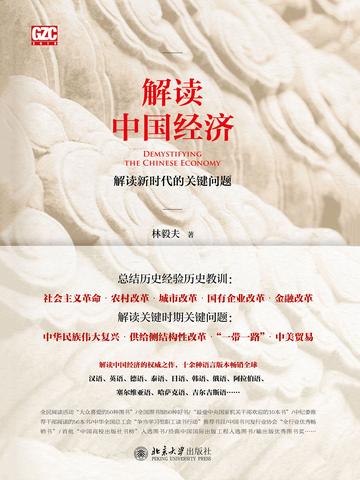

This book is both academic and readable. It is a popular science book that provides a good introduction to China's economic development context and trends. Economics is difficult to understand for non-professionals, but in this book, the author uses humorous and easy-to-understand language to explain the originally obscure and profound economic knowledge to readers, so that readers can truly understand it. In this book, the author is based on the background of the era when China's economic development has entered a new normal, and summarizes the experience of economic development and reform activities in China and other countries and regions. The author uses popular language and vivid examples to systematically review the development process of China's economy, and introduces hot issues in China's economic development to readers in a simple and easy-to-understand manner.
Lin Yifu's "Interpreting the Chinese Economy" provides an in-depth analysis of the development process and existing problems of the Chinese economy with its keen insight and simple expressions. An important point of this book is that he pointed out that in the process of economic transformation, China excessively worshiped the European and American market economic systems and ignored that China itself had led the world at the institutional level as early as two thousand years ago. The "Needham Puzzle" he proposed about China's technological development leads readers to think deeply about why China was very technologically advanced in pre-modern society, but became a technologically backward country in modern society. Such questions and answers give us a deeper understanding of the Chinese economy. At the same time, he also made profound observations and unique insights on China's household registration system, cooperatives and other issues. In general, "Interpreting the Chinese Economy" not only provides us with a theoretical framework, but also points out future research directions and development paths.
The economy is very important to a country's strength. Just like a country cannot live without national defense, a country cannot live without an economy. Without economic strength, the country's contribution to the world will be less, it will have less say, and it will not be able to realize its dream of prosperity. Without economic strength, people cannot live an ideal life. If food and clothing are not solved, there will be no extra energy to realize their ideals and no energy to develop science.
"Interpreting the Chinese Economy" is a fascinating book. In the book, the author Yifu Lin provides an in-depth interpretation of the history, current situation and possible future development of China's economy. In his book, he put forward the concept of "self-viability" and believed that in a free, open, and competitive market, an enterprise with normal operation and management can expect to obtain normal profits without external support and protection. This concept provides a new theoretical perspective on the economic development of China and other developing countries. Lin Yifu also proposed the theory of "factor endowment structural characteristics", emphasizing that if the industrial structure violates the characteristics of factor endowment structure, then efficiency will inevitably decrease. This has important practical significance for China's industrial development and economic policy formulation. This book is a valuable reference for readers who want to have a deeper understanding of China's economy and global economic development.
The writing style of this book is easy to understand and the writing is smooth, explaining the complex issues of China's economy in simple language. The author explains the development and transformation of China's economy in a profound and simple way through case analysis. The storyline is closely integrated with reality, making it easier for readers to understand and accept the ideas in the book. All in all, this is a very valuable book and worth reading.
It gave me a comprehensive and objective understanding of the past and future of China's economy, and answered many of my questions. Develop industries according to factor endowments, use latecomer advantages to introduce technology, establish a unified market system, focus on financing for small and medium-sized enterprises, and strip off the social burden of state-owned enterprises to improve the viability of state-owned enterprises. These are the author's suggestions for China's economic development.
Not bad, not bad, really good
A book worth remembering
Very thorough analysis
Deep thinking and worth reading.
China's economy is developing rapidly, the country is prosperous and strong, and national rejuvenation is just around the corner.
It's a really good book, and the layout opened up instantly.
Listening to your words is worth ten years of reading
Fascinating, learn about history and think about the future
Real and objective, multi-dimensional description, clear structure