Stats
5.8Score
Synopsis
No synopsis yet.
We haven’t got an English blurb for this one. It appears once the source description has been translated.
We haven’t got an English blurb for this one. It appears once the source description has been translated.




Under the influence of traditional Confucianism, the value of "diligence is beneficial, play is futile" is prevalent in Chinese society, and it is difficult for ordinary people to enjoy life to the fullest and unrestrainedly. Often limited by the environmental constraints around life, we live an almost unchanged life day after day, year after year. I always feel that life is still very long. Work harder now and enjoy life one day in the future. Furthermore, perhaps the contents of this book can also subvert the lifestyle we are accustomed to and reverse the understanding of the importance of leisure activities, sports activities and entertainment in our lives.
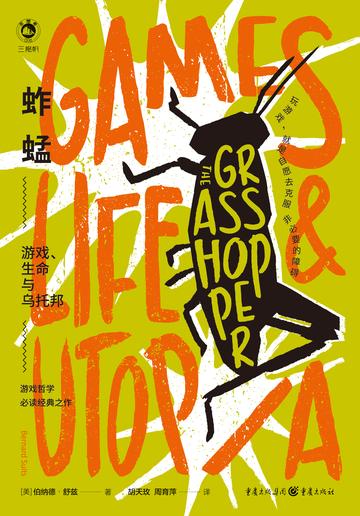
"Playing games means voluntarily overcoming all kinds of unnecessary obstacles." Bernard, the author of this book, continues Wittgenstein's game research and gives a clearer definition of games from the perspective of human nature. In Bernard's view, people in reality are always in various games. These games have different goals, methods, and rules, and define people's game attitudes. When people really enter Utopia, when all material resources in life are abundant, playing games may become the only thing people can do. This book may seem absurd, but in fact it is not easy to understand, and it also contains profound reflections.
Schutz's "Grasshopper: Game, Life and Utopia" uniquely demonstrates the philosophical connotation of games and the close connection between games and life. The grasshopper in the book spends his life in a game, showing a different attitude and concept of life than the conventional one. This idle but philosophical grasshopper explains the true meaning of life to us in his unique way. In his view, life is like a game, full of unnecessary obstacles, and we need to voluntarily overcome these obstacles to complete the game. He made us re-examine the value of games and realize that games are not just entertainment, but a way of life, an attitude towards life, and a philosophy of life. With its unique narrative technique, vivid character creation, and in-depth thinking, this work brings us endless revelation and insights.
In "Grasshopper: Games, Life and Utopia", Schutz uses the story of a grasshopper to tell the relationship between games and life. He defined play as a voluntary act of overcoming unnecessary obstacles, revealing the role that play plays in our lives that cannot be ignored. Games are not just entertainment and recreation, but also a way to understand and experience life. The grasshopper in the book, an idle philosopher, uses his games to show a new way of life. With its unique narrative style and thought-provoking themes, this book gives us a deeper understanding of games and life during the reading process. Whether you are a gamer or a thinker, you can find your place and inspiration in this book.
The grasshopper should be a well-known insect. In Aesop's fables, the grasshopper is portrayed as an idle but thoughtful philosopher. In order to survive in the winter, it dialectically negotiates with death in its own way, and finally dies. After death, the followers discovered that the grasshopper left them a puzzle about play, games, and life. In this book, the author adopts the form of Platonic dialogue to define the game through the dialogue between the grasshopper and the followers: the game is a great practice in which people create obstacles, game methods, and game rules to challenge themselves. The author explains serious and boring philosophical issues for us with the interest of words, which is amazing.
Through the long dialogue between the Big Grasshopper and his followers, Schutz contains the philosophy of life about a good life in the "playing of games": In a utopia of abundance, people give up all instrumental activities, that is, "work", and only participate in a life of intrinsically valuable activities, that is, "games." Games emotionalize and dramatize work to produce a stronger motivational effect, allowing people to succeed as quickly as possible, get rewards, and bring greater results and benefits. Gamification as a factor of production destroys the potential for liberation through play.