A book not to be missed by readers who like classic novels.
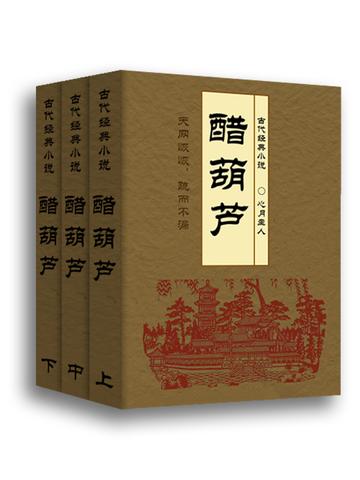
"Vinegar Gourd" is a novel from the Ming Dynasty and is listed as one of the "Top Ten Banned Books in Ancient China". It tells the marriage story of Yan Chenggui and Du Shi.
A commoner named Chenggui was from a humble background and was penniless. Unexpectedly, he married the daughter of a silk shop clerk.
Because of the disparity between the couple's backgrounds, Yan Chenggui was inevitably henpecked and obeyed Du's advice.
After the marriage, Du became infertile and never got pregnant. She was always jealous, so she suspected that Yan Chenggui was interested in his maid.
Later, Yan Chenggui coerced the Du family into allowing him to take concubines because of the fact that he had no children.
The reason why "Vinegar Gourd" was banned is because the whole story is about love affairs between men and women, especially the large number of extramarital sex descriptions that are shocking. During this period, men and women had weak moral concepts and ignored laws and regulations, which reflected the changes in social fashion at that time.
The plot of the work is ups and downs and exciting. It is a classic novel with excellent plot and writing.
This book is listed as one of the "Top Ten Banned Books in Ancient China", and its content is particularly warning from today's perspective.
The stories narrated in this book reflect from the side that in that era, people's instinctive desires were valued, and the pursuit of individual life and sensual happiness was emphasized. It is a true record of the early "extramarital affair" phenomenon in Chinese society.
The work combines weirdness, cause and effect, and obscenity. It has always been regarded as a satirical novel, intended to advise women not to be jealous. In a feudal society where men were superior to women, men could have three wives and four concubines, while wives could only be obedient and not jealous, otherwise they would be considered unworthy of women. This kind of "virtue" is essentially distorted, and it is nothing more than the establishment of a feudal family order in which wives are virtuous and concubines are obedient.
However, the description of the life of merchants in the Ming Dynasty shows the urban commercial economy in the late Ming Dynasty, and it still has certain cognitive value.
Reader comments
The plot of this book is really impressive! In particular, Du Shi's jealousy and Yan Chenggui's helplessness reminded me of some marriage problems in real life. In that feudal society, the status of men and women was unequal, and this distorted "virtue" did bring a lot of pain to people. However, this book also allows us to see the changes in social concepts and the complexity of human nature. Although it is classified as a banned book, its description of the society at that time still has certain cognitive value. Have you read this book? I think it's quite interesting!
This book advises people to do good deeds and accumulate virtue, and get retribution through karma. The law of heaven is clear.



The plot of this book is really impressive! In particular, Du Shi's jealousy and Yan Chenggui's helplessness reminded me of some marriage problems in real life. In that feudal society, the status of men and women was unequal, and this distorted "virtue" did bring a lot of pain to people. However, this book also allows us to see the changes in social concepts and the complexity of human nature. Although it is classified as a banned book, its description of the society at that time still has certain cognitive value. Have you read this book? I think it's quite interesting!
This book advises people to do good deeds and accumulate virtue, and get retribution through karma. The law of heaven is clear.