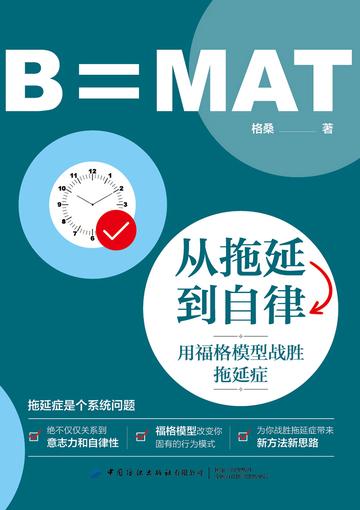
Everyone is likely to encounter procrastination unexpectedly and fall into the dilemma of having more than enough to do but not enough. How to pull yourself out of the swamp of procrastination has become a required course to create efficient work and a high-quality life. "From Procrastination to Self-Discipline: Using the Fogg Model to Overcome Procrastination" combines the three major factors of Fogg's behavioral model - motivation, ability and trigger mechanism. It deeply explores why we choose to procrastinate at certain moments and on specific issues, and proposes effective strategies to reduce resistance to action and promote positive behaviors. Especially in the context of trigger mechanisms, it proposes simple and easy solutions to the dilemma of "wanting to move but not being able to move". The author Gesang combines a large number of real-life cases and classic psychological knowledge, allowing readers to clearly understand the triggers of procrastination and selectively find applicable solutions as needed.
Reader comments
The Fogg model and strategies for dealing with procrastination mentioned in this book are very practical. Just like CC in the book, we too often face the challenge of procrastination. The author uses cases and psychological knowledge to help us better understand the reasons for procrastination and find solutions that suit us. This book is not only helpful to me when starting a business, but also suitable for everyone who wants to overcome procrastination and improve efficiency.
The words are meaningful and the measures are feasible
The book is a good book, but why are so few people reading it?




The Fogg model and strategies for dealing with procrastination mentioned in this book are very practical. Just like CC in the book, we too often face the challenge of procrastination. The author uses cases and psychological knowledge to help us better understand the reasons for procrastination and find solutions that suit us. This book is not only helpful to me when starting a business, but also suitable for everyone who wants to overcome procrastination and improve efficiency.
The words are meaningful and the measures are feasible
The book is a good book, but why are so few people reading it?
Clear structure and many examples