
Stats
Tags
Synopsis
Reader comments
In booklists 16
Nobel Prize for Literature, Mao Dun Literature Prize, Lu Xun Literature Prize and Other Literary Works
I want to read a book similar to "One Sentence is Worth Ten Thousand Sentences: Collector's Edition".
Psychology! ! I Really Like It, Please Read It! Girls Like Psychology
I want to read a book like "Murphy's Law: Learn a little bit of psychology every day". Please recommend some psychological articles. I really like them. I hope to recommend some psychological books. I really like to read them. Please, guys! ! !
A Profound Book That Can Help Me Grow My Brain
Logically rigorous, not mindless sweet stories, with deep foreshadowing, and a grand world view, this kind of

I Read Secretly During the Holidays and Became Obsessed with My Classmates' Books.
I would like to read a book similar to "How to Read a Book".
Why Not Read Classics?
Recommend some good books that are meaningful, influential and well-written.
A Book That Will Make Your Brain Faster After Reading It


9.9 or Above, I Read It Five Times in a Row, and It Made Me Burst into Tears.
I want to watch content similar to "The Destiny of an Orphan". It's beautiful, sad, and made me cry. I read it over and over again. I highly recommend it to everyone.
Looking for Literary Works That Can Improve My Writing Skills! ! !




9.9 High Score, the More You Look at It, the Better It Looks.
I want to watch content similar to "Wanwan is not Wanwan: Who still loves you after being reborn".



Books for College Students to Read
What books are worth reading for high school graduates?

World Famous Books
🍅All the world famous books I can find are thrown at me, I can bear it



They Should Have Been Shining Brightly, but They Were Born at the Wrong Time and Ended up with Regrets.
I want to read a book like "You and Me Are Called Poetry". WwwPoet I burst into tears, I want to see those people who should be high-spirited shine in the words, they should not end up like this, I just want to read some perfect articles about ancient literati
You Are Not an Outsider, Let Me See Your Collection of Books
The kind that can be rolled up into maggots under the quilt

Literature Books, I Want Literature Books! ! !
Family members, I want to read literature books, books that can improve my writing skills or increase my knowledge. Beg on your knees!


Tuosi's Wen Na Is Really Coming to an End! Woo Woo Woo
Is there any Tuosiwen? ! ! I'm going to starve to death π_π, whatever, please give me some. I'm really going to starve to death, I'm starving to death (๑•́ωก̀๑). Can you stop giving it to me? Starved to death


Open Your Mind, Cos, Setting, Imagination, Customization, Private Design, Oc
Can be randomly designed and collected
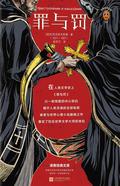
Strictly speaking, this is the second book by Dostoevsky that I have read. The first one was "Crime and Punishment". Crime and Punishment describes the psychology of the characters in such detail that it feels like you are immersed in the protagonist's thoughts. You bring yourself into "what would I do if I were him". Regarding the description of spiritual thoughts, Dostoevsky can be said to be the author who is easiest to get into among the books I have read. Regarding the book Notes from the Basement, it is more aimed at exposing the ugly and dark side of the psychology of people of that era and describing their thoughts in detail. There are many such people or people now, but I personally have not found my own ideological problems, such as avoidance, selfishness, inferiority, and cowardice. These things are like looking in a mirror. It was real and shocking that I felt my own problems. I have to say that the description of thoughts in Teacher Tuo's book helped me gain a lot of introspection. Readers who like psychological descriptions and thoughts can read it several times and get different feelings each time!
After reading Notes from the Basement, you feel as if someone has forced you in front of a mirror, forcing you to look directly at the darkest folds in your soul—the shame, arrogance, and self-destructive tendencies that squirm under the light of reason, as well as the contradiction deep in your heart that longs to be understood but is afraid of being seen through. The "basement man" described by Tuo is like a dissected neurological specimen. His monologue is not a confession in the traditional sense, but a spiritual riot against himself: cutting his soul with the blade of logic, only to find more unresolved venom in the wound. What shocked me most was not his anti-social words and deeds, but how he turned "sobriety" into a kind of torture - when he said "a truly sober person has no choice but to be crucified," I felt the birth pangs of existentialism. The criticism of "rational utopia" in the book has more practical significance today. In our era where algorithms are used to deconstruct human nature and success science is used to quantify the value of life, the roar of the man in the basement has become a kind of prophecy: In an absolutely rational world where "two twos get four", how do people put their crazy desires of "two twos get five"? This extreme defense of free will is as much a declaration of rebellion as it is the cry of a trapped animal. The part that stings the most is the part where he treats Lisa cruelly. The kind of psychological game that first tramples on the dignity of others with philosophical arguments and then self-destructs when the other party shows weakness exposes the most tragic hypocrisy of intellectuals: arming oneself with ideas is just to cover up emotional disability. When he said, "I can never become an insect, because I clearly know that I am an insect," this was an almost existential awakening, but he also fell into deeper despair. This book is like a seed covered with barbs. Once planted in consciousness, it is difficult to remove. While laughing at the people in the basement, I was horrified to discover that I also had similarities. It forced me to admit that the dignity of human nature may lie in its incorrigibility, and that there is always a dark undercurrent surging beneath the smooth surface of civilization. In today's era that values emotional stability and positivity, "Notes from the Basement" is still the most dangerous sobriety agent, reminding me that true self-understanding often begins with acknowledging the eternal existence of the inner basement.
When reading the first part, I felt like a crazy, complicated "madman" who is always struggling in his heart to control everything. The second part allows people to further understand and analyze this "great hero", a person with rich knowledge and the most correct values. Super pretty. Super 🐮!
This book is very in-depth and explores philosophical issues such as free will and human irrationality. Although the protagonist has a pathological low self-esteem, his self-analysis is very real and resonates with me. Dostoevsky's description is very accurate, which made me feel the charm of "anti-hero". This book is like a sharp sword, piercing the surface and letting people see the truth deep inside. It makes me think about my own life and choices, and it also makes me appreciate freedom more.
The first part is really abstract. The second part depicts the psychology of the characters in great detail, and the words are very unique, allowing those who fear society to almost see their own hearts.
Shameful, depraved, disgusting and pitiful, reading this book really makes you feel like you are looking in the mirror. There is a little bit of humor in it, and the plot is compact, making it not boring.
I was tortured by my own greed and inferiority. I often advised myself not to care about their casual eyes, movements and expressions, but their tacit understanding of each other's gazes and wordless communication made me feel scared, as if they were laughing at my clumsiness in silence. I'm so grateful to have read this, knowing that maybe we'll never get out of this basement, but I still have people with me.
Notes from the Basement depicts a half-illusory, half-real life. Such a person can be said to be imaginary or real. Because in reality, a real person cannot describe what he is thinking. At a certain moment, the driving force deep in his heart to do this thing is actually not what he thinks at all. A person's thoughts often come from his education. According to current common concepts, it is impossible for a person to suddenly think of things beyond his own knowledge. In his mind, if he thinks that an elegant argument is different from a shrew-like quarrel, he will be complacent that he belongs to the former. And if the spectator thinks that he is wasting time trying to convince someone who doesn't agree with him, it will not be able to achieve any effective success. In the eyes of onlookers, this person also belongs to the latter. We look for a more reasonable explanation for ourselves under the existing system, and we also build our own lives based on our own cognition. The reality of a person's life and his cognition complement each other. If reality is difficult and cognition is noble, then he is troubled and noble. ——In short, it is the so-called split personality and complexity that is not conventional. Under social conditions, there is an inherited traditional system. In this system, desires based on judgments based on traditional concepts come first. Personal growth and the final result of life in society depend on choices, not on your true thoughts.
A very special thought. As a stubborn person, how to face one's own failure, shame, humiliation... Is a question worth thinking about. It's not that I'm not a good person, that's why I'm so dirty, but it's just that I'm a human being, and I'm also a little smart. Not only do I see the selfishness and unbearability of others, I also see the ugly humanity underneath my own guise of justice. I feel extremely painful, and I can't understand it. Actions unite, I also want to be a noble gentleman, a hero who saves others from fire and water, but I am too weak, facing the reality, I can do nothing, I am as timid as a mouse, I just want to live, so I hid in the basement, unwilling to contact others, and unwilling to look directly into my heart. Is all this just my imagination or have I discovered subtleties that others cannot detect? I think others are probably unaware of it. Why do I have to be so hard on myself? The education I received is completely different from the reality I face. I feel that my world is broken. I have experienced all kinds of... In fact, I just live too seriously. Others don't listen to the truth. I listen to it. I don't understand. Why? Why am I so knowledgeable, but not as good as those vulgar and thoughtless people? In the process of struggling, my world view is being rebuilt step by step, and the story continues, but I finally figured out what it is to be alive, so I wrote this note...
Because I am used to being alone for a long time, but I am not used to being accompanied by others. Craving affection and fearing getting it. I hate the hypocrisy and despicability in the world but I also use it to disguise myself. Don't dare to hand over your true feelings for fear of getting hurt. Playing with other people's emotions to satisfy your own pleasure of abusing others and satisfy your own vanity. Situations that you could have escaped from will drag you into the abyss again and again. These things really exist in me, and I clearly know that doing so is morally corrupt, and I try to control myself not to do so, but these things are like being engraved in my body, and I don't know when I might do such things again.
There is actually this book in Tomato
The first part was hazy, but in the middle and later stages I finally figured out what he was writing. I thought it was quite interesting, but it also seemed a bit uncomfortable. He had such good control over the description of people's hearts. People more or less have a dark side, and they will more or less find some sense of familiarity in it. But I didn't have much impression after reading it. Maybe it's because I don't have enough literacy.
The madman is shouting, knowing his hypocrisy, selfishness, disgusting, flattery and double standards, but he still does it
In the first half of the chapter, you may feel that "Notes from the Basement" is too telling and full of arguments to read, but after you understand the "complaints" or "complaints" of the previous "me" - things will turn around - whether it is the first meeting or the second conversation between "me" and my stepdaughter, or the gathering between "me" and my old classmates, they all reflect the misfortune and tragedy of the people in the basement. In the end, you will fall in love with Tuo Weng's stream-of-consciousness narrative. [Note][Note][Note]
Thoughts after reading The only difference in psychology between me and the first-person perspective protagonist of Notes from the Basement is that I cannot enjoy this kind of pain and cannot integrate into this hypocritical and nihilistic society. I think I am hypocritical and I am ashamed of it, but I cannot change my hypocrisy. I think I am nihilistic and want to adapt to this nihility, but I cannot adapt to my nihility. My self-will is not free but absurd. I have not been defeated by social assimilation, modern narratives, religion or belief, nor have I compromised with the numb pain of nihilism. The protagonist said, "Not only will I not be such a vicious person, I don't even want to be any kind of person." I am also wandering in this situation of not wanting to be anyone. I can't even tell whether I am unwilling or unable. I don't trust outsiders or authorities to determine and define things that are relevant to me and that I care about. I want to deny the label I gave myself, and I even doubt my own thoughts. Even for this sentence, I will doubt whether what made me come up with this sentence is some kind of narrative from the outside world that cannot be completely trusted. I doubt my thinking, am I still here? I might just live in the pain of swallowing the red pill.
I think this book is no longer just a book, but a mirror. Generally speaking, the protagonist of a book is a person with high moral character and excellent morals and academics, but this book is not. The protagonist is just like countless ordinary people like us, with many shortcomings, such as jealousy, flattery, etc. When I read this book, I saw him and seemed to see myself, a self with flaws and imperfections. I also began to reflect on why I was always arming myself with imperfections and being harsh on myself. Maybe we should all learn to let ourselves go. After all, you see, everyone has shortcomings. In this case, why not embrace yourself. Reflect on yourself through self-awareness and grow.
This book is written very realistically. There are many things that can trigger thinking. It has new insights into hypocrisy, bravery, and innocence. Everyone has regrets, self-blame, guilt, and the pain of a moral person's life. People can't help but ask: How can we live a life with peace of mind?
The two opposing consciousnesses and mentality in the previous part of philosophy The novel part feels like it vividly describes the common "submissiveness" and "uselessness" of most people. Maybe you realize that you are such a person, but you dare not admit it. The "rumours and rumors" of the previous part of the philosophical theory are turned into a realistic portrayal in the novel.
This book has been provoking me, the Russian version of Ah Q spirit, but more rat-like (dark version), I was so moved when I read it: 1. Beauty and sublimity are usually used to deceive oneself, deceive others, and be deceived by others. 2. Who is the problem? The answer is lazy. (The Rat Man crawls in darkness) 3. Think of yourself as a decent person who combines a slave and a coward. He stole my diary, right? I'm fine. I'm fine. Hahahahahahahahahahahahahahahahahahahahahahahahahahahahahahahahahahahahahahahahahahahahahahahahahahahahahahahahahahahahahahahahahahahahahahahahahahahahaha After reading it, I felt a sense of relief. Someone was feeling the same, and I didn't seem to be suffering so much anymore. Also, a rat that stayed in the basement but didn't hurt others was a good rat, and was given the title of "Maverick Rat."
The most difficult book I have ever read may be because my level is not up to the level of the author. The protagonist in the book has extremely sharp and sensitive thoughts. He constantly analyzes his own and other people's souls, just like using a scalpel to cut open the layers of disguise in his thoughts, and pull out the darkest and most corner things in his thoughts to dry. Although he lives in a filthy basement, he has an extreme mental obsession and does not want anyone, including himself, to hide in his thoughts. The contradiction between absolute sobriety in his thoughts and his inability to control his instinctive reaction as a human being may be the source of his pain!
There is no shortage of heroic monologues in this world, but "rat man"-style self-analysis is rare. In the dark basement, those who are weak, those who are insidious, those who are sensitive and suspicious, those who are ugly and twisted, those who are not exposed to the sun, those who are covered by you, grow crazily and wantonly. This analysis is like a sharp knife, peeling off your heart layer by layer. Those shells that you beautify are cracking bit by bit, and the complexity of human nature is slowly revealed. It's so complicated that you can't even understand it yourself, and will do things you can't understand. People are so profound that they can't even empathize with themselves. When God created man, he obviously did not simply copy and paste, so self-exploration is also a dialogue with God. We all have a basement, but some people choose to turn a blind eye, and some people really can't see it. Thinking is a kind of self-salvation. The turbulent emotions are constantly colliding in the body. Various thoughts linger in the heart. The emotional gate is suddenly opened. Since it cannot be suppressed, simply let it flow. If you live just to avoid getting caught in the rain, then just follow this set of rules and follow the so-called path that is beneficial to you. But what is beneficial? Is there a unified standard for benefits? Does what's good for you necessarily work for me? It would be tragic if I could only see one way, only allow myself to see one way. So I want to think about these, even if it is painful, even if it is full of struggle, even if it is fruitless, but I still want to live soberly. I don't want to wear the shackles of the whole and be pushed away by the unconscious torrent. I am entangled, hesitant, and dealing with it, but I am still me, unique and individual.
Great book! I didn't get into The Brothers Karamazov, but I read Notes from the Basement happily. I feel like everyone can find a little bit of themselves in the book. This time I just swallowed it whole. I hope I can have the opportunity to calm down and read Tuo Weng's book.
I read it on the recommendation. After reading it, go back and read his evaluation keywords: self-confidence, sobriety, pride, cowardice, excess, and difficulty in life. I have to say that the evaluation is very accurate, if it represents the speech of a certain group in a certain state. In my opinion, Dostoyevsky described his own psychology very truly, profoundly and bravely. Analyzing himself was as precise and cold as performing surgery. No wonder the recommendation said he was the founder of modern psychology. As for talking about my thoughts from my current perspective, I can only say that I felt a little confused when reading the first part; in the second part, I sighed frequently.
I like the detailed confession in it
After reading the second chapter, I went back and read the first chapter again, and it was a different feeling (I was actually half confused when I started reading the first chapter).
As I read it bit by bit, I really realized something. The analysis of human nature and the society at that time is actually thorough enough. Perhaps the author himself is not aware of it. Words are a good carrier that can give meaning and emotion... Anyway, it is worth reading. I didn't expect that Tomato can still find this. Hahaha, Dostovsky, you really are... Ahem...
It's nice to watch, but I don't recommend watching it. Once you see it clearly, you feel like it's em, and it's even more uncomfortable than the Lord of Misery. Summary: Lao Tuo said that we are all "the king of pain~"
The second book by Tuo Weng, compared to "Notes from the House of the Dead", uses the House of Death to see all kinds of people in society. This book has pain points, thoughts, and funny parts, and deeply depicts the characters. There are such people around you and me, who are withdrawn, sensitive, contradictory, giants in thought, and dwarfs in action🥴 Especially, it gives life lessons to the delinquent female generals, which really hit the point of laughter😂
Tuoweng's writing power is so exquisite that he can make the abstract and difficult-to-identify human nature very concrete. Reading his words is like a sharp knife peeling away the skin, reaching the depths of the soul. Are we not "basement people"? It's just that the dark places deep in our hearts never dare to be exposed to the public.
It is an interesting monologue. Compared with "Crime and Punishment", I prefer this book because it has a stronger sense of immersion and deeply dissects the complexity and diversity of human nature. However, I didn't understand much about it and I will read it a second or third time. It is a good book worth reading again and again. I've finished it because I haven't watched it for a while, so I reviewed the previous content. What can I say? ! This description is absolutely immersive. Tuosi's dissection of human nature is really thorough (`Δ´)!