Stats
9.4Score
21Chapters
Tags
Synopsis
Reader comments
In booklists 3
Why Not Read Classics?
Recommend some good books that are meaningful, influential and well-written.
54.6MViews881Books1dUpdated
Worth Reading Literary Works
Keep it for the record and look at it again when you have time.
48.1MViews651Books3dUpdated
Tomato's Top Ten Masterpieces, All of Them Are Excellent Products!
I want to read a book like "I Learned to Kill Gods in a Mental Hospital".
3.1MViews251Books1dUpdated
"Growing up is about learning not to trust others' evaluations of yourself." Remember, you are very important, important, important, just a speck of dust, but also a star in the universe.
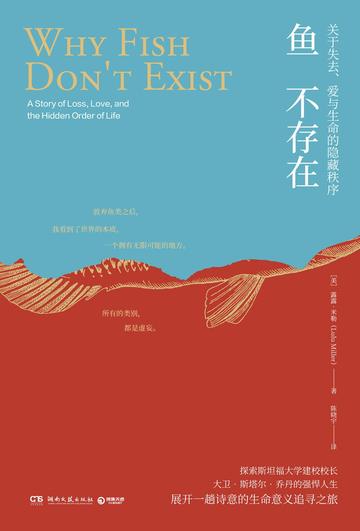
This book is very interesting! Lulu Miller combines biography, memoir, and scientific adventure to tell a story of persistence and the fight against chaos. I particularly like the description of David Starr Jordan in the book. After a setback, he used sewing needles to rebuild his collection. It is really admirable. As the book says: "A smart man will not fight it. But on a spring day in 1906, a tall American with a walrus beard dared to challenge our rulers." This sentence made me see a brave man who did not give in to chaos. I think I should be like David, not giving up easily when faced with difficulties, but finding ways to solve problems.
I first learned about this book through the podcast No One Knows About. The one-hour and forty-minute podcast actually did not allow me to fully absorb and understand the content of this book, so I found this book and read it during "internet disconnected moments" such as catching a plane or taking a high-speed train. This is a very fascinating novel. Lulu Miller starts from her own psychological changes and uses vivid language to lead us to experience a person's change in her view of the world and the universe. I was inspired and moved by David's use of needle and thread to fight against the disorder and chaos of the world, and was shocked by his proposal of eugenics in an attempt to eliminate those seemingly "inferior" genes. He lamented from a pessimistic perspective, "We are irrelevant. This is the cold truth of the universe. We are just particles in the world, born and dead in an instant, meaning nothing to the universe." Finally, he was enlightened by the "Dandelion Principle". Nothing in the universe can be simply defined. From worms to humans, from plants to fish, every species is so complex and beautiful. As Miller wrote: "Another world does exist, but it is within this world. In that world, fish do not exist, diamonds rain from the sky, and every dandelion is full of infinite possibilities. Yes, fish does not exist and the world is full of infinite possibilities. " Miller had studied David and his fish for so many years and read countless materials and notes. But when she actually saw these fish in the sea, she knew that fish did not exist.
This book starts from the perspective of "biological science" and explores the essential meaning of existence. The image of "fish" is not only the "fish" that David studies as a subject, but also an allusion to the concept of "science" behind it. After reading the entire book, I have a deeper understanding of the concept of "science". I used to think that science is the law of the universe, which is immutable. But this book goes against the grain and tells the story that "fish" does not exist. Overthrow this system and explore the secrets of the universe again. Although it denies "fish", it proves the existence of "fish". Perhaps, for life, as long as the individual feels valuable, whether the "fish" exists or not is not that important.
Keeping doubts, I think is the theme of this book, the worship of David, the understanding of the father, starting to have goals, the brokenness of worship, the accusation of eugenics, recognizing the reality, giving up "fish" and opening up ideas to find new love. The author kept thinking and re-understanding the world through David's life, and finally broke the shackles of thinking and found "another world hidden in this world."
Before the scary term eugenics appeared, I read David's experience with a frown. A natural taxonomist's anthropocentric approach to enlightenment against chaos manifests itself in proving that a species' abstract existence comes at the cost of depriving it of its concrete life. The whole article is written as if nature is the back garden of mankind, and the existential philosophy similar to the anthropic theory of the Copenhagen School, "the existence of fish needs to be discovered to be confirmed" is really full of arrogance. It wasn't until eugenics was thrown out that I discovered that my previous utilitarian intuition about David was actually correct, and my confusion about the author disappeared. In the end, fish were condemned to exist in nothingness. Fortunately, the author did not stop. After breaking through the fog of chaos, she decided to find the meaning of humanism in life. I watched people shake their heads or nod at "fish does not exist". When they still loved life after seeing the truth clearly, I unconsciously raised the corners of their mouths, and a small but majestic heroism emerged in my heart to face the chaos.
A book rich in philosophy that no one knows about. The world is chaotic, but human beings have always tried to make the world orderly. Everything that is orderly must serve us humans. All abstract concepts created by humans do not exist. The category of fish does not exist, but concrete life does exist, so life is meaningless, but I am alive. No individual life experience of mine can be 100% replicated. Meaning is constantly and actively discovered and created in the process of personal growth. There are no two identical leaves in the world, and there are no two identical me. From this perspective, life is so magnificent.
1 The initial thought that fish did not exist was due to the devastating impact of the earthquake, which made the classification of fish seem meaningless. After reading it, I realized that the non-existence of fish is God's joke on the protagonist's life work. It is a kind of strange fairness. The world is so chaotic and full of variables. 2 I feel that this book is somewhat similar to "Flowers for Alejnon", opposing science without human concern. But this book contains more. She uses this example to show two sides of the same coin. The protagonist's belief has enabled him to achieve many achievements and also caused him to hurt many people. At the same time, this book's concepts of opposing prejudice, respecting and understanding others, and emphasizing love are in line with mainstream Western values. Frankly speaking, when I read this book, I was deeply moved by these, and believe that the world will be better if these are realized. But I also thought about some of the chaos in the West, and found that imagination is beautiful, but reality is always not what you want. Although these ideas are beautiful, they can also be easily exploited by others. However, this also reflects the power of belief. It is precisely because it is powerful enough that it will be used by others. So we should believe in the power of belief.
In fact, in the end, I didn't think there was anything that could fight chaos. I still followed the simplest truth, the only possible weapon to deal with it: love. A particle in the vast universe is also trying to collide with other particles, seeking a home.
I wish you all can find your own unique certainty in an uncertain world
Very nice. It is a process of development. It's telling people's confusion and confusion. But go towards what your heart desires. Also very courageous. But I don't know if everyone is so lucky. Finish such a life. [Blowing kiss][shy]
The realistic ending is also very interesting. David, the eugenics scholar who spent his whole life frantically labeling everything in an attempt to be remembered in history, was eventually stripped of his name; and Lulu, the author who once despaired when the world fell into chaos, finally won the applause of the world and inner freedom by giving up labels. In fact, our self-perceived perfect classification and cognition are often determined by our blind spots.
It's very comfortable to watch. It starts from the biography, but it is not a blind pursuit. The opportunity to explore other people's past is also an opportunity to sort out one's own heart. We are all incredibly small in this chaotic world, but we are also important.
I don't matter, I'm a tiny drop in this world. But I don't care, I just need to live my own life... No, I am not important because I am not important to the vast universe, but in a sense, I am also important. Meaning is given by yourself, right? I exist, I give meaning, I am needed, I am needed
I'm very happy that Lulu finally found the best state of her life Compared to the story of David, the crazy and stubborn scientist I'm more curious about Jane Elizabeth Lathrop's experience
This is the best book I've read this year
There are magnificent things in the world, and if you can't see them, that's your problem.
The author's changing attitude toward David, the existence of fish, and eugenics. What is is? What is right and wrong? Nothing is final yet. What is war? What is evil? Will never be known.
A very shocking book. The unconventional chicken soup makes people feel the uniqueness of each individual. Life is actually very good.
A book that can be read several times.
Somewhat philosophical
Fish does not exist, but fish does exist.
Well, well, I like all the questioning of anthropocentrism.
In this book, the author and I went into David's world to find the "answer"—to figure out what people would become when they refused to give in to chaos.
Very good, 🐟 does not exist, the clear-cut ladder does not exist, there is still the meaning we give ourselves in the chaos, even if we are like a mote of dust, every mote of dust is important...
The plot has ups and downs and is fascinating