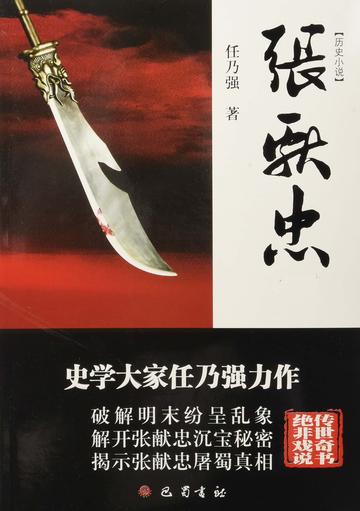
Synopsis
In booklists 6

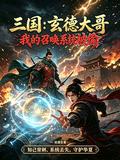
What’s the Most Popular Historical Novel on Tomato Novel?
I want something like Claiming the Surname Zhuge: Vast Heavens, Rebuild the Han Dynasty!

Tomato Novel Launched a Writing Contest About the Ming Dynasty, but I Can't Find Any Ming Dynasty Novels Anywhere.
Tomato launched a writing contest about the Ming Dynasty, but I can't find any Ming Dynasty novels anywhere. Does anyone have recommendations???
Looking for Books About Changing History at the End of the Ming Dynasty
I'm looking for books like "Rebuilding China in the Late Ming." I want a story about changing the course of history in the late Ming dynasty, without anything too far-fetched or a harem. Ideally, it should be as realistic as possible.
Looking for Historical Fiction
Looking for books similar to Britain: The Glory of the Empire on Which the Sun Never Sets.

Any Books That Can Teach You Something?
Looking for books like "The Art of Character Divination." I want something with real substance that doesn't feel stiff or boring.
Capture the Essence of Transmigration, and Let the Ming Dynasty Fade Into the Wind
Looking for books like "The Remnants of the Ming Dynasty Reborn". Why transmigrate? To do what you couldn't do before and make your dreams come true.
Reader comments 9
Translated by Google Translate
Zhang Xianzhong, also known as Yishan, also known as Li Zicheng, was one of the leaders of the peasant uprising in the late Ming Dynasty. After the fall of the Ming Dynasty, he established the Daxi Kingdom and became an important political force in Chinese history. Zhang Xianzhong was originally a farmer. During the social unrest in the late Ming Dynasty, he was affected by the dissatisfaction and resistance of the farmers and launched an uprising against the rule of the Ming Dynasty. As a rebel, he launched a large-scale peasant uprising in Sichuan, eventually captured Chongqing and established the Daxi Kingdom regime. This book provides a brief summary of his historical development.
Zhang Xianzhong was the leader of the peasant army in the late Ming Dynasty and the only emperor of Daxi. He called himself King of the West and his reign was "Dashun". Zhang Xianzhong gathered a crowd to revolt in Yan'an in 1630 and joined the peasants' armed struggle against the Ming Dynasty. Cooperating with Li Zicheng and other peasant armies, they fought with the Ming army for 17 years and eliminated the effective strength of the Ming army. In 1646, his general Liu Jinzhong rebelled and led the Qing army to directly attack the camp. Zhang Xianzhong was seriously injured and died in Xichong. Zhang Xianzhong made important contributions to overthrowing the Zhu Ming Dynasty and was as famous as Li Zicheng.
Zhang Xianzhong, who is as famous as Li Zicheng in history, established the Daxi regime and is worthy of being one of the leaders of the peasant uprising in the late Ming Dynasty. Although he came from a poor family, he was smart and stubborn since he was a child, and he had his own ideas. You can see some clues from doing business with his father when he was a child, not to mention working as a policeman, joining the army, and even organizing a peasant uprising when he grew up... On January 2, 1647, he personally led troops to Fenghuang Mountain in Xichong to fight the Qing army. He was later shot to death by an enemy general with an arrow, ending his legendary life at the age of only 41 years old.
From a very objective and fair perspective, the author describes the history of the fall of the Ming Dynasty and the rise of the Qing Dynasty, as well as the rebellion of refugees such as Zhang Xianzhong and Ji Zicheng. Unlike Yao Xueyin's writing about Li Zicheng, his attitude is too flat and too much whitewashing to be true. Indeed, this book is very well written and can be read as either a history book or a novel. It is both true and interesting, and the author's profound knowledge is even more impressive. Regardless of astronomy, geography, customs, the government and the public, inside and outside the palace, Tusi barbarians, border fortresses... Nini's story is all in order.
The characters in this book are distinct and the story is engaging. For example, the four categories of content that the Baozhengs talked about on the stage showed the simplicity and yearning for a peaceful life of the people at that time. The description of "the moon waxes and waxes" also lays the groundwork for the subsequent plot development, making people want to know what will happen next. Looking forward to the development of the story later!
There are many legends about Zhang Xianzhong in Sichuan. If we could collect them, we could write a book
I am so angry that I miss me, Chen Yuanyuan, because of my fair skin and beauty.
Real, vivid, interesting and fascinating
Great. OK.