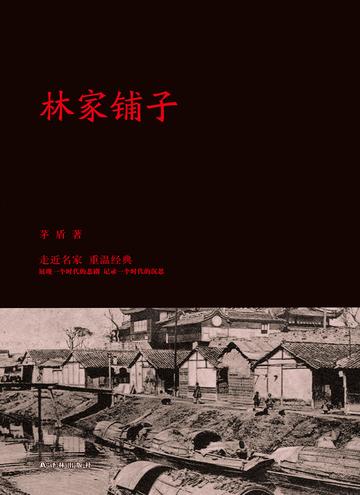
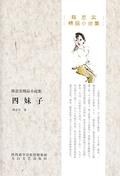
This book includes Mr. Mao Dun's short stories such as "Lin's Shop" and "The Rural Trilogy".
"Lin's Shop" was originally called "Bankruptcy". It is set in the rural areas of Jiangsu and Zhejiang before and after the "January 28th Incident" in 1932. Through the process of Lin's Shop from struggling to bankruptcy, it reveals the bad luck of national businesses going bankrupt. In 1959, writer Xia Yan adapted it into a script, and the movie of the same name became a screen classic.
Reader comments
Mr. Mao Dun's life experience gave him deep sympathy and helplessness for the suffering of the people at the bottom during the period of social transformation. With the country in all-round decline and backwardness, individual efforts to escape destiny are ultimately in vain. The more diligent people are, the more likely they are to suffer heavier losses, and the more hopeful people are, the more disappointed they will be. Just like the Lin's Shop in the story and the Jiangcun family in "Spring Silkworms", under the military and economic impact of foreign powers, all that awaits them is closure and bankruptcy.
This is a book introducing traditional Chinese culture. It takes Lin's Shop as the background and shows readers the richness and diversity of Chinese culture by describing the stories and works of different famous people. This book tells the lives, thoughts and artistic achievements of famous artists in a lively and interesting way. Through simple and easy-to-understand descriptions and meticulous illustrations, the author leads readers into the world of famous people and feels their wisdom and charm. This book will give readers an experience of getting close to famous artists and traditional culture. It allows people to re-understand and appreciate the profoundness of ancient Chinese culture, and develop a deeper interest in traditional art and thought.
My biggest impression of the contradiction between modern authors is that my country's highest literary award, the Mao Dun Literary Award, was established in his name. Apart from this, I don't think I have read any other works of his. When I opened the work today, I found that his writing style is smooth and delicate. In just a few lines, he describes the background of the story, the protagonist's demands, and even his innermost desires. After reading a short chapter of the story, I couldn't help but sigh. No wonder the author has won such an honor. His writing skills are really extraordinary.
This is a book introducing traditional Chinese culture. It takes Lin's Shop as the background and shows readers the richness and diversity of Chinese culture by describing the stories and works of different famous people. This book tells the lives, thoughts and artistic achievements of famous artists in a lively and interesting way. Through simple and easy-to-understand descriptions and meticulous illustrations, the author leads readers into the world of famous people and feels their wisdom and charm. This book will give readers an experience of getting close to famous artists and traditional culture. It allows people to re-understand and appreciate the profoundness of ancient Chinese culture, and develop a deeper interest in traditional art and thought.
Excellent writers are good at describing similar groups from different aspects. For example, they all write about farmers. Lu Xun focuses on revealing their mental trauma, while Mao Dun focuses on describing their economic bankruptcy. Of course, Mao Dun also writes about the spiritual world of farmers, but his starting point is their economic bankruptcy, so his portrayal of farmers must serve this social science proposition. In other words, although Mao Dun tried to write about the spiritual world of farmers from the perspective of combining history and reality, because his view of farmers is a priori, that is, "what farmers are like" is known, so no matter how superb artistic techniques he uses to write a typical image of farmers, this image is distorted to a certain extent.
In troubled times, people's lives are so difficult that they can't survive even if they risk their lives. At a time when life and death are at stake, who would still care about propriety, justice, integrity, benevolence and morality? What's more, they are all people who have nothing to rely on and have not yet developed their wisdom. Why is the word "miserable" so important?
Most of Mr. Mao Dun's works truly restore the real life of the people before and after the Revolution of 1911, and this book is also set in the countryside, truly restoring the tragic situation of the people before the revolution in China's rural areas and the history of the struggle of the peasant class, proletarian workers and petty bourgeoisie under the premise that the development of national industry and commerce was fruitless. I am particularly interested in the rural trilogy composed of the next three articles, from spring silkworms to autumn to late winter; this is a true portrayal of modern Chinese rural areas, with spring planting but no autumn harvest; there is no idle land but farmers still starve to death; this tragic picture of all living beings is so sad even when I read it now.
Wow, the book "Lin's Shop" is really a classic! It allowed me to see the rise and fall of national business in that era, just like watching a wonderful movie. I particularly like the characters in the book. They are all so vivid, as if they could have stepped out of the book. The script adapted by Xia Yan is also very good, and the movie of the same name is really a screen classic! This reminds me of "Camel Xiangzi", which also reveals the social reality. They both gave me a deeper understanding of past society. Have you ever watched "Camel Xiangzi"? I think Xiangzi in it is really distressing.
The author's overall view describes the living conditions of people of all walks of life at that time from many aspects and angles. The writing is very touching.
Mr. Mao Dun's life experience gave him deep sympathy and helplessness for the suffering of the people at the bottom during the period of social transformation. With the country in all-round decline and backwardness, individual efforts to escape destiny are ultimately in vain. The more diligent people are, the more likely they are to suffer heavier losses, and the more hopeful people are, the more disappointed they will be. Just like the Lin's Shop in the story and the Jiangcun family in "Spring Silkworms", under the military and economic impact of foreign powers, all that awaits them is closure and bankruptcy.
This is a book introducing traditional Chinese culture. It takes Lin's Shop as the background and shows readers the richness and diversity of Chinese culture by describing the stories and works of different famous people. This book tells the lives, thoughts and artistic achievements of famous artists in a lively and interesting way. Through simple and easy-to-understand descriptions and meticulous illustrations, the author leads readers into the world of famous people and feels their wisdom and charm. This book will give readers an experience of getting close to famous artists and traditional culture. It allows people to re-understand and appreciate the profoundness of ancient Chinese culture, and develop a deeper interest in traditional art and thought.
My biggest impression of the contradiction between modern authors is that my country's highest literary award, the Mao Dun Literary Award, was established in his name. Apart from this, I don't think I have read any other works of his. When I opened the work today, I found that his writing style is smooth and delicate. In just a few lines, he describes the background of the story, the protagonist's demands, and even his innermost desires. After reading a short chapter of the story, I couldn't help but sigh. No wonder the author has won such an honor. His writing skills are really extraordinary.
This is a book introducing traditional Chinese culture. It takes Lin's Shop as the background and shows readers the richness and diversity of Chinese culture by describing the stories and works of different famous people. This book tells the lives, thoughts and artistic achievements of famous artists in a lively and interesting way. Through simple and easy-to-understand descriptions and meticulous illustrations, the author leads readers into the world of famous people and feels their wisdom and charm. This book will give readers an experience of getting close to famous artists and traditional culture. It allows people to re-understand and appreciate the profoundness of ancient Chinese culture, and develop a deeper interest in traditional art and thought.
Excellent writers are good at describing similar groups from different aspects. For example, they all write about farmers. Lu Xun focuses on revealing their mental trauma, while Mao Dun focuses on describing their economic bankruptcy. Of course, Mao Dun also writes about the spiritual world of farmers, but his starting point is their economic bankruptcy, so his portrayal of farmers must serve this social science proposition. In other words, although Mao Dun tried to write about the spiritual world of farmers from the perspective of combining history and reality, because his view of farmers is a priori, that is, "what farmers are like" is known, so no matter how superb artistic techniques he uses to write a typical image of farmers, this image is distorted to a certain extent.
In troubled times, people's lives are so difficult that they can't survive even if they risk their lives. At a time when life and death are at stake, who would still care about propriety, justice, integrity, benevolence and morality? What's more, they are all people who have nothing to rely on and have not yet developed their wisdom. Why is the word "miserable" so important?
Most of Mr. Mao Dun's works truly restore the real life of the people before and after the Revolution of 1911, and this book is also set in the countryside, truly restoring the tragic situation of the people before the revolution in China's rural areas and the history of the struggle of the peasant class, proletarian workers and petty bourgeoisie under the premise that the development of national industry and commerce was fruitless. I am particularly interested in the rural trilogy composed of the next three articles, from spring silkworms to autumn to late winter; this is a true portrayal of modern Chinese rural areas, with spring planting but no autumn harvest; there is no idle land but farmers still starve to death; this tragic picture of all living beings is so sad even when I read it now.
Wow, the book "Lin's Shop" is really a classic! It allowed me to see the rise and fall of national business in that era, just like watching a wonderful movie. I particularly like the characters in the book. They are all so vivid, as if they could have stepped out of the book. The script adapted by Xia Yan is also very good, and the movie of the same name is really a screen classic! This reminds me of "Camel Xiangzi", which also reveals the social reality. They both gave me a deeper understanding of past society. Have you ever watched "Camel Xiangzi"? I think Xiangzi in it is really distressing.
The author's overall view describes the living conditions of people of all walks of life at that time from many aspects and angles. The writing is very touching.