This is a world full of blood and killing...
People and things, good and evil, love and hate together make up this world...
There is no absolute safety in this world...
Even the people closest to you will betray you...
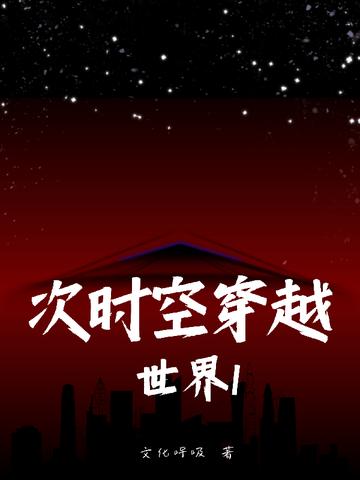
When dusk falls,
Under the scarlet sky,
Can you find the true meaning of life?
Reader comments
When consciousness separates from the body and floats in the gap between time and space, when cold divinity and warm humanity collide fiercely, this story about death and transaction is actually a deep deconstruction of the essence of "existence".
The author uses delicate psychological descriptions and tense dialogues to construct a spiritual labyrinth that wanders between reality and surreality.
Qin Zheng's state of consciousness constitutes the core setting: from the instinctive resistance to death (pinching hands to verify the pain, refusing to look at the body) to the psychological collapse of being forced to accept it, to the final game of interests with the God of Time and Space, his emotional curve accurately captures the cognitive rupture when humans face existential crises.
The god of time and space is in sharp contrast to his indifferent divinity. He enforces the rules with mechanical rationality, but reveals the loneliness of divinity in the self-mockery of his identity as a "traveler." This role tension makes the power relationship between "gods and humans" full of irony:
He seems to be a god who controls life and death, but he is actually a prisoner subject to rules.
The visual treatment of death in the novel is extremely impactful: the tragic appearance of the corpses in the morgue and the stillness of time and space at the accident scene transform the abstract fear of death into concrete sensory stimulation.
Questions such as "Is the conscious body equal to the soul" and "Does resurrection mean rebirth" go beyond the logic of traditional fantasy and point to philosophical speculation on the nature of life.
When the deal is concluded, Qin Zheng's "hope for resurrection" and God's "trouble" form an absurd footnote, implying the accidental and absurd nature of existence.
Creating a sense of dizziness through the rapid switching of scenes (train - black void - field - morgue), it appropriately simulates the... Well... It can be called a lost state as a conscious body.
The identity confirmation ("Are you Qin Zheng") and rule explanations that appear repeatedly in the dialogue not only promote the plot, but also strengthen the question of "who am I?"
In this soul negotiation, every choice is a rewriting of the meaning of existence.
When consciousness can exist without the body, and when divinity is just a prisoner of another kind of rule, human beings' desire for eternal life will eventually return to the origin of "how to prove their existence."
The above is my understanding. This book is worth recommending.
When consciousness is separated from the body, will the world after death still be the same world? The article is very imaginative and very sci-fi. The conversation between the two people at the beginning is also a bit funny. It can be seen that the author put his heart into it. After the death of the male protagonist, he traveled around the world with God as an inspector and witnessed the process of restoring human nature. He used his eyes to record and feel that the basic components of the world are intertwined, and the way to survive lies within it.
It's a great novel, I feel like it can become something big, especially the details. I feel it's very comprehensive, and the plot is also great. It gets at least nine points (out of ten). I hope I can witness the birth of a masterpiece!
The idea is very novel and interesting. I use the name of God to travel through worlds. I highly recommend it.
It's a very nice book. The author has rich imagination and mature thoughts. Although there is only one point, it should express a lot of things [love]
Each chapter is so long, I can't stop reading it
The author is very imaginative, worth reading [Like]



When consciousness separates from the body and floats in the gap between time and space, when cold divinity and warm humanity collide fiercely, this story about death and transaction is actually a deep deconstruction of the essence of "existence". The author uses delicate psychological descriptions and tense dialogues to construct a spiritual labyrinth that wanders between reality and surreality. Qin Zheng's state of consciousness constitutes the core setting: from the instinctive resistance to death (pinching hands to verify the pain, refusing to look at the body) to the psychological collapse of being forced to accept it, to the final game of interests with the God of Time and Space, his emotional curve accurately captures the cognitive rupture when humans face existential crises. The god of time and space is in sharp contrast to his indifferent divinity. He enforces the rules with mechanical rationality, but reveals the loneliness of divinity in the self-mockery of his identity as a "traveler." This role tension makes the power relationship between "gods and humans" full of irony: He seems to be a god who controls life and death, but he is actually a prisoner subject to rules. The visual treatment of death in the novel is extremely impactful: the tragic appearance of the corpses in the morgue and the stillness of time and space at the accident scene transform the abstract fear of death into concrete sensory stimulation. Questions such as "Is the conscious body equal to the soul" and "Does resurrection mean rebirth" go beyond the logic of traditional fantasy and point to philosophical speculation on the nature of life. When the deal is concluded, Qin Zheng's "hope for resurrection" and God's "trouble" form an absurd footnote, implying the accidental and absurd nature of existence. Creating a sense of dizziness through the rapid switching of scenes (train - black void - field - morgue), it appropriately simulates the... Well... It can be called a lost state as a conscious body. The identity confirmation ("Are you Qin Zheng") and rule explanations that appear repeatedly in the dialogue not only promote the plot, but also strengthen the question of "who am I?" In this soul negotiation, every choice is a rewriting of the meaning of existence. When consciousness can exist without the body, and when divinity is just a prisoner of another kind of rule, human beings' desire for eternal life will eventually return to the origin of "how to prove their existence." The above is my understanding. This book is worth recommending.
When consciousness is separated from the body, will the world after death still be the same world? The article is very imaginative and very sci-fi. The conversation between the two people at the beginning is also a bit funny. It can be seen that the author put his heart into it. After the death of the male protagonist, he traveled around the world with God as an inspector and witnessed the process of restoring human nature. He used his eyes to record and feel that the basic components of the world are intertwined, and the way to survive lies within it.
It's a great novel, I feel like it can become something big, especially the details. I feel it's very comprehensive, and the plot is also great. It gets at least nine points (out of ten). I hope I can witness the birth of a masterpiece!
The idea is very novel and interesting. I use the name of God to travel through worlds. I highly recommend it.
It's a very nice book. The author has rich imagination and mature thoughts. Although there is only one point, it should express a lot of things [love]
Each chapter is so long, I can't stop reading it
The author is very imaginative, worth reading [Like]
Very interesting, very familiar