Lin Xin never imagined that, with her life hanging in the balance, she would have to complete missions to return to the real world.
Having been single her whole life, she becomes a matchmaker and helps other people find love.
Her daily routine:
Eat well, sleep well, and complete her missions.
Who could have guessed
that every mission would feature a villain trying to steal the heroine?
As she clears away the obstacles,
she gradually realizes something is wrong.
This villain seems to have some kind of bewitching power.
Help!
She won't let herself be won over by good looks.
The villain's cold-hearted wife gets her moment of satisfaction,
then comes the long road to winning her back.
But wait, is she really headed for the crematorium?
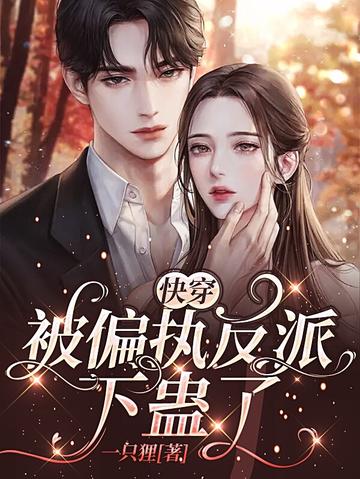



The following are just my personal feelings: I mainly read the first story in detail, and it felt quite sad. Because as the heroine, I felt that the heroine actually likes the villain, but the villain has always liked the heroine's best friend (although the heroine's best friend does not like him). Normally, this connection should be cut off or the heroine would be given a new official partner, but no, I think this is a very nice innovation👍 When reading, I feel that the content of the article will be relatively bland, similar to a narrative and a record from the perspective of a bystander, allowing people to find clues from it. Except for the psychology of the heroine, there will be a little description of other people. This actually gives a lot of room for people to guess, but the disadvantage is that readers will be confused, and some plots may be written too much to make readers understand, which is not easy to read. In terms of the emotional portrayal of the male and female protagonists, I personally feel that the female protagonist in the first story is a pure tool and the male protagonist is very rude and has a bad impression of the male protagonist. (Because it is from the perspective of the heroine, but if you think about it carefully, it may indeed be the character of the hero based on his family of origin.) There is also the heroine's best friend, is she really a best friend? I feel that I am not quite able to accept the portrayal of my best friend's relationship (I think we can add some scenes about the best friend confiding her feelings to the heroine, so that the audience can understand it better) The heroine's character creation, I think, is a bit more flat, but also more contradictory, because everyone has their own character background. That is, when the heroine first came here, she found that her grades were relatively poor, and she had an enterprising spirit. So I think this actually hints at the heroine, she hopes that she can become better, and later I feel that the heroine may He just likes a little villain, (of course, it may be that the reader has too much self-introduction), but he did not try to win for it, or if he is, he thinks that his best friend is the most important, and this psychological struggle is whether he can write a little more. In this case, I think the character of this character may be more fleshed out. I think the male protagonist's character is very cold, and the kind of person that no one likes except the female protagonist's best friend. Because I watched it relatively quickly, I felt that the process of the male protagonist falling in love with this best friend would be a bit confusing. And as a human being, he actually has a certain fondness for people who prefer him, but the heroine's best friend is in a state of complete rejection from the beginning of her contact with the hero or later. Then I think we can add some more details. For example, when seeing the male protagonist being rude to others, he will have certain expressions or some small verbal expressions, which can hint to why the female protagonist's best friend does not like the male protagonist. I think this will be more specific. Finally, I want to talk about my own feelings. When I read this article, I didn't like the male protagonist too much. The opening chapter gave me such a critical blow that he was very rude. But think about it, in fact, I read other articles that the male protagonist likes the female protagonist, and he is only gentle to the female protagonist. I might just call him crazy (′~`;). So actually, I still have a bit of a double standard. I think in the first article, the male protagonist is the kind of person with a relatively high IQ. I feel that this is what the author wants to portray, and later on, when the heroine's best friend and the male protagonist are engaged, they suddenly say that they have failed. I was a little confused, because even people with high IQs usually have high emotional intelligence, so he actually has to wait until he achieves his goal. There must be various cover-ups. It must be that he molds his character according to the direction that the heroine's best friend likes. This is what I think is more in line with the tendency of um, high IQ and high EQ, but there is no such thing. Then he suddenly said something later, breaking his plan or something. I think these two aspects will be more contradictory.
I can't see any love between the male and female protagonists.
I have basically finished it, but if you want to watch Crematorium or want to read a romantic novel, it is best not to watch it, because the emotional drama between the male and female protagonists is really very shallow (that is, the feeling that the relationship gradually deepens from the first hour to the second hour to the third hour to the fourth hour). The writing is still very good, and it feels like a daily novel.
In the first story, does the male protagonist like the female protagonist or the female protagonist's best friend?
I feel like reading this book makes me feel sad.