Is Traditional Fantasy Really in Decline? I Haven't Found a Good One so Far.
I'm tired of reading new fantasy novels. I kind of miss the authentic tradition of the past. There can be cheats, but they are not a system. You can be reborn, but you can't travel through time. If there is no heroine or only one heroine, it is best if the protagonist works hard alone and succeeds in the end.
14.9MViews315Books14hUpdated
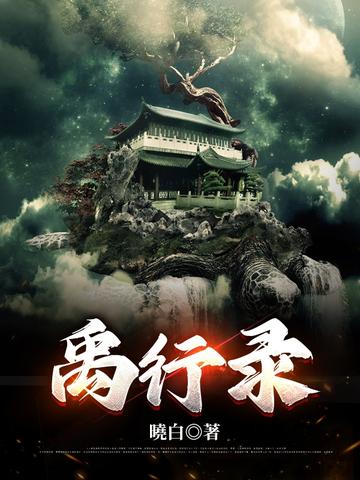
This book is wonderful. It contains seven points of ancient charm and three points of thoughtful thinking. It is a good story, but it is difficult to make a good novel. I wonder how many people can calm down and read it. Keep working hard. It is only a matter of time before the immortal will come forward.
First comment, self-encouragement! [Shy] The whole book "Yu Xinglu" is set in the late Xia Dynasty, and reflects the mysterious pre-Qin world through the growth experience of the two protagonists, Xia Geng and Xia Yun. What is interesting is that the book incorporates a large number of mythological stories from the prehistoric period, which reflects the order of gods and demons in the late Xia Dynasty during the wars and wars. It allows readers to redefine traditional mythology and make those fragments of well-known mythology more coherent and logical. Friends who are interested in mythology may wish to take the time to read it and give the author some comments and suggestions. Regarding the reason why "Yu Xing Lu" was written, it was not to explain some enlightening words or principles of life, but to make up for the gray history of my country's first hereditary dynasty. Why is it said to be gray history? Because so far, no strong evidence has emerged to prove the existence of the Xia Dynasty, or whether the Xia Dynasty is a real dynasty, such debates still continue. Therefore, the idea of writing "Yu Xing Lu" came into being. The background of the late Xia Dynasty can be found in fragments on many websites or books, and it has also become a necessary part of the book. In addition to writing skills, an appealing work must also attract readers' interest by matching some text fragments in history books, which can make readers feel as if they are fantasy and reality. For example, it is recorded in the Dahuangxi Jing of "The Classic of Mountains and Seas": There is a person without a head, standing with a sword and a shield, named Xia Geng's Corpse. Therefore, Cheng Tang attacked Xia Jie at Zhangshan, defeated him, and cut off the front of the army. After the plowing was established, there was no leader, and it was easy to find faults, so it descended to Wushan. Just a piece of information like this provides a lot of inspiration for writing. We can see from it that in late summer, Shang Tang attacked Xia Jie in Zhangshan. Xia Geng was beheaded to protect Xia Jie, but something magical happened. In the clip, Xia Geng lost his head and was able to escape to Wushan. Naturally, in reality, it is impossible for anyone to be beheaded and survive, let alone escape. Because of this, the scenes of Xia Geng cast a layer of mystery in the last years of the Xia Dynasty. We can't help but think about whether there were really any magic, magic or the like at that time? Therefore, the characters in "Yu Xing Lu" naturally need some fantasy spells and imaginative embellishments to infect this mysterious era. Looking back, if there was any magical magic at that time, why is it gone in modern times? In order to make up for the supernatural things in ancient books, the book also sets up a prologue from the creation of Pangu to the establishment of the Xia Dynasty. It briefly introduces how the Three Sovereigns and Five Emperors grew from humans to immortals, how they understood the harm of magic and immortality to the balance of the world, and how Dayu was entrusted by the immortals to seal all the gods, demons, magic and immortality into the Jiuding, so that the world could return to its original nature. Therefore, the book "Yu Xing Lu" naturally revolves around the battle for Jiuding to reflect the mystery of the late Xia Dynasty. From a modern perspective, the above-mentioned strange things about gods and men are naturally nonsense, or they are just fictions created by later generations' worship of nature. So was the Xia Dynasty a tribe that didn't even have a city-state, or was it a huge empire with endless luxury? This is obviously not something that novels such as "Yu Xing Lu" can prove, but the author believes that the scale of the Xia Dynasty in "Yu Xing Lu" is already extremely extravagant. Since in the book, when the Xia Dynasty was founded, the whole human world unanimously promoted Dayu as the king, all the tribal leaders were convinced that although the productivity was not high and they could not even build towns on a large scale, they did not stop doing anything and simply set up the Xia Dynasty into a luxurious empire. In order to make the story more logical, the characters have also inserted a lot of intrigues and inner activities, which may be too different from the historical environment and understanding of the Xia Dynasty. However, this is not a history book after all, and there is no need to interpret everything truthfully. Just like my friend asked about the weapons in the book, the last years of the Xia Dynasty were an era when even knives were not developed. If we really want to talk about the weapons at that time, they might just be some modified agricultural tools. Another example is the language dialogue and military strategy during the Xia Dynasty. Was the war at that time a competition for hunting territory or a conflict purely caused by rejecting foreigners? These were all very pure behaviors without too many detailed arrangements. The military strategy was at best a group fight and not a war. If we really wanted to apply it to the actual situation at that time, there would be no point in writing a novel at all. Of course, "Yu Xinglu" should also retain some pre-Qin traditions, such as sacrifices and rituals, which were top priorities in feudal society. Sacrifice is the foundation for the prosperity of the country, and etiquette is the basis for the people's belief. Natural disasters were in full swing at the end of the Xia Dynasty. As a ruler, Xia Jie naturally knew that offering sacrifices to heaven and earth could not change the natural disasters. The purpose of these shows was just to reassure the people of the world. His Dali minister Zhao Liang suggested that all time and energy should be spent on conquering the rebellious princes and attacking the forces that threatened the Xia Dynasty, so as to reduce or eliminate such shows as offering sacrifices to heaven and earth. However, Guan Longpang believed that the people would not stand up if they had no faith. Only by showing sympathy to the people's sufferings could they gain their trust and support. Xia Jie thought that both of them were reasonable, but after repeated weighing, he still adopted Zhao Liang's strategy. At that time, natural disasters were rampant and the country's reserves were all used on the military. Where was there any spare food to help the people? The people were tired of such days, tired of such wars, tired of such rulers, and even began to curse Xia Jie like a vicious natural disaster. Zhugui, the father of Chengtang, the founder of the Shang Dynasty, also saw the aspirations of the people. Unfortunately, how could Xia Jie not be on guard against the Shang clan, a great prince? Zhugui naturally became the target of attack and died in depression. It is precisely because of the background of the times when the people are in dire straits that many heroes will inevitably appear. Cheng Tang later inherited his father's legacy, wandered around with Lai Zhu, and won over the princes. Later, he met Yi Zhi, a great sage, and made the "Tang Oath" at the battle between Ming Tiao and Xia Jie. In the end, when the Xia Dynasty overthrew the tyranny, Lai Zhu wrote "Zhong Hui's Edict" to appease the world and other historical stories. "Yu Xing Lu" also contains this series of ancient book fragments and intersperses them with the plot to make it more convincing. Chengtang's success relies on talents, benevolence and timing, which is quite in line with the development trend of the times. The author believes in this process of changing dynasties, and the gray historical part has become more or less colorful because of "Yu Xinglu".