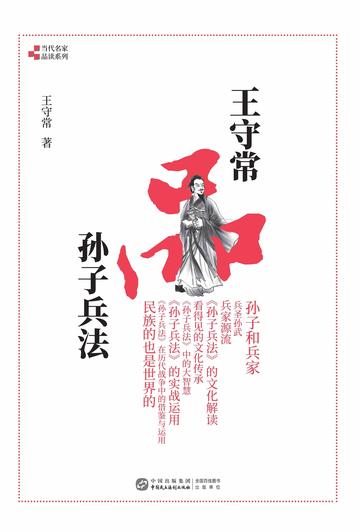
He is a scholar of the history of Chinese philosophy, thought and religion. As an early participant and current "head" of the "Chinese Culture Academy", one of the three major groups that influenced the "cultural boom" in the 1980s, he is an advocate and practitioner of "Chinese Studies" education in China's new era. This book expounds the strategies, tactics and wisdom of "Sun Tzu's Art of War" on the application of wisdom in various fields; it comes to the analytical thinking of "the Golden Mean"; then it combs and lists multiple authoritative commentators on "Sun Tzu's Art of War", and then organizes and summarizes the translations; finally, it looks at the world and conducts a multi-faceted review and analysis of the research and application of "Sun Tzu's Art of War" in Japan, the United Kingdom, France and the United States, and concludes with the "universal" wisdom of "Sun Tzu's Art of War". It gives people a unique interpretation and reading, making Chinese studies more down-to-earth.
Reader comments
Wang Shouchang, who believed in morality and strategy, had never experienced a commercial espionage war, but he was unwilling to apply Sun Tzu's art of war to commercial games; on the contrary, he privately believed that Sun Tzu's Art of War was the embodiment of a view of war with strong humanistic care and moral spirit; although Although there are many strategic theories in Sun Tzu's Art of War, the emphasis on morality and politics in it is actually what people today need to pay special attention to. To defeat the enemy without fighting is Sun Tzu's ultimate belief, that is, to rule with ethical concepts such as justice and integrity, rather than to use deceit and trickery to temporarily govern.
Wang Shouchang was a famous strategist, general and military theorist in the Ming Dynasty. He conducted in-depth research on "Sun Tzu's Art of War" and combined it with his own practical experience to create "Wang's Art of War". In his book "Comments on Sun Tzu's Art of War", Wang Shouchang gave a detailed explanation and elaboration of "Sun Tzu's Art of War", and put forward his own theories and opinions based on the war cases and war environment at that time. Wang Shouchang's thoughts on the art of war emphasize people-oriented, attach great importance to the training of soldiers and the encouragement of morale, focus on tactical flexibility, and oppose sticking to rules and rigid thinking. His theory was also widely influenced by later military strategists and became an important part of traditional Chinese military science.
"The Art of War" is a brilliant treasure in the military cultural heritage of the ancient Chinese Han people and an important part of the excellent traditional culture of the Han people. Its content is extensive and profound, its thoughts are profound and rich, and its logic is meticulous and rigorous. It is a concentrated expression of the essence of the ancient Han military thought. It is the earliest surviving military book in China and the earliest military work in the world. It is known as the "Sacred Book of Military Science". Taoist and military philosophy are expressed everywhere. This book is written by a professor from Peking University to explain to us the profound cultural phenomena and literary connotations contained in Sun Tzu's Art of War.
Wang Shouchang was a philosopher, thinker and politician in my country in the 1980s. As a participant in the early contemporary Chinese academies, he was an advocate of Chinese traditional Chinese education in the new era. This book tells about Sun Tzu's understanding and insights into various fields in The Art of War. The author has gained some insights about Sun Tzu's Art of War through familiarity with Sun Tzu's Art of War and understanding of translations by various authorities. It gives people a unique and profound understanding of Sun Tzu's Art of War.
As an important figure in the history of Chinese philosophy, thought and religion, the author interprets "The Art of War", a military book of great significance from ancient times to the present, in the book. He explains in detail from the wisdom of combat to the strategic and tactical layout, and combines the analysis with the use of specific war cases. The content is vivid, interesting and easy to understand. Finally, he comes to the wisdom of the book that is "universal" and leaves readers with endless thoughts.
Wang Shouchang, who believed in morality and strategy, had never experienced a commercial espionage war, but he was unwilling to apply Sun Tzu's art of war to commercial games; on the contrary, he privately believed that Sun Tzu's Art of War was the embodiment of a view of war with strong humanistic care and moral spirit; although Although there are many strategic theories in Sun Tzu's Art of War, the emphasis on morality and politics in it is actually what people today need to pay special attention to. To defeat the enemy without fighting is Sun Tzu's ultimate belief, that is, to rule with ethical concepts such as justice and integrity, rather than to use deceit and trickery to temporarily govern.
Wang Shouchang was a famous strategist, general and military theorist in the Ming Dynasty. He conducted in-depth research on "Sun Tzu's Art of War" and combined it with his own practical experience to create "Wang's Art of War". In his book "Comments on Sun Tzu's Art of War", Wang Shouchang gave a detailed explanation and elaboration of "Sun Tzu's Art of War", and put forward his own theories and opinions based on the war cases and war environment at that time. Wang Shouchang's thoughts on the art of war emphasize people-oriented, attach great importance to the training of soldiers and the encouragement of morale, focus on tactical flexibility, and oppose sticking to rules and rigid thinking. His theory was also widely influenced by later military strategists and became an important part of traditional Chinese military science.
"The Art of War" is a brilliant treasure in the military cultural heritage of the ancient Chinese Han people and an important part of the excellent traditional culture of the Han people. Its content is extensive and profound, its thoughts are profound and rich, and its logic is meticulous and rigorous. It is a concentrated expression of the essence of the ancient Han military thought. It is the earliest surviving military book in China and the earliest military work in the world. It is known as the "Sacred Book of Military Science". Taoist and military philosophy are expressed everywhere. This book is written by a professor from Peking University to explain to us the profound cultural phenomena and literary connotations contained in Sun Tzu's Art of War.
Wang Shouchang was a philosopher, thinker and politician in my country in the 1980s. As a participant in the early contemporary Chinese academies, he was an advocate of Chinese traditional Chinese education in the new era. This book tells about Sun Tzu's understanding and insights into various fields in The Art of War. The author has gained some insights about Sun Tzu's Art of War through familiarity with Sun Tzu's Art of War and understanding of translations by various authorities. It gives people a unique and profound understanding of Sun Tzu's Art of War.
As an important figure in the history of Chinese philosophy, thought and religion, the author interprets "The Art of War", a military book of great significance from ancient times to the present, in the book. He explains in detail from the wisdom of combat to the strategic and tactical layout, and combines the analysis with the use of specific war cases. The content is vivid, interesting and easy to understand. Finally, he comes to the wisdom of the book that is "universal" and leaves readers with endless thoughts.