Stats
5.8Score
Synopsis
No synopsis yet.
We haven’t got an English blurb for this one. It appears once the source description has been translated.
We haven’t got an English blurb for this one. It appears once the source description has been translated.

Although the history of Nanming is not very long, it is longer than other separatist regimes in history. But why is Nanming so unpopular? This has a lot to do with a series of policies of the Qing Dynasty. When talking about the history of Nanming, we cannot avoid the ethnic issue. Although the Mongols and Manchus are now related to the Han people, at that time, they existed as alien invasions and carried out large-scale killings and conquests of the Han people. There is no official official history of this period of Nanming history, which brings corresponding difficulties to the study of Nanming history. But fortunately, there are scattered literati notes among the people that can be used as reference, so that this period of history will not sink into the dust.
Reading textbooks, history is all about life. Since ancient times, no one has died, and his loyalty will be remembered by history! If you read history carefully, you will be punished by heaven and earth if you don't care for yourself. Losing loyalty is a small matter, but reporting one's fate is a big deal! Every dynasty was afraid of death and surrendered many generals when it came to war. When the Nanming was established, the territory and strength were very strong. The entire south of the Huaihe River, which is what we call the entire south today, was the territory of the Nanming. I understand surrender very well: in the prosperous times, the country belongs to your Zhu family, and we are cattle and horses! In times of trouble, you say that the country belongs to everyone, and you let us be cannon fodder! Who is stupid? Surrender and still have food to eat!
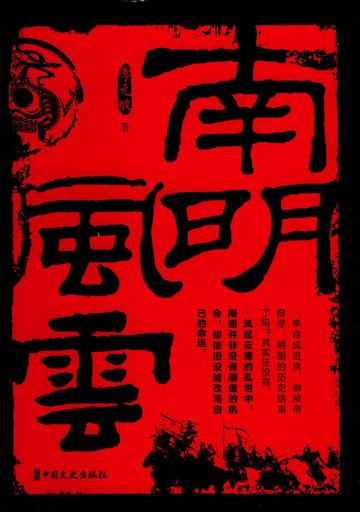
Nanming occupies a small space in the entire history of China, and its presence in history is not strong, but it is an indispensable part of history. Nanming was a period full of tragedy, but the author used humorous language to unfold it one by one in the book. This book sorts out the historical context of Nanming in chronological order and tells about the many historical figures of that period. Some of them left their names in history, and some are unknown, but you can learn about them all in this book.
We know that after the Yuan and Ming Dynasties came the Qing Dynasty, but in fact after the demise of the Ming Dynasty and the establishment of the Qing government, there was a little-known Nanming Dynasty. The Nanming Dynasty was a series of political regimes established in the south by the Ming Dynasty clan after the fall of Shuntian Mansion, the capital of the Ming Dynasty. It went through four emperors and one supervising the country. After the fall of the capital, most of the Ming Dynasty's clan and civil and military ministers turned south. At this time, Li Zicheng's Dashun occupied the original Ming Dynasty territory north of the Huaihe River, Zhang Xianzhong's Daxi occupied the Sichuan area, the Qing Dynasty occupied the northeastern region outside Shanhaiguan and Monan Mongolia, and controlled various Mongolian tribes, while the clan forces of the Ming Dynasty occupied half of the country south of the Huaihe River.
Emperor Yongli appointed Lin Jiading as the right minister of the Ministry of War, governor of military affairs, and led the army to fight. On November 29, the second year of Longwu (1646), two "Ming armies" met in the west of Sanshui County, Guangdong, and a battle ensued. The Ming army of the Yongli court was stronger and defeated the Ming army of the Shaowu court, and Chen Jitai had no choice but to escape. After the victory in the first battle, Lin Jiading thought that the Shaowu court was vulnerable and decided to take advantage of the victory to pursue it. He ordered the army to march to Guangzhou immediately in an attempt to end the coexistence of the two emperors in one fell swoop. Lin Jiading didn't know why Su Guansheng dared to be so arrogant.
Compared with many other historical periods, the history of the Southern Ming Dynasty is not only messy but also easily overlooked. This is a popular work about the history of the Southern Ming Dynasty, which generally starts from the chaos after the death of Emperor Chongzhen in 1644 and ends with the murder of Emperor Yongli in 1662. It mainly tells the history of the three periods of Hongguang, Longwu and Yongli in the Southern Ming Dynasty, and incidentally mentions the regimes of King Lu and Shaowu. While describing the war between the Southern Ming Dynasty and the Qing Dynasty, it also highlighted the fierce internal fighting during the Southern Ming Dynasty on the premise of respecting historical facts, and pointed out that internal fighting was the main cause of the demise of the Southern Ming Dynasty.
The logic is rigorous and the speculation is reasonable. Studying day and night, I can't stop.
A good book
Respect history and read a good book