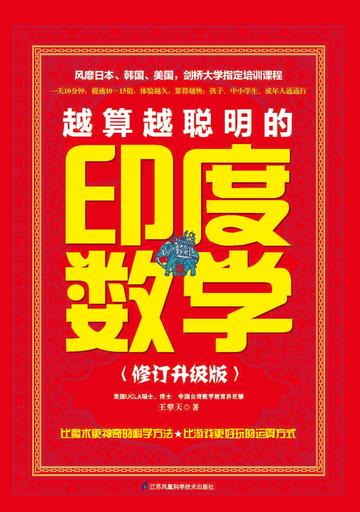
Indian Mathematics That Gets Smarter the More You Calculate It
越算越聪明的印度数学
- Status
- Completed
- Source
- Fanqie
Stats
Tags
Synopsis
Reader comments
In booklists 10



Take Stock of the "Miracle" Talents of the Law of Cause and Effect
Emulators or other things, as long as they are good books, please bring them to me ( ͡° ͜ʖ ͡°)✧



An Internal Essay About Killing a Classmate. as Long as You Can Learn Knowledge



Learning Books





Are There Any Books Similar to "The Lost City"?
The 20-year-old bookworm strongly recommends "The Lost City"! ! It's not good, you guys come and hit me. I read it in one sitting. I haven't read such a good-looking book in a long time. The Paper, you are my god🥹 Are there any similar ones? Please recommend.


Good Books on Mathematics
I just want some fun stuff! Thank you all
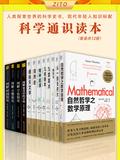
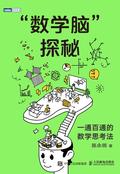
Looking for Mathematics and Physics Books
I want to read a book similar to "Elements of Geometry". I personally major in mathematics, chemistry and biology and don't care much about it.


Is There Any Book About High School Knowledge? the Inner Volume Must Be Memorized.
Chinese, mathematics, English, politics, physics, chemistry, history, geography, biology




Looking for the Kind of Novel That Has a Lot of Knowledge About Mathematics, Physics and Chemistry (Except for the Three-Body Problem)



Looking for Books Suitable for Students in the Second and Third Grade of Junior High Schoolᶻz ₍^_ ̫ _^₎
Now that I'm in my second year of junior high school, I'll look for some academic or literature books, which cover all subjects, preferably ones that junior high school students can understand.
Books About Mathematics, More Hardcore
Recently I read Stickman Learning Mathematics on Station B. I was wondering if there are any similar books like this?
After reading this book, I discovered that in addition to our country's mathematics, which has always been praised by foreigners, India's mathematics level is also relatively high. There, some children can also quickly calculate math problems of multiplying two-digit numbers by two-digit numbers, or even multiplying three-digit numbers. The secret lies in this book. The author introduces a variety of arithmetic methods in the book, which allows readers to quickly learn the application of addition, subtraction, multiplication and division and obtain the results. The book also adds pictures and mathematical questions to help readers quickly master various algorithms while reading.
Divided into three chapters, a total of fifteen simple Indian mathematical algorithms are introduced. The first to sixth formulas are classified into Chapter 1. These six simplified algorithms apply different ideas and can simplify five types of operations very effectively (one operation can be simplified using two methods). Chapter 2 contains simplified algorithms from the seventh to the twelfth formula, which respectively demonstrate the essence of "complement number thinking" in addition, subtraction, multiplication, and division operations. Chapter 3 is a relaxing and enjoyable chapter. Rather than introducing three simple algorithms, it is better to say that it leads everyone to do three thinking games or three sets of yoga relaxation exercises. In this chapter, you can truly appreciate the fun and interesting side of Indian mathematics.
This book shouldn't be rated so low. Hurry up and add it to the list so that more people can see it. [Note] It's really very practical! ! ❗
The book "Indian Mathematics Gets Smarter with Calculations" covers related content of Indian mathematics. Arabic numerals were originally invented by Indians and spread by Arabs. Speed and accuracy are the greatest characteristics of Indian mathematics. Indian mathematics takes an unusual approach and has its own unique calculation methods. The calculation speed is much faster than the usual calculation method, which is called "Vedic second algorithm". This method teaches learners how to jump over thinking obstacles and shorten the logical thinking process during operations, thereby increasing speed and reducing the probability of errors.
When I saw the title of this book, I was curious about what it was about. What does mathematics have to do with India? How can we become more and more intelligent in mathematics? After opening it, I found the answers to these questions one by one. It turned out that this was a book introducing the operations of addition, subtraction, multiplication and division in Indian mathematics. It used four chapters to tell us the basic logic and rules of mathematics, as well as how to learn mathematics. What impressed me deeply was the idea of "complement number thinking", which subverted my previous impression of mathematics.
India can be said to be the cradle of IT engineers in the world. There are quite a few Indians working in Silicon Valley in the United States. Indians also account for a large proportion of various scientists, which shows India's mathematical capabilities. The training of these talented IT engineers benefits from Indian mathematics. This arithmetic method comes from the ancient "Vedic Arithmetic Sutra". This book gradually introduces the mysteries of addition, subtraction, multiplication and division in Indian mathematics to help us understand Indian mathematics, expand arithmetic thinking, and improve arithmetic abilities.
After reading this book, I discovered that in addition to our country's mathematics, which has always been praised by foreigners, India's mathematics level is also relatively high. There, some children can also quickly calculate math problems of multiplying two-digit numbers by two-digit numbers, or even multiplying three-digit numbers. The secret lies in this book. The author introduces a variety of arithmetic methods in the book, which allows readers to quickly learn the application of addition, subtraction, multiplication and division and obtain the results. The book also adds pictures and mathematical questions to help readers quickly master various algorithms while reading.
After reading this, I realized that the mathematical methods I learned before were all wrong. It turns out that there is a simpler algorithm.
It's okay, some of them have been known for a long time. Although it may be that I haven't finished reading them yet, the first few are enough for daily use, but the hard ones behind them make simple problems more complicated [Thoughts]
India can be said to be the cradle of IT engineers in the world. There are quite a few Indians working in Silicon Valley in the United States. Indians also account for a large proportion of various scientists, which shows India's mathematical capabilities. The training of these talented IT engineers benefits from Indian mathematics. This arithmetic method comes from the ancient "Vedic Arithmetic Sutra". This book gradually introduces the mysteries of addition, subtraction, multiplication and division in Indian mathematics to help us understand Indian mathematics, expand arithmetic thinking, and improve arithmetic abilities.
I particularly like some of the number games in it, such as grid arithmetic and trigonometric cubes, which make mathematics fun and interesting. Moreover, the author Wang Qingtian explains complex mathematical knowledge very clearly and is easy to understand. Indians are really good at mathematics. This book gave me a deeper understanding of Indian mathematics and inspired my interest in mathematics!
There are always shortcuts in life, why not learn from them?
Not abstract but very practical
Isn't this just junior high school mathematics? When I saw multiplication, I realized that I didn't understand it immediately [smile]
Live until you are old and learn until you are old. Study hard.
Awesome. I really learned the sequence in high school. I didn't understand it in high school. I missed it.
It's amazing🉐, the further you go, the harder it becomes
It feels quite useful
It's quite interesting. Counting nets is really interesting.
😐It can indeed improve the computing speed.
It's really good to be taught. I learned a lot.
How can there be such a good book, but we just met so late [Adoration]