Learning Books
I want to read a book similar to "Stumping You Without Negotiation: A Complete Collection of the Coldest and Unpopular Knowledge". There is no requirement for books. They can be liberal arts books, science books, computer science books, or books on a certain subject, including miscellaneous professional books.
1.7MViews607Books2dUpdated
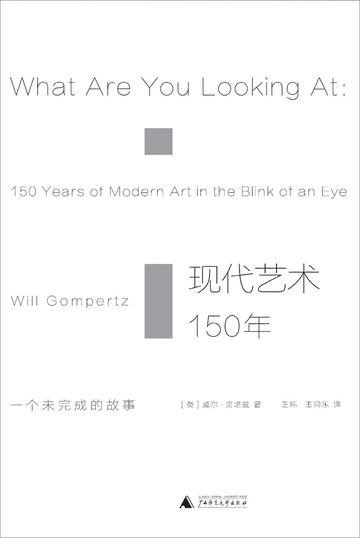

People often say that there is no art in modern times. Modern and postmodern art are highly abstract. Well-known modern art styles such as Cubism, Expressionism, Abstract Expressionism, and Pop Art have all been questioned as to whether they are real art. In this book, the author takes modern art as the theme and reviews the important developments and changes in the art world over the past 150 years. It covers various art forms, including painting, sculpture, photography, installation art, performance art, etc., And explores the creative ideas and artistic works of modern artists.
This book is a book worth reading for readers who want to systematically understand the history of modern art. The author uses history as material and people as his chapters. Through a concise and direct narrative method and solid writing skills, the author tells readers the development of modern art in the past 150 years. He comprehensively and systematically reproduces nearly a hundred artists and their representative works, and sorts out the origins and changes of more than 20 modern art schools, allowing readers to have a more comprehensive and systematic understanding of the development history of modern art. When the author talks about typical representatives, he will also add corresponding pictures, both pictures and text, to enhance readability.
This book systematically lists the development and changes of modern art over the past 150 years. From it, we can clearly feel that modern art is not an ivory tower, and its development is closely connected with everything around it. For example, the theory of relativity had a huge influence on Picasso and Cubism. The influence of psychoanalysis on Pollock and Abstract Expressionism. Small cans of paint and photography technology contributed to Impressionism, commodity printing to Andy Warhol, and Pop Art.
The writing style of this book is interesting and easy to understand. Gomperz does not use complicated terms to explain modern art, but tells it like a story. Some of the descriptions in the book are also very exciting, such as "Malevich and Tatlin fought on the spot to compete for the booth at the first exhibition", which is impressive. I think this book is not only suitable for people who are interested in modern art, but also for "art novices" like me.