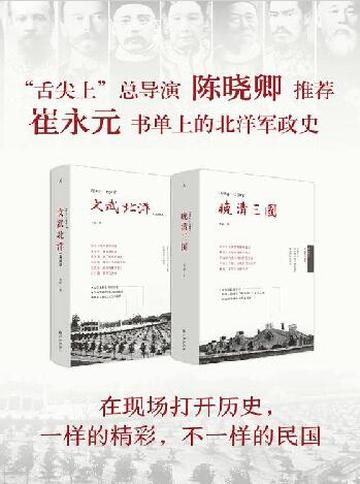
I am preparing for the war intensively, the Russians are confidently fighting, but the people of the Qing Dynasty do not know how to choose sides... The Qing Empire, the Japanese Empire, the Russian Empire, the "Three Kingdoms of the Late Qing Dynasty" who gambled on their national destiny, the Russo-Japanese War (1904-1905) between the Empress Dowager Cixi, Emperor Meiji, and the last Tsar, are just like betting on the "Zero World War"!
Only six years after the war, the Qing edifice that had stood for nearly 300 years collapsed. Today's Chinese people, when talking about Japanese military leaders, may know names such as Tojo Hideki, Yamamoto Isoroku, Okamura Neji, Doihara Kenji, etc., But they may not all know that these Japanese army and navy generals during World War II were all junior officers who grew up during the Russo-Japanese War. The so-called "idol" they share is the Japanese army's Oyama Iwa. The Russo-Japanese War is what historians call "World War Zero."
The author of "Three Kingdoms in the Late Qing Dynasty" visited Lushunkou twice and drove across the land of Liaoning three times, retracing the Japanese army's advance route, or along the route of the Russian army's defeat. The wheels rolled over Dandong, Phoenix City, Xinbin, Benxi, Liaoyang, Shenyang, Tieling, Faku and Changtu one by one, exploring the war relics one by one. In the spring, midsummer and late autumn of 2015, the author also traveled east to Japan three times to interpret the birthplace of the war and the growth environment of a generation of military and political giants. On the Russian Navy Day (the last Sunday in July every year), the author made a special trip to Vladivostok, a famous city in the Far East, to observe the Pacific Fleet at close range during the festival. The beginning and end of the Russo-Japanese War were all related to this fleet. "On-the-ground history", on-the-spot exploration of China and powerful countries before and after a hundred years, and unfolding history on the spot! Regarding "World War Zero", it is also based on a war record that has not been broken so far, that is, there are no victors and defeated countries in the legal sense between the warring parties! The Russo-Japanese War more than 100 years ago incubated the emergence of various ideologies and political factions in the late Qing Dynasty, accelerated the disintegration of the empire, and greatly changed the political ecology of China and even East Asia, and its influence continues to this day.
Looking back at this period of history, Russia may have forgotten it, while Japan may have beautified it. This is a new work written by the Chinese themselves that strives to restore the political ecology of the year and the world's geopolitical pattern.
Reader comments
His descriptions are vivid and interesting, as if he is chatting with us, and he makes complex historical plots clear and easy to understand. Moreover, the analysis of the political ecology and geopolitical pattern of various countries is also very good, which gave me a deeper understanding of that period of history. I think this is a great book worth reading!
His descriptions are vivid and interesting, as if he is chatting with us, and he makes complex historical plots clear and easy to understand. Moreover, the analysis of the political ecology and geopolitical pattern of various countries is also very good, which gave me a deeper understanding of that period of history. I think this is a great book worth reading!