Amid the powerful tides of the existence and transformation of world civilizations, how should China find its place, and how should it view its own history and culture?
Where did China come from, where did Chinese culture come from, and where is it headed?
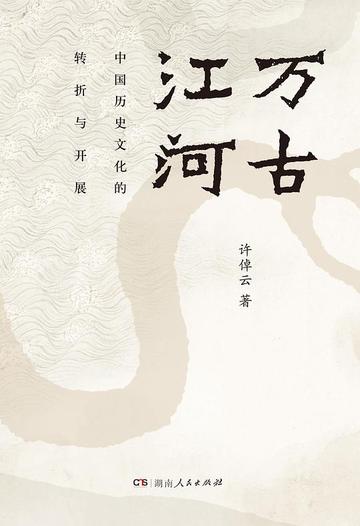
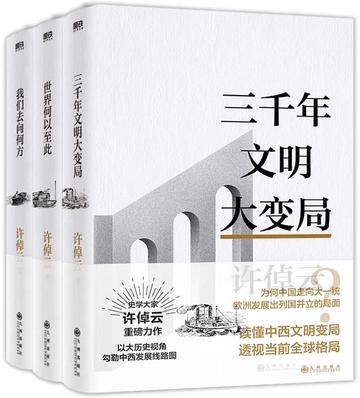
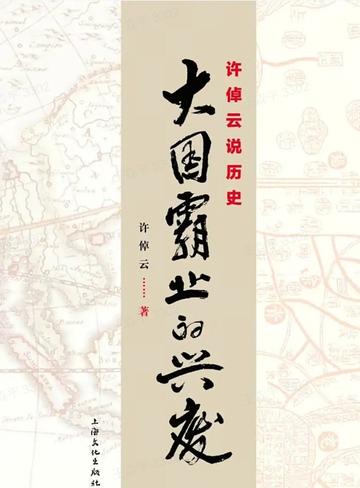
This book, Vast Rivers Through the Ages, is the answer offered by the renowned historian Xu Zhuoyun, who holds Chinese culture close to his heart. It is also a history written for Chinese people today, and a biography of the growth and development of Chinese culture.
As history has unfolded, the content of Chinese culture and the space it has occupied have continually changed: from the beginnings of Chinese culture revealed by archaeological discoveries, to the emergence of the "Central Plains"; the Central Plains became China, and the "China of the Central Plains" gradually expanded into the "China of China." It then reached beyond China, slowly absorbing its neighbors and, through cultural exchanges and the expansion of its sphere of influence, becoming the "China of East Asia." It then played an important role across Asia as the "China of Asia," before, after more than a century of upheaval and halting progress, entering the world and becoming the "China of the world."
In this account of long-term cultural spheres that transcend dynasties and regimes, Chinese culture and the people who grew up on this land are the true protagonists. Centering on state institutions and the character of each era, changes in thought, religion, and culture, agriculture, handicrafts, and economic networks, the integration and interaction of ethnic groups and cultures, the everyday lives of Chinese people, their ways of life and resources, folk society and worlds of belief, advances and transformations in culture, science, and technology, foreign relations, and comparisons and interactions with other civilizations, Mr. Xu explores a wide range of themes. He tells the vivid, colorful story of the growth of Chinese culture and the Chinese people.
What is more, in every period China had to face other peoples and the cultures they created. Through constant contact and exchange, China sometimes embraced them and sometimes rejected them, ultimately changing "itself" and the cultures of its neighbors. At times, "itself" even merged with "others" to become a new "self."


"Reading five thousand years in one book" is indeed true. The book introduces China from ancient times to modern China and narrates it according to the timeline. However, this book does not introduce us to the major events in Chinese history at each stage. On the contrary, the author records some of the culture and economy of China at this time point, as well as the comparison with other regions such as Rome at the same time. Overall, this book is not very interesting, and is even a little thick. However, I still strongly recommend that everyone pick up this book and read it, because it is very "informative"! The table of contents of the book clearly shows the timeline of the content in the book at a glance. In this regard, I think it is very readable. Even for history novices, it will not be difficult to understand. For me, the most impressive thing is the fragments in the book that describe my previous life, which are very meaningful to read. This book is like a time tunnel for me, taking me back to the past.
This book introduces how China, from a small country, often updates its cultural and historical orientation through communication, exchange, contact and struggle with surrounding ethnic groups, and gradually moves from the local to the world. From China in the Central Plains, to China in Asia, and then to China in the world, the history and culture of the Chinese nation are endless and everlasting, showing the strong vitality of the Chinese nation, embodying the vitality of our Chinese nation, and demonstrating the nation's self-confidence and pride.
After reading the entire book, we will understand that what Chinese culture is truly proud of is its ability to accommodate and digest. Chinese culture not only radiates the influence of other cultures, but also accepts the influence of foreign cultures. At every historical stage, "China" has to face other groups of people and the cultures they create, either welcoming or rejecting them. In the end, it changes itself and the culture of those neighboring ethnic groups, and even "self" and "others" merge into a new "self."
This is a huge book about history and culture. Through sorting out and interpreting Chinese history, the author shows the glory and vicissitudes of the Chinese nation. The historical narrative and cultural examination in this book are breathtaking. Through an overview of Chinese history and interpretation of important events, the author shows readers the historical heritage and cultural treasures of the Chinese nation. Readers can appreciate the thousand-year history of China and the continuation of the national spirit by reading this book.