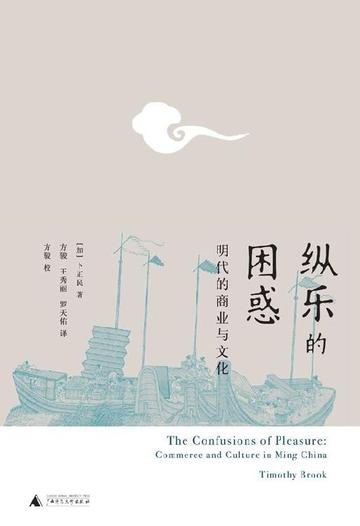
"The Confusions of Pleasure" is a major work by the renowned historian of China Timothy Brook and a classic of Western scholarship on China. It won the 2000 Levenson Prize.
In the middle and late Ming dynasty, China underwent an economic transformation. The rapid growth of commerce prompted a series of social and cultural changes. The communications network that Zhu Yuanzhang had built in the early Ming to serve a sparsely populated realm became the foundation on which the commercial world grew. People chased the latest fashions and savored material pleasures. Wealthy merchants traded their silver and gold for a ticket into the upper classes.
In the bizarre world of the late Ming, money seemed to be the only currency that mattered. Old social identities and even moral boundaries had grown so blurred that they left people bewildered.
With masterful storytelling, Timothy Brook weaves together the lives and stories of officials, travelers, diplomatic envoys, brickmakers, merchants, textile workers, prostitutes, and others, bringing to life vivid scenes of society. At the same time, his work retains the rigor and depth of academic writing, and his insights into Ming culture and society remain illuminating.



The characters in the book are all unique, and adventurers like Nick Ray reminded me of Marco Polo in "The Travels of Marco Polo." They are all full of yearning and curiosity about China, trying to find wealth and opportunities in this mysterious country. This book not only shows the prosperity of the Ming Dynasty, but also made me think about the connection between history and reality.