Stats
9.5Score
20Chapters
Tags
Synopsis
Reader comments
In booklists 7
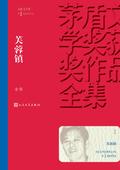
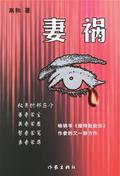
Nobel Prize for Literature, Mao Dun Literature Prize, Lu Xun Literature Prize and Other Literary Works
I want to read a book similar to "One Sentence is Worth Ten Thousand Sentences: Collector's Edition".
122.5MViews725Books4dUpdated
A Profound Book That Can Help Me Grow My Brain
Logically rigorous, not mindless sweet stories, with deep foreshadowing, and a grand world view, this kind of
70.2MViews615Books10hUpdated
Why Not Read Classics?
Recommend some good books that are meaningful, influential and well-written.
55MViews315Books1dUpdated
Masterpieces, History and Culture, World Masterpieces
.
3.7MViews658Books3dUpdated
Literature Books, I Want Literature Books! ! !
Family members, I want to read literature books, books that can improve my writing skills or increase my knowledge. Beg on your knees!
3.1MViews564Books1dUpdated
Recommended Chinese Classics
782kViews400Books7dUpdated

😊A Good Book Is a Microcosm of an Era, a Mirror of History
I want to watch something like "Red Mansions: The Strongest Guard, I Can Cover the Sky with My Hands!" Book.
40.4kViews269Books1yUpdated
"White shirt, blue skirt, unknown name, beautiful scenery at dusk" I finally read Yizhi Qing's original work. But Wan Bazi can actually adapt such a wonderful story... Ordinary people are ultimately the dust that is picked up as the great wheel of time moves forward.
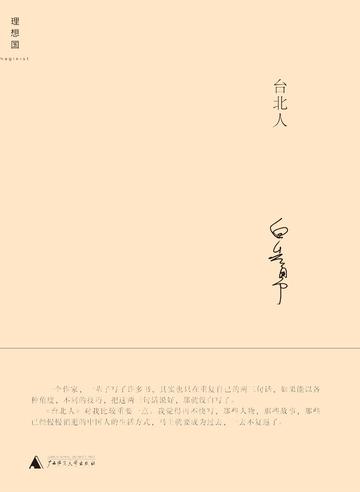
"Taipei People" is a collection of deeply complex short stories, consisting of fourteen first-class short stories, strung together into one. Among them, the story "A Dream in the Garden" is my favorite. The story of "A Dream in the Garden" follows Bai Xianyong's usual sentimental and gloomy writing style. A short and lively banquet, but in Mrs. Qian's half-asleep and half-awake memories of the past, it extends to a sad old time under the shadow of the times and personal tragedy, reflecting a heavy and sad atmosphere in the bustle. Who is the searcher who has searched for him thousands of times in the crowd? It was Mrs. Qian, the widow who had passed away in the Dou Mansion. Who is he in the dim light? It is Lan Tianyu, a famous Kunqu opera singer with a melodious voice. The large period of darkness in the middle is the irretrievable years passing between the fingers. They stare at each other, one bright and one dark, one revealed and one hidden, relatively hesitant and silent.
Bai Xianyong's very classic short story collection. In the book, Taipei people are not really Taipei people, but strangers are real strangers. Every short story in "Taipei People" is of first-class quality. The fourteen stories are strung together to form the separation, sorrow, and longing of that era. People from all walks of life, the local dialects of various places of origin, and various industries, whether rich or poor, are like duckweeds and ageless ghosts. They have no branches to rely on but warm each other in the war-torn era.
The book contains the pattering of spring rain, the gorgeous scorching sun, and the charmingly fragrant flower buds, as well as the gains and losses of love, the trance of spirit, and the frustration of plummeting from the peak of life. The fourteen stories in the book gave me different and novel feelings. What impressed me the most was "Ode to Old Thoughts" because the author's way of describing the plot of the story was relatively straightforward, giving people the feeling of speaking directly from the heart. Although this short story is a novel, it is not absurd and tasteless, and the structure is complete and tight. Reading this book not only allows us to understand the social situation at that time, but also makes us think deeply. In short, this book is worth recommending and worthy of our in-depth study.
Ended on January 29, 2026. I read 14 novels, which are not like novels but like documentary literature. You can see traces of history in every story. They are all from mainland China, they are all the same foreigners, but they have gradually become Taipei people. I stood on the opposite side of the Taiwan Strait, across the river of time, reading the stories of this group of people. It felt like a world away, and yet it seemed before me that everyone was a living individual. I watched everything about them, feeling sorry for them, angry about them, and sad for them. Mr.'S writing is always eloquent and profound.
Bai Xianyong's very classic short story collection. In the book, Taipei people are not really Taipei people, but strangers are real strangers. Every short story in "Taipei People" is of first-class quality. The fourteen stories are strung together to form the separation, sorrow, and longing of that era. People from all walks of life, the local dialects of various places of origin, and various industries, whether rich or poor, are like duckweeds and ageless ghosts. They have no branches to rely on but warm each other in the war-torn era.
The writing is so awesome, whether it is the depiction of the pictures or the shaping of the characters, the concise length can actually restore so many lifelike characters. What excites me most is the delicate emotions and exquisite writing. The scene where Juanjuan rides on Ke Laoxiong's corpse reminds me of Mariam picking up a shovel in A Thousand Splendid Suns. It allows us to see the plight and resistance of women, even though the endings of both are more realistic. The story "A Dream in the Garden" skillfully uses the expression technique of stream of consciousness to exaggerate the emotional narrative of the characters. What's very interesting is that there is just the right amount of white space. The best thing about a short narrative is that it doesn't have to tell the story of the causes and consequences, leaving the reader with room for creative imagination. Unfortunately, it's too short, and it's not satisfying to read. [Crying] This holiday I want to read all of Bai Xianyong's other works. This book can be called my favorite.
Reading Bai Xianyong's novel is like walking into the drizzle without an umbrella. Unconsciously at first, as the walk deepens, the coolness penetrates through the clothes and quietly penetrates into the limbs and bones. Without being hoarse, the pain, unwillingness, helplessness and numbness of people in the book are accurately pierced to the bottom of the heart. Not a single word is mentioned about sorrow, the entire article is filled with sorrow. Bai Xianyong uses compassionate and generous writing to describe the souls abandoned by the times in his apartment in Taipei. He stared equally at every exile trapped in old dreams and trapped on an isolated island: Pu Gong in "The Song of Liang Father" is like a defeated orchid. The heroic spirit of the year of 1911 has been scattered into dust, leaving only a few remaining buds, exuding a delicate fragrance. Juanjuan in "The Lonely Love Flower" is naked and curled up on the window sill, her toes are painted with khaodan, and her hollow throat overflows with a sad cry. In "A Dream in the Garden", Lan Tianyu is shocked to realize that the dark green Hangzhou silk brought from Nanjing at the bottom of the box has become dull and black in color. For Yu Jinlei in "Winter Night", the burning passion of the "May Fourth Movement" was finally buried by the dust of life under the mountain of books piled up in the living room; at this moment, all that remains of him is the anxiety of plotting for rice. He used words to weave a gentle net and retrieve the sighs lost in the gaps of time. Nanjing Road is not Nanjing, and Paris at night is not Paramount; just as Li'er cannot replace her little sister, Achun is not a girl from the Luo family after all. Time knocks down old buildings and builds new ones, and it can easily change countless faces. However, there are always some things that solidify into rocks in the long river of time: it is the "handful of snow" proudly placed in the garden, the bowl-sized scar on the body that will never fade, the stiff waist when saluting, and the unyielding spirit nourished by five thousand years of civilization - it is the national background that cannot be washed away by the torrent of history. "In the old days, the swallows in front of Wang Xietang flew into the homes of ordinary people." History ultimately carries everything forward, and those souls swimming against the current, clinging to the faded maps and disappearing bells, echo the elegy of the times in the ordinary alleys of Taipei.
This is a novel with a rich realistic style, depicting Taipei city life as its theme. Through a series of vivid stories and rich characterizations, the author shows the diversity and human touch of the city of Taipei. This book depicts the lives and emotional experiences of different characters with delicate writing style, revealing the joys, sorrows, sorrows and joys of modern urban life. Through vivid descriptions and detailed characterizations of various characters, readers can feel the pulse and humanistic atmosphere of the city of Taipei. This book is not only a true portrayal of urban life, but also an in-depth reflection on human nature and emotions. Through the stories of different characters, the author explores people's loneliness, confusion, desire and struggle in the city, triggering readers to think about the meaning of life and interpersonal relationships.
Reading the book "Taipei People" is like spending a night with one of the characters. In this magical night, you are immersed in various dreams of his or her life. Just as you were about to grab him by the hem of his clothes, he had already walked away with the weight of history and the lightness of his soul, leaving only a feather-like flutter in your heart. After reading it, I couldn't say anything. I stared blankly at this behemoth of history and thought, God, I'm greedy again.
The protagonists in this book are all walking dead whose bodies are still alive, but their souls remain in the past forever. They long to return to the past, and they long to find the harbor of the soul again. In the end, they all end in failure. The confrontation between spirit and body, reality and ideals.
"The characters in "Taipei People" can be said to include all strata of Taipei's urban society: from the old and upright Confucian general Pu Gong to the retired maid Shun En's wife, from the upper-class Madam Dou to the lower-class "Commander-in-Chief."" It is not difficult to see from the introduction that this book uses character creation as the main method, and through delicate descriptions and vivid characterizations, it shows the life experiences, inner worlds and social backgrounds of different characters. The author presents the diversity and complexity of Taipei's urban society through diverse character descriptions. Readers can gain an in-depth understanding of all aspects of Taipei society through the stories and experiences of these characters, thereby gaining a deeper understanding of the city's culture, social scene, and interpersonal relationships.
Taipei people are not born in Taipei. This collection of several short stories shows the spiritual outlook of the mainland after its retreat to Taiwan. No matter which article, playing mahjong seems to be an activity interspersed with eternity, and their pale life appears vividly on the page.
After leaving the motherland, I was full of infinite nostalgia for the past, instead of trying to find similar traits in similar people, and I was obsessed with this trait. Regardless of class, I felt like I had collected everything from the Cangshan Mountains to the Western Liang.
It looks good, with a sense of beauty that sticks in your throat (I'm not educated, so I'll just comment)
The whole book is an interpretation of a sentence: No one is good for a thousand days, and a flower is not as good as a hundred days. Bai Lao has created a lot of vivid characters. My favorite is Jin Daban, because he is so energetic! "I'm a little tired, but I always have the courage to do amazing things in my dog-like life."
Although the book is called "Taipei People", there is no serious, native Taipei person in the book. Most of them are mainlanders who escaped from the mainland, lost generals of the Kuomintang, old and young, and some ordinary people who fled to Taiwan. It feels as if the driving force that supports these people's survival is the accidental review of past lives. The beautiful luxury of past lives has almost become the biggest luxury in their lives...
This is the first time I read a novel like this. It feels like a drama. The words and actions of the characters are as if they are now. After reading it, I was shocked and felt a sense of desolation. However, these novels also seem to have some fixed formulas for opera. I don't quite understand the structure, but the high degree of emotional unity and the similarity of the story's direction still made me feel tired when I read the last two chapters. I am still too young, and the so-called past and present are still light to me. Maybe when I get a few years older, I will have a deeper understanding of this emotion.
The process of reading it was very desolate and sad, and I almost couldn't read it. Defeated, far away from homeland, old physically and mentally, no matter which character, will recall the past, sigh, forget, or die. How beautiful the Chinese culture described by the author is, like a tragic song! Why are there so few works like this with Chinese classical culture?
"Taipei Man" was the first book I read by Bai Xianyong. I picked it up again after many years and still cried several times. This book is a collection of short stories that tells the stories of 14 people who live in Taipei but are not from Taipei. There are people in the world of mortals, some who have fallen into decline, and some who have participated in the revolution... People of all kinds came to Taipei from the mainland and began a life of no return. The stories are not long, so they are suitable for reading in fragmented time.
See the silhouette of an era, detailed and structured I really want to know what people and things were like in different eras, before the baptism of time, and see history from a different perspective through a book. A book worth reading
It's really well written. I didn't quite understand some of the stories, but I can roughly understand the meaning. Each story has its own connotation. I was very impressed by the heroine in the first story. It is really attractive to start this book with such a woman. She is charming and understands the accidents of human relationships. She can rely on herself but cannot break away from society. There are so many things to explore about her. It was so heartbreaking to watch that I didn't even dare to look at the lonely flower at the end. It was so uncomfortable to watch... The oppressed and numb child finally used an iron to resist. Although the ending was crazy, it was a giggle from the heart, and it was probably the best ending for her. Emm There are many other stories that I can't remember because they were incoherent. I will re-read this classic!
A touch of sadness, a touch of confusion, a touch of nostalgia
When the 60-year-old old general hired me to be the wife of a real official who filled a house, he already had age sores on his hands. There were scars on the corners of his eyes and the tip of his nose. If you look closely, you will see a circle of ripple-like marks. The knife wounds and fire cracks were on his soft skin, and the traces of the surgery could be pulled out with my hand to take a closer look. When I was most able to spend money, I was in my early 20s. I also learned to want to have afternoon tea like other wives, and I wanted to get together from time to time. In my heart, I still sing softly. I swayed my voice during the song "Hexiang". There was still the old man in front of me. Hehe... Now I have come to Taiwan, taking planes and ships, dodging air raids and gunfire. The old man couldn't stand it. I'm 30 years old. I don't think I'm old... I can just twist a gray hair and remove it like a mosaic. Chief of staff, adjutant, etc. Officers who come from universities always have a clean temperament. They are different from the old man and his gang of military gangsters. Our old man looks at me with tenderness and water in his eyes. It is different from the gold and silver aura in the original group of sisters. The old man has money and is willing to have a relationship with a girl like me. This is what the sisters are doing. We are all tired of having to work hard for a few coins. Getting married is not the same as getting ahead. You shouldn't think about these bitter things today. Let's continue talking about drama.
Bai Xianyong is very good at telling stories, and his favorites are Golden Taipan, Lonely Flowers and Huaqiao Rongji. As mentioned in the appendix, the whole book is about the ratio between the past and the present. The past and reality overlap in the same character, but they can reflect two completely different sides. This is the past that they cannot let go and the past that they do not want to let go.
Talented scholars and gifted scholar books are rare in such an era. I remember Mr. Bai Xianyong said that he was glad that he wrote such a book at that age. If it had been later, I might not have had the courage to write it.
Classic enough to be used as a reading comprehension article.
People who have been influenced by Chinese culture for a long time, no matter where they go, no matter their age, will continue to influence the people around them and the next generation with the imprint of Chinese culture. This is also the power that Chinese civilization has always inherited. Every chapter in this book "Taipei People" is a memory.
The book contains the pattering of spring rain, the gorgeous scorching sun, and the charmingly fragrant flower buds, as well as the gains and losses of love, the trance of spirit, and the frustration of plummeting from the peak of life. The fourteen stories in the book gave me different and novel feelings. What impressed me the most was "Ode to Old Thoughts" because the author's way of describing the plot of the story was relatively straightforward, giving people the feeling of speaking directly from the heart. Although this short story is a novel, it is not absurd and tasteless, and the structure is complete and tight. Reading this book not only allows us to understand the social situation at that time, but also makes us think deeply. In short, this book is worth recommending and worthy of our in-depth study.
It is worthy of being written by everyone who has been circulated and praised. Every article is exquisite, rich, and thought-provoking! Who said there are no good short stories in modern Chinese? ! Revolution of 1911 ("Liang Fu Yin"), May Fourth Movement ("Winter Night"), Northern Expedition ("New Year's Eve", "Liang Fu Yin"), Anti-Japanese ("New Year's Eve", "Autumn Thoughts"), The Civil War between the Kuomintang and the Communist Party ("A Handful of Green") . . .