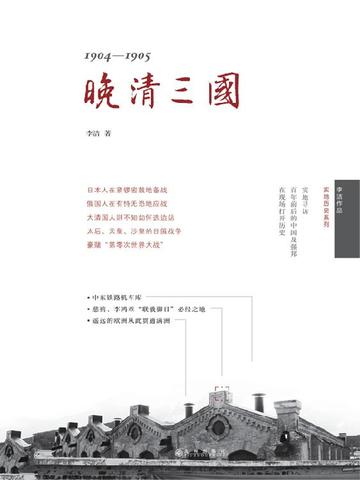
The Japanese were making feverish preparations for war, the Russians were facing it with confidence, and the people of the Qing Empire had no idea which side to support...
The Qing Empire, the Japanese Empire, and the Russian Empire wagered their national destinies in the Russo-Japanese War of 1904–1905, a late-Qing contest among three powers involving Empress Dowager Cixi, Emperor Meiji, and the last Tsar. It was practically a gamble on the "First World War Zero"! Just six years after the war, the Qing dynasty, which had stood for nearly 300 years, crumbled to dust.
The author of The Late Qing's Three Powers visited Lushun twice and drove across Liaoning three times, retracing the Japanese army's route of advance, or what might be called the Russian army's route of defeat. The wheels of the car rolled across Dandong, Fenghuangcheng, Xinbin, Benxi, Liaoyang, Shenyang, Tieling, Faku, and Changtu, as the author investigated the traces of the war one by one. In the spring, summer, and autumn of 2015, the author also traveled to Japan three times to examine firsthand the war's place of origin and the environments that shaped the leading military and political figures of the era. On Russian Navy Day, held on the last Sunday of every July, the author made a special trip to Vladivostok, the celebrated city in Russia's Far East, to get a close-up look at the Pacific Fleet during the festivities. Both the beginning and the end of the Russo-Japanese War were tied to this fleet.
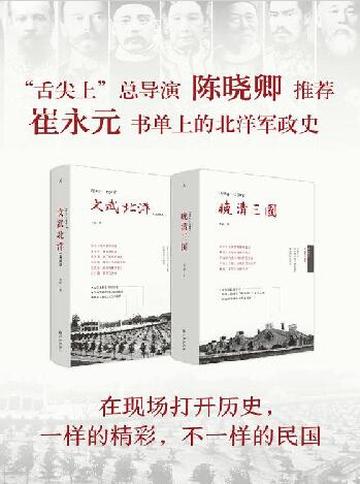
"History in the field": visiting China and the great powers as they were a century ago, and opening up history on site!
The term "First World War Zero" also rests on a record that remains unbroken to this day: neither side in the conflict was a victor or a defeated nation in the legal sense. The Russo-Japanese War, fought more than a century ago, gave birth to the ideological and political factions of the late Qing, hastened the empire's dissolution, and profoundly changed the political landscape of China and East Asia, with effects that continue to this day.
Looking back on this period, Russia may have forgotten it, and Japan may have glorified it. This is a new book written by a Chinese author, aiming to reconstruct the political landscape and global geopolitical order of the time.
It is worthy of being a historian's work, with detailed historical materials, fluent writing and unique insights. You will gain a lot after reading it. Recently, I was reading the novel "Republic of China" at the same time, and I was really moved by the history of the late Qing Dynasty and the Republic of China.
It's like I just gave birth to a child, and I can appreciate the value of peace even more. History always reminds people that we should cherish our present life. This book also reminded me of my ancestors, who experienced war and understood the meaning of peace. The author's efforts have given us a deeper understanding of that period of history. I recommend everyone to read it.
A rare good book that describes the true and immersive experience and understands the Russo-Japanese War.
Don't forget the national humiliation!