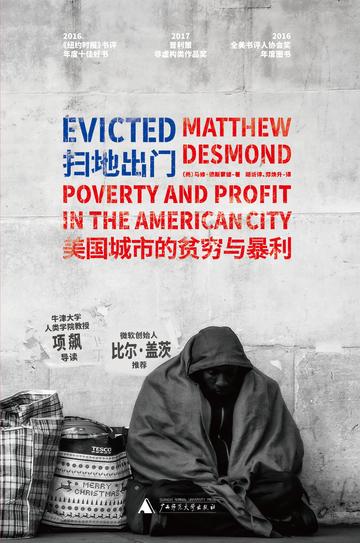
"Sweeping Out: Poverty and Profits in American Cities" focuses on the increasingly severe housing problem in the United States - housing prices continue to rise, the cost of living continues to rise, but incomes remain stagnant or even decrease instead of increasing - Matthew Desmond is determined to go deep into poor communities to explore the core of the problem.
In May 2008, Desmond moved into a trailer camp on Milwaukee's south side. In September of the same year, he moved to a rental house in the northern old city. Desmond, who was a graduate student in sociology at the time, kept writing and documenting the daily lives of groups on the verge of being evicted: they lived side by side with snakes, insects, rats, and ants, and the sinks in their homes were clogged for years, and the heating and electricity stopped at random. The tenants tried their best and spent most of their income on rent, but they still couldn't prevent their desperate situation.
In this brilliant yet heartbreaking book, Desmond takes readers on a journey through Milwaukee's impoverished neighborhoods and tells the stories of eight American families on the edge of despair: Arlene, a single mother who, after paying rent on a run-down apartment, has only twenty dollars a month left to support herself and her two sons. Lamar is a disabled man who has lost his legs and is tasked with taking care of an entire community of boys while also working for his landlord to pay off his debts. Scott is a kind-hearted male nurse. Drug addiction caused him to lose his job and his roof...
Readers will face the displacement caused by poverty and witness the graceful figure of those in need who refuse to submit. This is an enlightening book about poverty and eviction, and a call to action and change.
Reader comments
This book allowed me to see the real life of poor families in the United States, and the difficulties they face with housing issues are truly heartbreaking. Thinking back to when I was passionately in love, although I did not face such difficulties, I would still work hard for my future life. I hope more people can read this book, understand the stories of these families, and work together to change this situation.
It reflects some of the current problems in American society, the lives of people living on the edge of the bottom, and the precarious living condition.
It's worth reading. The author talks about the difficulty of renting a house for low-income families in the United States and the possibility of being evicted at any time, as well as the possible encounters after eviction. It feels very real.









This book allowed me to see the real life of poor families in the United States, and the difficulties they face with housing issues are truly heartbreaking. Thinking back to when I was passionately in love, although I did not face such difficulties, I would still work hard for my future life. I hope more people can read this book, understand the stories of these families, and work together to change this situation.
It reflects some of the current problems in American society, the lives of people living on the edge of the bottom, and the precarious living condition.
It's worth reading. The author talks about the difficulty of renting a house for low-income families in the United States and the possibility of being evicted at any time, as well as the possible encounters after eviction. It feels very real.