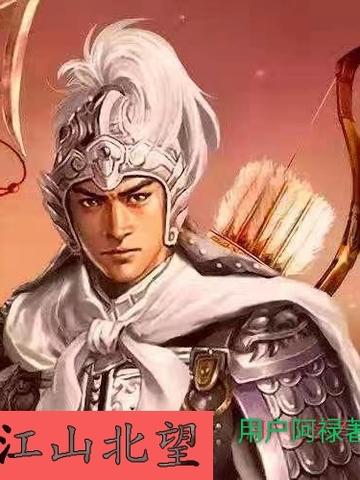
During the Anti-Japanese War, Liu Zhiyue, commander of the 1st Brigade, 1st Regiment and 1st Battalion of the National Army Teaching Corps, led his men to participate in the defense of Nanjing. After several fierce battles, he was ordered to escort Huang Yundu, the principal of Nanjing Chemical Technology School, and the school's teaching staff to relocate. However, they were besieged by the Japanese army. After several battles, everyone and most of the Japanese soldiers died together. Liu Zhiyue's soul accepted a mission in heaven and was reincarnated in the late Ming Dynasty in 1644. Liu Zhiyue was reborn to replace Liu Erye, the leader of Liujiazhai Second Village in Shifang County, Sichuan with the same surname. Relying on his superior martial arts, he organized a team to fight against the Great Western Army. Because he recognized his subordinate Zhang Hao, who was also reincarnated in the Daxi Army, he got to know Li Dingguo, the general of the Daxi Army. Under Li Dingguo's persuasion, he became the general of the Daxi Army. Later, because he was dissatisfied with the brutality and strife of the Daxi court, he led his troops to join forces with the Ming army and guarded Bozhou. Later, he met Huang Yundu, who was reincarnated as a Mohist giant, and relied on Huang Yundu's profound knowledge and knowledge in his previous life. With advanced technology, and with the support of the Mohists' huge financial resources, they achieved a series of successes in agriculture, military industry, and chemical industry, solved the problem of food and clothing, and formed an army with modern weapons and equipment. Together with Li Dingguo's Great Western Army and the "Loyalty Battalion", they competed with the Manchu invading forces. After several years of hard work, they successfully drove the Manchu forces out of Jiangnan. After that, based on the prosperous land in the south of the Yangtze River, it vigorously developed agriculture and economy. After more than ten years of operation, when the people were prosperous and the country was prosperous, they sent troops to the Northern Expedition to recover the lost land in the north, and drove the Manchus back to the northeast to establish a state. Finally, they completed the great cause of unification and created a country of democracy, freedom and equality.
Reader comments
Traveling from the Anti-Japanese War to the late Ming Dynasty, the author has a unique conception, very delicate writing style, and rigorous structure. It is a rare good book. The only regret is that the author is too slow to update, so I can't help but look forward to it.
Traveling from the Anti-Japanese War to the late Ming Dynasty, the author has a unique conception, very delicate writing style, and rigorous structure. It is a rare good book. The only regret is that the author is too slow to update, so I can't help but look forward to it.